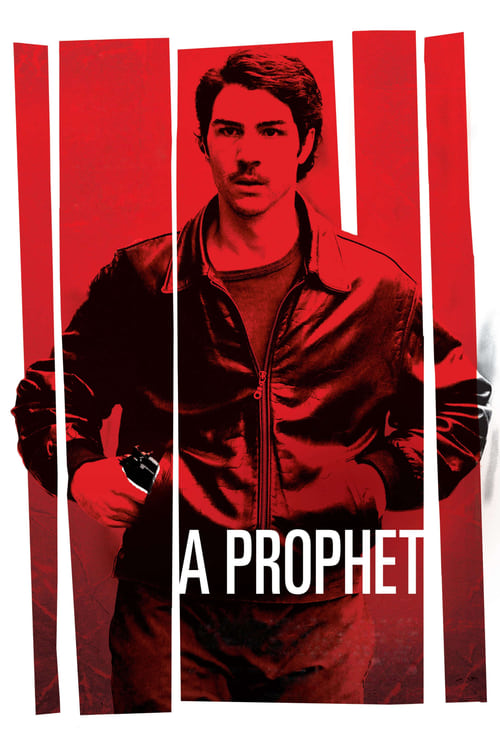
A Prophet (2009)
Directed by Jacques Audiard
No — A Prophet is not especially woke, scoring 34 out of 100 on our wokeness meter.
A Prophet arrives from 2009, a French prison picture of unusual patience, and it conducts its business with the grim efficiency of a man counting contraband.
Consciousness Markers
The film centers a Maghrebi protagonist and features a largely North African and Corsican cast, with the director explicitly stating an intent to create images for Arabs in French cinema.
Ethnic hierarchy and racism are central to the prison drama, with Corsican and Maghrebi factions competing and Malik navigating French Algerian identity.
There are no LGBTQ+ themes, characters, or subtext in the film.
The film is set almost entirely in a male prison and offers no feminist critique or significant female perspective.
There is no environmental or climate-related theme in the film.
The film depicts criminal enterprise and prison power structures but does not advance an anti-capitalist or eat-the-rich message.
There is no body positivity theme or related commentary.
Malik's illiteracy and visions are not framed as neurodivergence, and the film does not explore neurodiversity.
The film is a fictional crime drama and does not revise or reinterpret historical events.
The film is a gritty social-realist crime story and does not deliver preachy or didactic political lectures.
Why it received this score
A Prophet arrives from 2009, a French prison picture of unusual patience, and it conducts its business with the grim efficiency of a man counting contraband. Malik El Djebena, nineteen and illiterate, enters the system and is promptly rented out as a weapon by the Corsican faction that runs the yard. Jacques Audiard follows him through roughly six years of screen time, and the film refuses the comforts of a redemptive arc. Malik does not reform. He ascends. The performance from Tahar Rahim is a study in stillness that slowly acquires weight, and the picture around him stays close to the floor, attentive to the mechanics of survival.
The prison is organized along ethnic lines, and Audiard does not pretend otherwise. Corsicans hold the levers, Maghrebis hold the numbers, and Malik moves between them because he can pass as useful to both. Audiard has said he wanted to make images for people who rarely get them, Arabs in French cinema, and the casting reflects that ambition without ceremony. The film observes the hierarchy instead of editorializing about it. Racism here is a structural fact of the corridor, not a thesis to be delivered from a podium.
What the film declines to do is instruct. There is no sermon, no tidy moral, no gesture toward contemporary causes. It is a crime story, cold and specific, and it trusts the audience to draw its own conclusions about power, assimilation, and the price of belonging. In an era of cinema that frequently mistakes a lecture for a theme, this restraint reads almost as a provocation. The film simply watches. That is enough.
Analysis generated by our Consciousness Algorithm


Synopsis
Sentenced to six years in prison, Malik El Djebena is alone in the world and can neither read nor write. On his arrival at the prison, he seems younger and more brittle than the others detained there. At once he falls under the sway of a group of Corsicans who enforce their rule in the prison. As the 'missions' go by, he toughens himself and wins the confidence of the Corsican group.
Questions about A Prophet
Is A Prophet woke?
No — A Prophet is not especially woke, scoring 34 out of 100 on our wokeness meter. That earns it a verdict of Based.
Does A Prophet have any woke elements?
2 of the 10 markers register at 30 or above, led by Representation Casting (65) and Racial Consciousness (50). On Representation Casting: The film centers a Maghrebi protagonist and features a largely North African and Corsican cast, with the director explicitly stating an intent to create images for Arabs in French cinema.
How does A Prophet compare to other 2009 movies?
It ranks #17 of the 230 films from 2009 we've scored; their average is 14. The wokest is Home (79).
How is the Woke Score calculated?
An AI-assisted process researches the film and its reception, scores it 0–100 on ten markers, then combines those into one 0–100 Woke Score. It measures a specific set of 2020s cultural themes, not film quality.