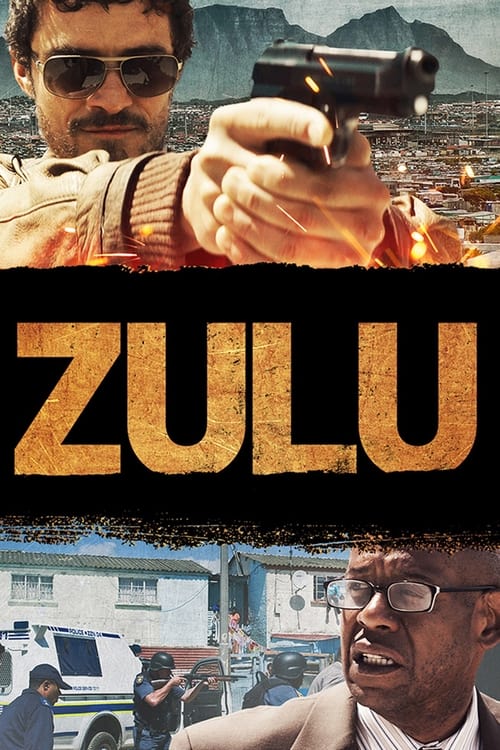
Zulu (2013)
Directed by Jérôme Salle
No — Zulu is not especially woke, scoring 30 out of 100 on our wokeness meter.
Zulu arrives as a French-South African co-production that closed the 2013 Cannes Film Festival, then sat in distribution limbo because Harvey Weinstein judged it too South African for American audiences.
Consciousness Markers
Apartheid's legacy is central: the plot revolves around Project Coast, a real biological-weapons program whose scientists sought to eradicate South Africa's Black population, and the Black detective's childhood trauma under necklacing drives the narrative.
A South African-set film with a Black co-lead (Forest Whitaker) and a largely South African supporting cast, though the two top-billed stars are Hollywood imports and the diversity flows naturally from the setting rather than from any deliberate casting agenda.
The film dramatizes the real Project Coast program and apartheid-era atrocities, but it does so as a fictional crime thriller rather than as a reframing of history through a modern ideological lens.
The apartheid backdrop carries moral weight, but the film delivers it through genre mechanics and violence rather than through preachy speeches or direct audience instruction.
Women appear as an exotic dancer, a computer technician, a ranger, and a wronged wife, but the film is a male-driven crime procedural with no feminist framing or commentary.
Villainy is embodied by a private militia and ex-apartheid scientists rather than by capitalism as such; shell corporations appear as plot mechanics, not as an economic critique.
No LGBTQ+ characters, themes, or subtext appear anywhere in the film.
No environmental or climate themes are present; the Namib Desert serves only as a shootout backdrop.
No body-positivity themes or messaging are present.
No neurodivergent characters or themes are depicted.
Why it received this score
Zulu arrives as a French-South African co-production that closed the 2013 Cannes Film Festival, then sat in distribution limbo because Harvey Weinstein judged it too South African for American audiences. It is a homicide procedural set in Cape Town, with Orlando Bloom as a broke, barely functioning alcoholic detective and Forest Whitaker as his partner, a man whose childhood under apartheid left him orphaned and mutilated. The genre furniture is familiar: a body in the botanical gardens, a designer drug, a private militia, a revenge shootout in the Namib Desert.
Beneath the procedural runs the film's actual engine, the apartheid regime's biological weapons program, Project Coast, and the scientists who dreamed of eradicating the country's Black population. That material gives the film genuine moral ballast and supplies its most substantial cultural content, which it delivers through plot mechanics and violence instead of speeches. The cast reflects the setting without ceremony: a Black co-lead, a South African supporting ensemble, and two imported stars placed on top. The result is diverse by geography, not by design.
Elsewhere the film is incurious about the preoccupations of its own moment. No climate allegory stirs beneath the desert. No economic thesis lurks behind the shell corporations and the mercenaries. There is no body politics, no neurodivergent arc, no queer presence, and the women (a dancer, a technician, a ranger, an aggrieved wife) exist to move a male-driven plot along. It is a grim, competent thriller that treats apartheid as a crime to be avenged, not a lesson to be recited. That distinction matters.
Analysis generated by our Consciousness Algorithm


Synopsis
As a child, Ali Neuman narrowly escaped being murdered by Inkhata, a militant political party at war with Nelson Mandela's African National Congress. Only he and his mother survived the carnage of those years. But as with many survivors, the psychological scars remain.
Questions about Zulu
Is Zulu woke?
No — Zulu is not especially woke, scoring 30 out of 100 on our wokeness meter. That earns it a verdict of Based.
Does Zulu have any woke elements?
2 of the 10 markers register at 30 or above, led by Racial Consciousness (60) and Representation Casting (45). On Racial Consciousness: Apartheid's legacy is central: the plot revolves around Project Coast, a real biological-weapons program whose scientists sought to eradicate South Africa's Black population, and the Black detective's childhood trauma under necklacing drives the narrative.
How does Zulu compare to other 2013 movies?
It ranks #31 of the 274 films from 2013 we've scored; their average is 14. The wokest is Belle (76).
How is the Woke Score calculated?
An AI-assisted process researches the film and its reception, scores it 0–100 on ten markers, then combines those into one 0–100 Woke Score. It measures a specific set of 2020s cultural themes, not film quality.