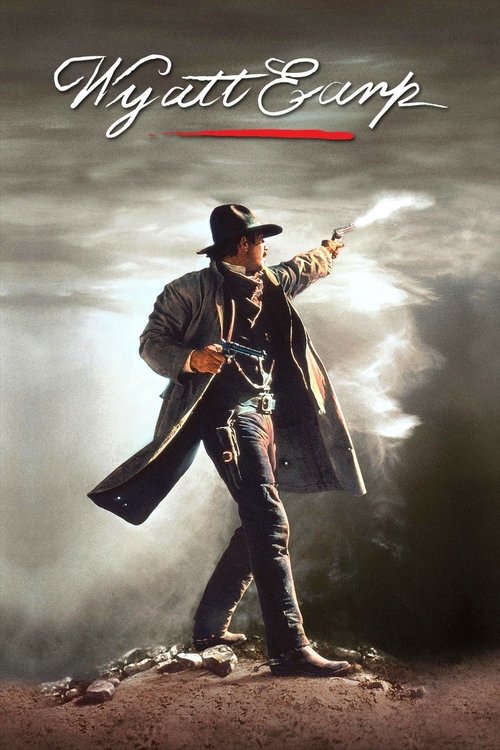
Wyatt Earp (1994)
Directed by Lawrence Kasdan
No — Wyatt Earp is not woke, scoring 0 out of 100 on our wokeness meter.
The classification business has its quiet days, and this is one.
Consciousness Markers
The cast is overwhelmingly white and historically appropriate for a 19th-century Western; there is no modern inclusive casting agenda.
No LGBTQ+ characters, themes, or subtext are present.
Female characters are primarily wives, romantic interests, or prostitutes within a traditional Western narrative; no feminist agenda is advanced.
The film does not engage with racial justice, systemic racism, or modern racial consciousness.
There is no environmental or climate-related theme.
The film does not critique capitalism, wealth inequality, or class structures in a modern activist sense.
No body-positivity themes or messaging are present.
No neurodivergence themes or representation are present.
The film is a traditional biographical Western about Wyatt Earp and does not revise history through a modern social-justice lens.
The film is a long-form historical drama and does not contain preachy modern lecture energy.
Why it received this score
The classification business has its quiet days, and this is one. Lawrence Kasdan's Wyatt Earp arrives from 1994 carrying three hours and nine minutes of frontier jurisprudence and no discernible interest in the cultural conversations that would arrive decades later. Kevin Costner plays the lawman as a man of stone, a figure who vomits at his first gunfight and then spends the rest of the runtime hardening into something the prairie can use. The film concerns itself with family, with the law, and with the slow accumulation of grudges. That is the entire agenda, stated plainly and repeated at length.
The women here are wives, widows, and a prostitute named Mattie, and the film regards them with the resigned sentimentality of its era. Joanna Going's Josie Marcus receives a final line about how it happened that way, and the movie offers it as comfort, not critique. Doc Holliday, played with hollowed cheeks by Dennis Quaid, is a dying gambler and a loyal friend. There is no subtext to excavate, only tuberculosis and gunpowder. Nobody lectures. Nobody is asked to interrogate an inheritance on the road to the O.K. Corral. The Cowboys are villains because they shoot people, and the Earps are heroes because they shoot back with paperwork.
What remains is scale. The film was made in competition with Tombstone and lost that fight on budget, on mood, and on the patience of audiences. It is long, somber, and occasionally beautiful, and it treats its hero's darkness as a weather condition instead of a thesis. Roger Ebert called it a rambling, unfocused biography, which is fair and also somewhat the point. There is nothing here to score. A clean slate, rendered in dust.
Analysis generated by our Consciousness Algorithm
Part of


Synopsis
From Wichita to Dodge City, to the O.K. Corral in Tombstone, Wyatt Earp is taught that nothing matters more than family and the law. Joined by his brothers and Doc Holliday, Earp wages war on the dreaded Clanton and McLaury gangs.
Questions about Wyatt Earp
Is Wyatt Earp woke?
No — Wyatt Earp is not woke, scoring 0 out of 100 on our wokeness meter. That earns it a verdict of Ultra Based.
Does Wyatt Earp have any woke elements?
No. All 10 markers score zero.
How does Wyatt Earp compare to other 1994 movies?
It ranks #77 of the 86 films from 1994 we've scored; their average is 10. The wokest is On Deadly Ground (75).
How is the Woke Score calculated?
An AI-assisted process researches the film and its reception, scores it 0–100 on ten markers, then combines those into one 0–100 Woke Score. It measures a specific set of 2020s cultural themes, not film quality.