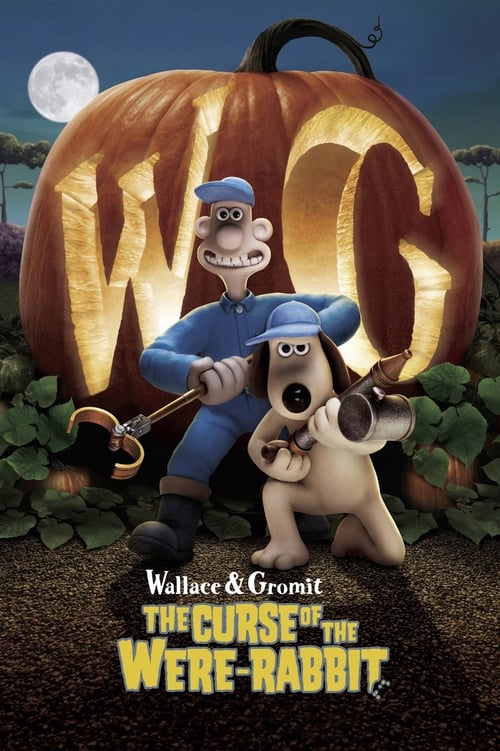
Wallace & Gromit: The Curse of the Were-Rabbit (2005)
Directed by Steve Box
No — Wallace & Gromit: The Curse of the Were-Rabbit is not woke, scoring 3 out of 100 on our wokeness meter.
Wallace & Gromit: The Curse of the Were-Rabbit arrives from 2005, a year in which a plasticine dog could still carry a feature film without a mission statement attached.
Consciousness Markers
Lord Victor Quartermaine is a venal aristocrat courting Lady Tottington for her fortune, a faint whiff of class satire, but the film has no economic argument to make.
The voice cast is a uniformly white British ensemble of character actors; no diversity-conscious casting effort is present or discernible.
No LGBTQ+ characters, themes, or subtext appear anywhere in the film.
Lady Tottington is a wealthy spinster with some agency, but she functions as a romantic prize between two suitors rather than as a vehicle for any feminist argument.
The film engages no racial themes whatsoever; it is a parochial English village comedy about vegetables.
The humane pest-control premise and the closing nature reserve gesture at animal welfare, but there is no environmental or climate-crusade messaging.
Wallace's desire to lose weight is played purely for slapstick, with no body-positivity framing.
No neurodivergent characters or themes are present; Wallace's eccentricity is comedic invention, not a condition.
The film is a whimsical parody of monster movies, not a reworking of any historical record.
This is a gentle, gag-driven claymation caper that never pauses to instruct its audience on anything.
Why it received this score
Wallace & Gromit: The Curse of the Were-Rabbit arrives from 2005, a year in which a plasticine dog could still carry a feature film without a mission statement attached. Nick Park and Steve Box have built a gentle monster-movie parody set in a Yorkshire village where the chief civic anxiety is the annual giant vegetable competition. The craft is meticulous, the jokes are silent and visual, and the film asks nothing of its audience beyond attention.
There is a faint tremor of class satire here, and we should be honest about its size. Lord Victor Quartermaine, voiced by Ralph Fiennes with a toupee and a sneer, courts Lady Tottington for her fortune, and the film treats his venality as a joke about the gentry that British comedy has been telling since the music hall. That is the whole of the film's economic argument. Lady Tottington herself, a wealthy spinster with a genuine interest in horticulture, is positioned as a prize to be won between two suitors, which leaves the film with no feminist case to make and no apparent desire to make one.
The humane pest control premise and the closing conversion of Tottington Hall into a nature reserve gesture at animal welfare without ever becoming an environmental sermon. Wallace's wish to lose weight is slapstick, not a body-positive statement. His eccentricity is comic invention, not a diagnosis. The cast is a uniformly white ensemble of British character actors, and nobody involved seems to have given the matter a thought. The result is a charming film with no agenda whatsoever, a curio from a moment before every children's cartoon was expected to arrive with a lesson attached.
Analysis generated by our Consciousness Algorithm
Part of


Synopsis
Cheese-loving eccentric Wallace and his cunning canine pal Gromit run a business ridding the town of garden pests. Using only humane methods, which turns their home into a halfway house for evicted vermin, the pair stumble upon a mystery involving a voracious vegetarian monster that threatens to ruin the annual veggie-growing contest.
Questions about Wallace & Gromit: The Curse of the Were-Rabbit
Is Wallace & Gromit: The Curse of the Were-Rabbit woke?
No — Wallace & Gromit: The Curse of the Were-Rabbit is not woke, scoring 3 out of 100 on our wokeness meter. That earns it a verdict of Ultra Based.
Does Wallace & Gromit: The Curse of the Were-Rabbit have any woke elements?
Very few. None of the 10 markers reaches 30, the level where a marker counts as present; the highest is Eat the Rich at 5.
How does Wallace & Gromit: The Curse of the Were-Rabbit compare to other 2005 movies?
It ranks #150 of the 181 films from 2005 we've scored; their average is 13. The wokest is The Constant Gardener (72).
How is the Woke Score calculated?
An AI-assisted process researches the film and its reception, scores it 0–100 on ten markers, then combines those into one 0–100 Woke Score. It measures a specific set of 2020s cultural themes, not film quality.