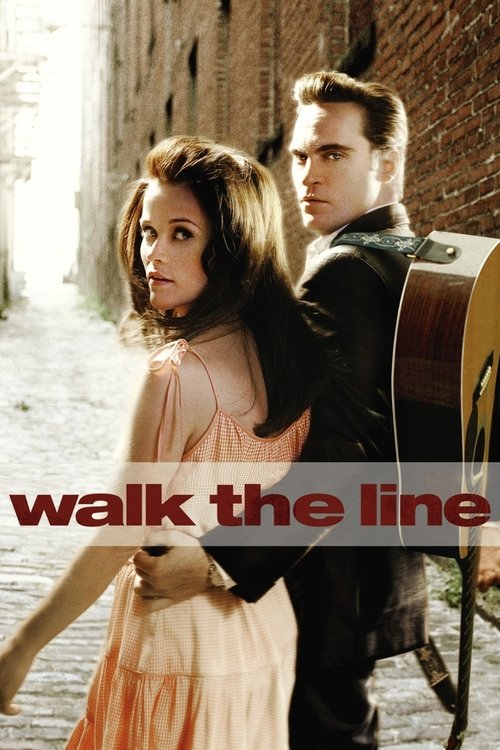
Walk the Line (2005)
Directed by James Mangold
No — Walk the Line is not woke, scoring 5 out of 100 on our wokeness meter.
Walk the Line arrives with the quiet confidence of a film that knows exactly which boxes it intends to tick, and that list is short.
Consciousness Markers
June Carter is portrayed as independent and career-minded, but the film remains a conventional male-genius biopic without explicit feminist critique or messaging.
The cast is historically appropriate for the white country-music milieu of the story, with no deliberate inclusive or diverse casting agenda.
The film centers on Johnny Cash and June Carter's heterosexual romance and contains no LGBTQ+ themes or characters.
The film does not engage with racial justice, systemic racism, or racial consciousness; it largely avoids Cash's later political activism.
There is no climate-related content or environmental messaging in the film.
The music-industry and salesmanship elements are presented as biographical context, not as an anti-capitalist or eat-the-rich critique.
The film contains no body-positivity themes or messaging.
Johnny Cash's addiction and personal struggles are depicted, but not framed through neurodivergence or neurodiversity.
The film is a conventional biographical drama based on Cash's autobiographies, not a revisionist or ideologically reframed history.
The film tells its story through standard biopic drama and musical performance rather than preachy or lecture-like messaging.
Why it received this score
Walk the Line arrives with the quiet confidence of a film that knows exactly which boxes it intends to tick, and that list is short. James Mangold traces Johnny Cash from an Arkansas cotton farm through Sun Records, a marriage that curdles, a pill habit that metastasizes, and a Folsom Prison concert that functions as both career resurrection and emotional reckoning. Joaquin Phoenix sings every note himself, an act of commitment that the awards bodies duly noted. The picture is sturdy, well acted, and entirely content to be a conventional rise-and-fall musical biography. There is no ambient social instruction here, no moment where the narrative pauses to inform the audience how to feel about the broader culture. It simply tells a story about a man, a guitar, and a series of poor decisions.
Reese Witherspoon's June Carter is the one element that gestures toward something more modern. She is permitted wit, ambition, and a career of her own, and she declines Johnny's proposals with a weariness that reads as self-preservation. This is a modest accommodation, however. The film remains a male-genius biopic in which the woman's primary function is to be the steadying hand and the eventual prize. Any critique of that arrangement stays offscreen. The camera loves her, but the screenplay does not interrogate the structure she occupies.
Elsewhere the ledger is blank. The cast is period-appropriate and predominantly white, which is what the subject demands. The romance is heterosexual and uncomplicated in its orientation. Cash's addiction is rendered as personal tragedy, not as a neurodivergent condition awaiting a diagnostic label. His later political evolution, the part that earned him the nickname, is mostly left on the cutting room floor. The film has no interest in climate, in wealth redistribution, or in body image. It wants to be loved, and largely it was. A pleasant evening at the cinema, and nothing more strenuous than that.
Analysis generated by our Consciousness Algorithm


Synopsis
A chronicle of country music legend Johnny Cash's life, from his early days on an Arkansas cotton farm to his rise to fame with Sun Records in Memphis, where he recorded alongside Elvis Presley, Jerry Lee Lewis and Carl Perkins.
Questions about Walk the Line
Is Walk the Line woke?
No — Walk the Line is not woke, scoring 5 out of 100 on our wokeness meter. That earns it a verdict of Ultra Based.
Does Walk the Line have any woke elements?
Very few. None of the 10 markers reaches 30, the level where a marker counts as present; the highest is Feminist Agenda at 10.
How does Walk the Line compare to other 2005 movies?
It ranks #126 of the 181 films from 2005 we've scored; their average is 13. The wokest is The Constant Gardener (72).
How is the Woke Score calculated?
An AI-assisted process researches the film and its reception, scores it 0–100 on ten markers, then combines those into one 0–100 Woke Score. It measures a specific set of 2020s cultural themes, not film quality.