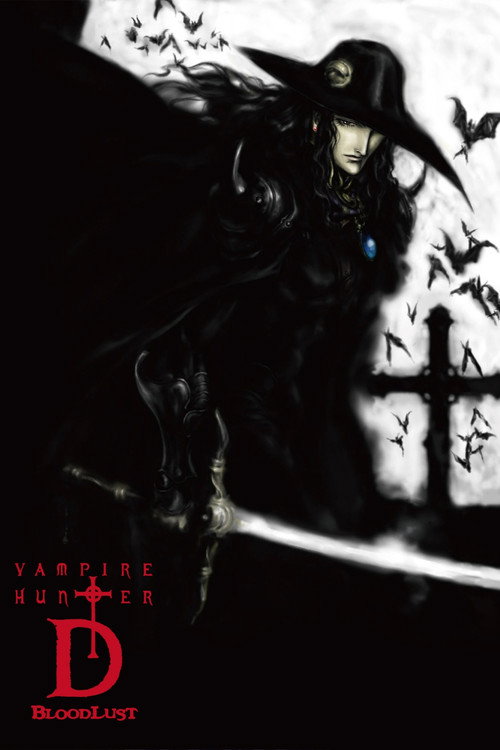
Vampire Hunter D: Bloodlust (2001)
Directed by Yoshiaki Kawajiri
No — Vampire Hunter D: Bloodlust is not woke, scoring 8 out of 100 on our wokeness meter.
Vampire Hunter D: Bloodlust arrives from the year 2000 with the confidence of a film that has no interest in being useful.
Consciousness Markers
Leila is a capable female bounty hunter with her own revenge arc and a poignant graveside pact with D, but the film presents this as character drama rather than a feminist statement.
The English-language voice cast is a conventional roster of white anime dub performers, and the film makes no deliberate effort at diverse or inclusive casting.
There are no LGBTQ+ characters, relationships, or themes anywhere in the film's narrative.
The film engages no racial themes, commentary, or identity politics whatsoever.
The post-apocalyptic setting is gothic vampire lore, not an environmental parable; no climate messaging is present.
Wealthy nobles and bounty hunters populate the story, but the film offers no critique of capitalism or class economics.
No body-positivity themes; the film's aesthetic is gothic horror and idealized anime design.
Grove is a physically frail psychic, but his condition is a supernatural plot device, not a depiction of neurodivergence.
The film is pure dark fantasy set in a fictional far-future world and makes no historical claims to revise.
The film is a moody action-horror adventure that never pauses to deliver social or moral instruction to the audience.
Why it received this score
Vampire Hunter D: Bloodlust arrives from the year 2000 with the confidence of a film that has no interest in being useful. Yoshiaki Kawajiri's adaptation of Hideyuki Kikuchi's third D novel concerns a dhampir, a family of bounty hunters, a runaway heiress, and a vampire nobleman who simply wants to leave the planet. The animation is gorgeous and the mood is funereal. Nothing in the runtime suggests the filmmakers ever considered that a motion picture might also serve as a pamphlet.
That is not to say the film is without a social dimension. Leila, the lone woman among the Marcus Brothers, carries a revenge arc rooted in her mother's abduction and her hometown's cruelty, and her graveside pact with D gives the closing act a quiet weight. It registers as character writing, not as a thesis. The English dub cast is the customary roster of white anime performers, assembled for availability and register, with no evident ambition toward inclusion.
Beyond that, the ledger is bare. The post-apocalyptic setting is gothic furniture, not an environmental warning. Wealthy nobles and paid hunters populate the story without a word about class. Grove, the frail psychic, is a supernatural device, not a portrait of neurodivergence. No racial themes, no body politics, no historical claims to revise, no moment where the action pauses to instruct us on how to live. The film prefers to be strange and beautiful and slightly sad, which is its own kind of integrity. We score it accordingly.
Analysis generated by our Consciousness Algorithm
Synopsis
Legendary dhampir D competes with a motley family of bounty hunters to track down Charlotte Elbourne, a young woman seemingly abducted by undead nobleman Meier Link.
Questions about Vampire Hunter D: Bloodlust
Is Vampire Hunter D: Bloodlust woke?
No — Vampire Hunter D: Bloodlust is not woke, scoring 8 out of 100 on our wokeness meter. That earns it a verdict of Ultra Based.
Does Vampire Hunter D: Bloodlust have any woke elements?
Very few. None of the 10 markers reaches 30, the level where a marker counts as present; the highest is Feminist Agenda at 18.
How does Vampire Hunter D: Bloodlust compare to other 2001 movies?
It ranks #64 of the 148 films from 2001 we've scored; their average is 12. The wokest is Monster's Ball (60).
How is the Woke Score calculated?
An AI-assisted process researches the film and its reception, scores it 0–100 on ten markers, then combines those into one 0–100 Woke Score. It measures a specific set of 2020s cultural themes, not film quality.