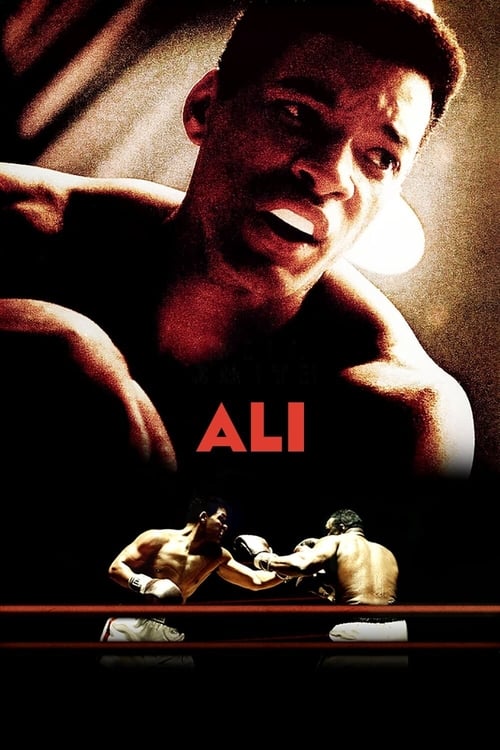
Ali (2001)
Directed by Michael Mann
Yes — Ali is woke, scoring 60 out of 100 on our wokeness meter.
Michael Mann's Ali covers ten years in the life of Muhammad Ali, from the 1964 upset over Sonny Liston to the Rumble in the Jungle a decade later.
Consciousness Markers
The film is deeply engaged with Black identity, the Nation of Islam, civil rights, and Ali's anti-racist and anti-colonial politics.
A major studio biopic centered on a Black icon with a predominantly Black cast, though the representation is historically inherent rather than a modern casting statement.
The film includes political speeches and didactic moments, but they are woven into the drama rather than delivered as modern moral instruction.
Women are present as wives and romantic interests, with brief moments of independence, but the film remains a male-centric sports biopic.
A straightforward historical biopic that dramatizes real events without reinterpreting them through a modern social justice lens.
No LGBTQ+ characters, themes, or subtext appear in the film.
No environmental or climate-related themes are present.
The film does not critique capitalism or wealth inequality as a central or secondary concern.
No body positivity themes or messaging are present.
No neurodivergent characters or themes are depicted.
Why it received this score
Michael Mann's Ali covers ten years in the life of Muhammad Ali, from the 1964 upset over Sonny Liston to the Rumble in the Jungle a decade later. Will Smith put on weight and learned to box, and the fight sequences use actual heavyweight fighters instead of the usual cinematic sleight of hand. The result is a somber, patient film. Roger Ebert called it a eulogy, and he was not wrong. Mann's camera lingers on the man's isolation more than on his wit.
The political material is substantial, and it belongs to the subject. The Nation of Islam, Malcolm X, the refusal of conscription, the stripping of the title, the years away from the ring, the journey to Kinshasa and the presence of Mobutu: this is the historical record, dramatized with care. The cast is largely Black because the story requires it, not because a studio issued a memo. Women appear as wives and romantic interests, Sonji Roi, Belinda Boyd, Veronica Porché, and they occasionally push back, though the film's attention never leaves its subject. There is no engagement with queer life, environmental anxiety, body image, neurodivergence, or the sins of capital. Ali's objection to the war was theological and anti-colonial, not economic.
The speeches are Ali's own, delivered as dialogue, so the sermonizing never arrives from the present day. The film dramatizes events without refashioning them for contemporary instruction. It cost a great deal and earned back very little. A solemn monument, then, and monuments have their place.
Analysis generated by our Consciousness Algorithm


Synopsis
In 1964, a brash, new pro boxer, fresh from his Olympic gold medal victory, explodes onto the scene: Cassius Clay. Bold and outspoken, he cuts an entirely new image for African Americans in sport with his proud public self-confidence and his unapologetic belief that he is the greatest boxer of all time. Yet at the top of his game, both Ali's personal and professional lives face the ultimate test.
Questions about Ali
Is Ali woke?
Yes — Ali is woke, scoring 60 out of 100 on our wokeness meter. That earns it a verdict of Woke.
What makes Ali woke?
2 of the 10 markers register at 30 or above, led by Racial Consciousness (85) and Representation Casting (70). On Racial Consciousness: The film is deeply engaged with Black identity, the Nation of Islam, civil rights, and Ali's anti-racist and anti-colonial politics.
How does Ali compare to other 2001 movies?
It is the wokest of the 148 films from 2001 we've scored; their average is 12.
How is the Woke Score calculated?
An AI-assisted process researches the film and its reception, scores it 0–100 on ten markers, then combines those into one 0–100 Woke Score. It measures a specific set of 2020s cultural themes, not film quality.