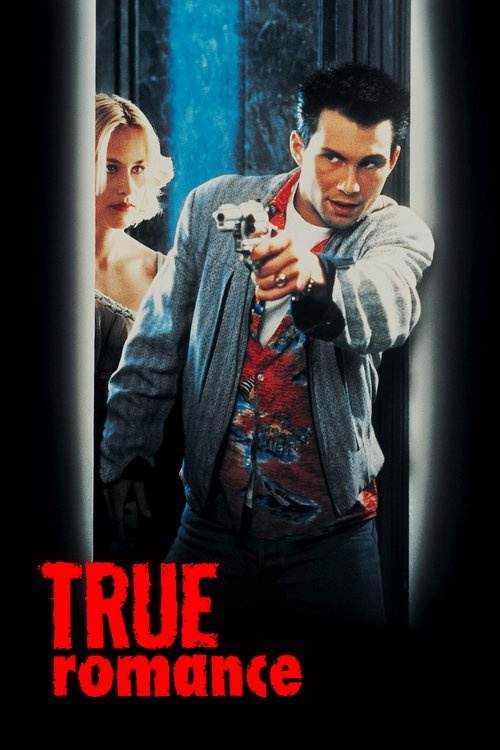
True Romance (1993)
Directed by Tony Scott
No — True Romance is not woke, scoring 6 out of 100 on our wokeness meter.
True Romance arrives from 1993, which is to say from a period when a screenplay could still concern a comic book clerk and a call girl driving a stolen suitcase of cocaine across the country without anyone feeling obliged to append a thesis to it.
Consciousness Markers
Alabama is a resourceful, resilient character who violently dispatches an enforcer, but the film frames her primarily through Clarence's romantic gaze and the 'hooker with a heart of gold' trope rather than any feminist thesis.
The infamous 'Sicilian scene' deploys racial provocation as a suicide-by-cop tactic, but this is inflammatory dialogue, not progressive racial consciousness or commentary.
The cast is overwhelmingly white, with Samuel L. Jackson in a brief supporting role and no deliberate diversity casting agenda. Minority presence is incidental rather than curated.
Tarantino's dialogue is pop-culture-dense and stylized but never preachy or moralizing; the film is gleefully amoral by design.
Drug dealing and a Hollywood producer appear as plot machinery, but the film carries no anti-capitalist or eat-the-rich messaging.
No LGBTQ+ characters, themes, or subtext of any kind appear in the film.
No environmental or climate themes whatsoever.
No body positivity themes; the film trades heavily on conventional sexualized imagery of its female lead.
No neurodivergence themes or characters.
A wholly fictional crime romance with no historical revisionism.
Why it received this score
True Romance arrives from 1993, which is to say from a period when a screenplay could still concern a comic book clerk and a call girl driving a stolen suitcase of cocaine across the country without anyone feeling obliged to append a thesis to it. Tony Scott directs Quentin Tarantino's script with his customary lacquered sheen, all slow motion and sunset orange, and the result treats amorality as a decorative finish. Clarence and Alabama are newlyweds. They are also felons. The movie never apologizes for the second fact and never congratulates itself for the first.
Alabama is the nearest thing here to a figure of empowerment. She stabs an enforcer with a corkscrew, sets his face alight with hairspray, and finishes him with his own shotgun. The camera, however, is Clarence's camera, and the film regards her through the soft focus of romantic possession, which places her squarely within the hooker-with-a-heart-of-gold lineage instead of any argument about her independence. Elsewhere the picture is cheerfully indifferent to matters of identity. Samuel L. Jackson appears briefly as a hood and vanishes. The cast is white, the sensibility is white, and nobody involved seems to have treated this as a problem requiring a solution. The Sicilian monologue between Hopper and Walken deploys racial invective as a suicide tactic, which is inflammatory, not instructive.
The film's politics, such as they exist, amount to a leer and a shrug. Hollywood producers and pimps are targets of violence, not of critique. There is no environmental sermon, no advocacy of any kind, no lesson attached. It is a love story with a body count, propelled by needle drops and pop trivia. Weighed against the contemporary appetite for instruction, its refusal to teach anything reads as almost antique.
Analysis generated by our Consciousness Algorithm


Synopsis
Clarence marries hooker Alabama, steals cocaine from her pimp, and tries to sell it in Hollywood, while the owners of the coke try to reclaim it.
Questions about True Romance
Is True Romance woke?
No — True Romance is not woke, scoring 6 out of 100 on our wokeness meter. That earns it a verdict of Ultra Based.
Does True Romance have any woke elements?
Very few. None of the 10 markers reaches 30, the level where a marker counts as present; the highest is Feminist Agenda at 12.
How does True Romance compare to other 1993 movies?
It ranks #48 of the 97 films from 1993 we've scored; their average is 11. The wokest is Bound by Honor (60).
How is the Woke Score calculated?
An AI-assisted process researches the film and its reception, scores it 0–100 on ten markers, then combines those into one 0–100 Woke Score. It measures a specific set of 2020s cultural themes, not film quality.