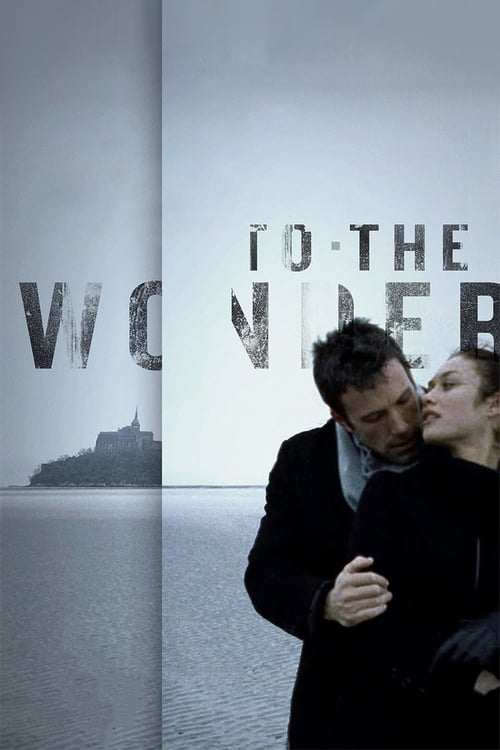
To the Wonder (2013)
Directed by Terrence Malick
No — To the Wonder is not woke, scoring 12 out of 100 on our wokeness meter.
The cinema of Terrence Malick has, over the decades, settled into a dependable mode: whispery voice-over, fields of wheat, and unhappy people rotating slowly against a sunset.
Consciousness Markers
The film is highly philosophical and spiritual, featuring intense monologues, but this is spiritual guidance, not a modern, didactic social justice lecture.
The film touches upon economic hardship, such as Jane's bankrupt farm, but this is used as a backdrop for spiritual struggle, not a direct political critique of capitalism.
Marina is an independent woman navigating complex life choices, but the film frames her journey through spiritual and romantic lenses rather than a modern feminist political lens.
The film features a diverse international cast, but the focus remains on existential crises rather than specific modern representation quotas or narratives.
There are no explicit or implied LGBTQ+ themes or relationships present in the narrative.
The film does not engage with specific racial dynamics or systemic issues of race.
While Neil works as an environmental inspector, this is a minor plot detail and not a central thematic focus or 'crusade.'
There is no commentary or focus on body image or diverse body types.
No characters exhibit traits or diagnoses related to neurodivergence.
The film is a fictional, semi-autobiographical drama and does not challenge established historical facts.
Why it received this score
The cinema of Terrence Malick has, over the decades, settled into a dependable mode: whispery voice-over, fields of wheat, and unhappy people rotating slowly against a sunset. To the Wonder, his 2012 offering, supplies all three in abundance. Ben Affleck, an actor not usually cast for interiority, drifts through Oklahoma as an environmental inspector, an occupation that sounds like the setup for a crusade and turns out to be a job. Olga Kurylenko spins through the grass. Rachel McAdams minds a failing farm. Javier Bardem, a priest in the grip of doubt, stares at the poor and wonders where God went. What we have is a love triangle rendered as a shrug.
A lesser film might have converted the environmental inspector into a sermon about the planet. This one uses the job to look at dirt. The bankrupt farm is a plot fact, not a thesis about capital. The cast is international by accident of romance, not by design. There is no racial reckoning, no examination of the body, no diagnosis of the mind, no revision of the historical record. Marina is a woman with her own money and her own visa troubles, and the film treats her as a soul in transit, not a case study. The nearest thing to a political position here is a serene indifference to politics.
What the film does possess, in quantity, is talk. Characters murmur about love, God, and the failure of both, frequently while walking backward into the camera. A priest addressing the imprisoned is not delivering a lecture on social justice. He is delivering a homily, and the distinction matters for the ledger. The result is a work of enormous spiritual ambition and almost no contemporary urgency. It wants to know whether grace exists. It does not want to know your pronoun. That is either a limitation or a relief, depending on the viewer, and the classification reflects the former.
Analysis generated by our Consciousness Algorithm


Synopsis
Neil is torn between two loves: Marina, the European woman who comes to the United States to be with him, and Jane, the old flame from his hometown he reconnects with. Neil’s doubts about his life and loves are reflected in the crisis of faith experienced by Father Quintana, who only sees pain and the loss of hope in the world.
Questions about To the Wonder
Is To the Wonder woke?
No — To the Wonder is not woke, scoring 12 out of 100 on our wokeness meter. That earns it a verdict of Ultra Based.
Does To the Wonder have any woke elements?
1 of the 10 markers register at 30 or above, led by Lecture Energy (30). On Lecture Energy: The film is highly philosophical and spiritual, featuring intense monologues, but this is spiritual guidance, not a modern, didactic social justice lecture.
How does To the Wonder compare to other 2013 movies?
It ranks #104 of the 274 films from 2013 we've scored; their average is 14. The wokest is Belle (76).
How is the Woke Score calculated?
An AI-assisted process researches the film and its reception, scores it 0–100 on ten markers, then combines those into one 0–100 Woke Score. It measures a specific set of 2020s cultural themes, not film quality.