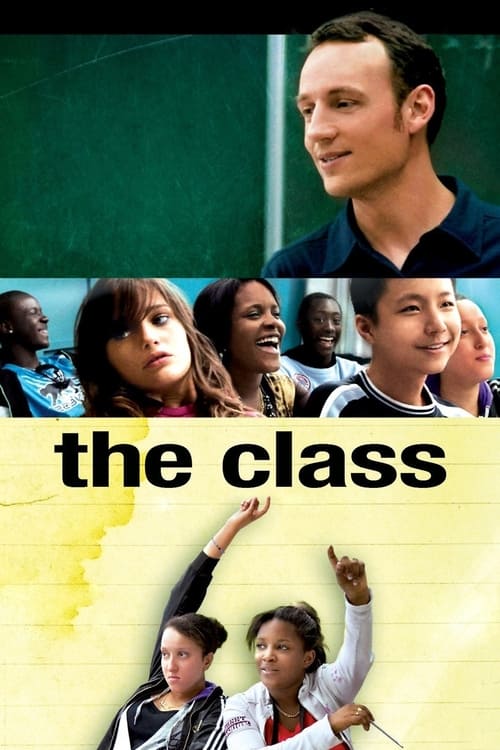
The Class (2008)
Directed by Laurent Cantet
Yes — The Class is woke, scoring 60 out of 100 on our wokeness meter.
The Class arrives with a Palme d'Or and a documentary-like patience, a combination that usually sends a critic reaching for the thesaurus.
Consciousness Markers
Race, immigration, and French multicultural identity are central to the film's classroom debates and social dynamics, making racial consciousness a major theme.
The cast is largely composed of non-professional actors from diverse immigrant backgrounds, authentically reflecting the racial and ethnic makeup of a Parisian inner-city classroom.
The film is dialogue-driven and set in a classroom, with debates about education and society, but it remains observational rather than preachy.
The film includes assertive female students and touches on gender dynamics, but it does not advance a feminist agenda or critique patriarchy.
The film depicts social inequality and deprived backgrounds, but it does not critique capitalism or advocate for wealth redistribution.
A single student briefly questions whether the teacher is gay, but this is a passing moment with no exploration of LGBTQ+ themes or identities.
There is no engagement with climate change or environmental themes.
No body positivity themes are present.
No neurodivergence themes are present.
The film is a contemporary portrait and does not revise or reinterpret historical narratives.
Why it received this score
The Class arrives with a Palme d'Or and a documentary-like patience, a combination that usually sends a critic reaching for the thesaurus. Here the restraint is earned. Laurent Cantet keeps his camera inside a Parisian middle school classroom and lets the year unfold through argument, fatigue, and small breaches of trust. The cast is largely made up of nonprofessional students from immigrant backgrounds, and their presence gives the film an authenticity that no amount of careful scripting could manufacture. This is representation as texture, not as a badge.
Race and immigration are not decorative themes in this room. They are the daily weather. The students debate Anne Frank, national identity, Mali, and the authority of a teacher who means well and stumbles anyway. The film watches him fumble with a skepticism that feels bracing. His leftist instincts are neither saintly nor useless, just human and insufficient. Female students are assertive and complicated, especially Esmeralda, but the film does not organize itself around a critique of patriarchy. A brief question about the teacher's sexuality passes through the room and vanishes. That is adolescent noise, not an investigation of LGBTQ+ life.
For a film set in a classroom, it is remarkably free of sermonizing. The arguments are messy and unresolved, and the camera mostly sits still and lets them play. Poverty and social deprivation are present, but the film avoids economic preaching. Its concerns are local and institutional, not planetary or therapeutic. There is no climate crusade, no body-positive subplot, no neurodivergence arc, and no revisionist history. The result is a serious, unsentimental portrait of French education, and it earns its gravity without raising its voice.
Analysis generated by our Consciousness Algorithm


Synopsis
Teacher and novelist François Bégaudeau plays a version of himself as he negotiates a year with his racially mixed students from a tough Parisian neighborhood.
Questions about The Class
Is The Class woke?
Yes — The Class is woke, scoring 60 out of 100 on our wokeness meter. That earns it a verdict of Woke.
What makes The Class woke?
2 of the 10 markers register at 30 or above, led by Racial Consciousness (80) and Representation Casting (75). On Racial Consciousness: Race, immigration, and French multicultural identity are central to the film's classroom debates and social dynamics, making racial consciousness a major theme.
How does The Class compare to other 2008 movies?
It ranks #2 of the 212 films from 2008 we've scored; their average is 12. The wokest is Milk (68).
How is the Woke Score calculated?
An AI-assisted process researches the film and its reception, scores it 0–100 on ten markers, then combines those into one 0–100 Woke Score. It measures a specific set of 2020s cultural themes, not film quality.