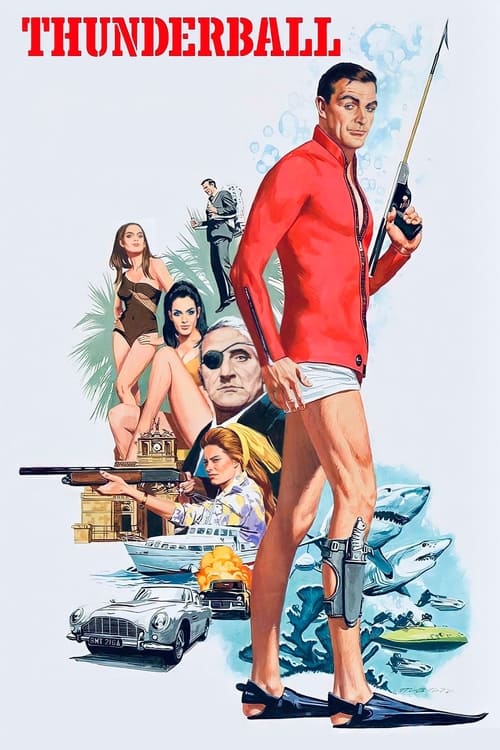
Thunderball (1965)
Directed by Terence Young
No — Thunderball is not woke, scoring 0 out of 100 on our wokeness meter.
Thunderball (1965) is a spy film about stolen atomic bombs, a ransom in diamonds, and a great deal of underwater combat in the Bahamas.
Consciousness Markers
The cast is largely white and European, with Earl Cameron as Pinder in a role naturally fitting the Bahamian setting; no deliberate progressive or color-conscious casting agenda is present.
No LGBTQ+ characters, relationships, or themes appear in the film.
Female characters are primarily Bond girls and femme fatales within a traditionally sexist 1960s spy framework; no feminist critique or agenda is advanced.
The film does not engage with racial inequality, identity, or social justice themes.
No environmental or climate-related themes are present.
The villains are criminals seeking ransom, not a critique of capitalism or wealth inequality; Bond is an establishment agent.
No body positivity themes or diverse body representation are present.
No neurodivergent characters or themes are depicted.
The film is a fictional spy adventure and does not revise or reinterpret historical events.
The film is an action thriller with no preachy or didactic social messaging.
Why it received this score
Thunderball (1965) is a spy film about stolen atomic bombs, a ransom in diamonds, and a great deal of underwater combat in the Bahamas. Its concerns are operational: retrieve the weapons, defeat SPECTRE, and preserve a certain British composure under pressure. No modern social agenda intrudes. The cast is European and white, with Earl Cameron as Pinder, a Bahamian intelligence contact whose presence is dictated by setting, not by a casting initiative. Women are Bond girls and femme fatales, regarded with the unexamined appetite of the era. There are no LGBTQ themes, no racial consciousness, no climate crusade.
The villain wants diamonds, not a restructuring of wealth. Bond works for the establishment, and the film treats MI6 as a necessary instrument of order. No anti-capitalist allegory, no body-positivity message, no neurodivergent character arc. The history is fictional and revises nothing. The energy is action, not lecture. The film does not pause to instruct us on how to live. The underwater sequences are long, the sharks are real, and the moral universe is simple.
To classify Thunderball by contemporary progressive sensibilities is to find nothing. That is not a deficiency. It is a historical fact. The film was made for audiences who wanted danger, gadgetry, and a hero who prevails. It offers no sermon, no consciousness-raising, no corrective to the past. A sommelier of such vintages would note the absence of modern tannins. The ledger is empty. Thunderball remains a well-made machine of escape, and it has no interest in being anything else.
Analysis generated by our Consciousness Algorithm
Part of


Synopsis
A criminal organization has obtained two nuclear bombs and are asking for a 100 million pound ransom in the form of diamonds in seven days or they will use the weapons. The secret service sends James Bond to the Bahamas to once again save the world.
Questions about Thunderball
Is Thunderball woke?
No — Thunderball is not woke, scoring 0 out of 100 on our wokeness meter. That earns it a verdict of Ultra Based.
Does Thunderball have any woke elements?
No. All 10 markers score zero.
How does Thunderball compare to other 1965 movies?
It ranks #10 of the 14 films from 1965 we've scored; their average is 4. The wokest is A Charlie Brown Christmas (25).
Is Thunderball the most woke James Bond movie?
No. It ranks #26 of the 26 James Bond films we've scored; the wokest is No Time to Die (42).