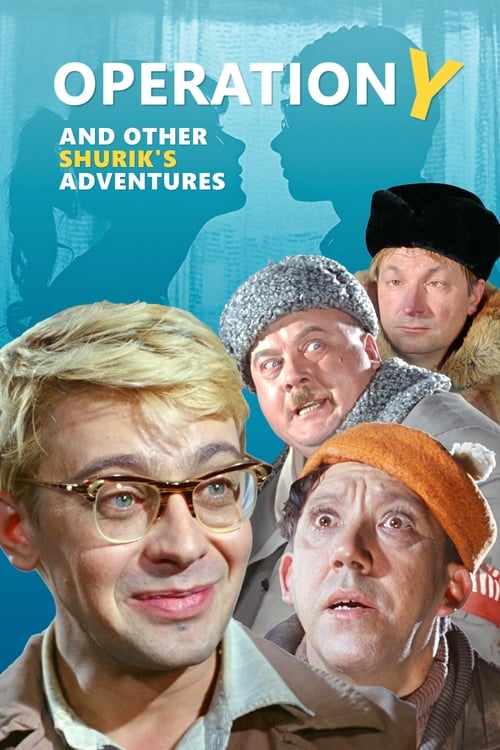
Operation Y and Other Shurik's Adventures (1965)
Directed by Leonid Gaidai
No — Operation Y and Other Shurik's Adventures is not woke, scoring 5 out of 100 on our wokeness meter.
Operation Y and Other Shurik's Adventures arrives from 1965, a Mosfilm production in three movements, and it submits itself to our classification apparatus with the hopeful air of a picture that assumes it will be let off lightly.
Consciousness Markers
The 'Workmate' segment's reeducation of a shirking laborer and the warehouse-manager's embezzlement carry faint Soviet-era class-of-labor framing, but this is bureaucratic satire, not a modern eat-the-rich polemic.
A pregnant woman is given a seat and Lida is a capable student, but these are incidental gags and plot mechanics, not a feminist thesis. The camera's treatment of Lida undressing unaware is played for slapstick, not empowerment.
A pure slapstick anthology with no didactic or preachy register; the moral lessons (don't be a boor, don't cheat) are delivered through pratfalls, not lectures.
A 1965 Soviet ensemble comedy cast entirely from the Mosfilm stable; ethnic variety exists incidentally but there is no modern representation-casting intent. Notably, the film retains a scene of Aleksei Smirnov in blackface that the art council wanted cut, which runs against the marker rather than for it.
No LGBTQ+ characters, themes, or subtext of any kind appear across the three segments.
No engagement with racial consciousness or racial justice themes; the blackface gag is a period artifact rather than a commentary.
No environmental or climate themes whatsoever.
No body-positivity themes; physical comedy relies on conventional slapstick rather than body acceptance messaging.
Shurik is characterized as naive, bespectacled, and awkward, but this is comedic archetype rather than any depiction of neurodivergence.
The film is a straightforward period comedy with no revisionist reframing of history.
Why it received this score
Operation Y and Other Shurik's Adventures arrives from 1965, a Mosfilm production in three movements, and it submits itself to our classification apparatus with the hopeful air of a picture that assumes it will be let off lightly. It was the most watched Soviet film of its year, some 69.6 million tickets, and it endures on the strength of Aleksandr Demyanenko's performance as a bespectacled student who drifts through a bus, a university, and a warehouse with the serene confidence of a man who has never been informed that he is in a comedy. The three segments are brisk, physical, and largely wordless in their best passages.
The film's progressive credentials are, to be generous, vestigial. A pregnant woman receives a seat through Shurik's deception of a drunkard, which registers as common decency and a pretext for a brawl. A shirking laborer is reeducated at a construction site, and a warehouse manager embezzles to disguise his thefts. The Soviet framing of labor and larceny is present, but it is bureaucratic satire aimed at shirkers and crooks, not a modern indictment of wealth. The art council requested the removal of a scene in which Aleksei Smirnov appears in blackface. The request was denied, and the footage survives, which places the film at a measurable distance from contemporary casting sensibilities.
Elsewhere the ledger is empty. No LGBTQ+ presence of any kind. No environmental theme, no body-acceptance messaging, no neurodivergent reading that survives contact with the text, since Shurik is a comedic archetype and not a diagnosis. There is no revisionist reframing of history and no sermonizing, because Gaidai delivers his morals through pratfalls and a warehouse brawl conducted with musical instruments and rapiers. This is a film that wants nothing from its audience but laughter, and it gets it. Viewed from the present, that restraint reads almost as an achievement.
Analysis generated by our Consciousness Algorithm
Synopsis
The film consists of three independent parts: "Workmate", "Déjà vu" and "Operation Y". The plot follows the adventures of Shurik, the naive and nerdy Soviet student who often gets into ludicrous situations but always finds a way out very neatly.
Questions about Operation Y and Other Shurik's Adventures
Is Operation Y and Other Shurik's Adventures woke?
No — Operation Y and Other Shurik's Adventures is not woke, scoring 5 out of 100 on our wokeness meter. That earns it a verdict of Ultra Based.
Does Operation Y and Other Shurik's Adventures have any woke elements?
Very few. None of the 10 markers reaches 30, the level where a marker counts as present; the highest is Eat the Rich at 10.
How does Operation Y and Other Shurik's Adventures compare to other 1965 movies?
It ranks #3 of the 14 films from 1965 we've scored; their average is 4. The wokest is A Charlie Brown Christmas (25).
How is the Woke Score calculated?
An AI-assisted process researches the film and its reception, scores it 0–100 on ten markers, then combines those into one 0–100 Woke Score. It measures a specific set of 2020s cultural themes, not film quality.