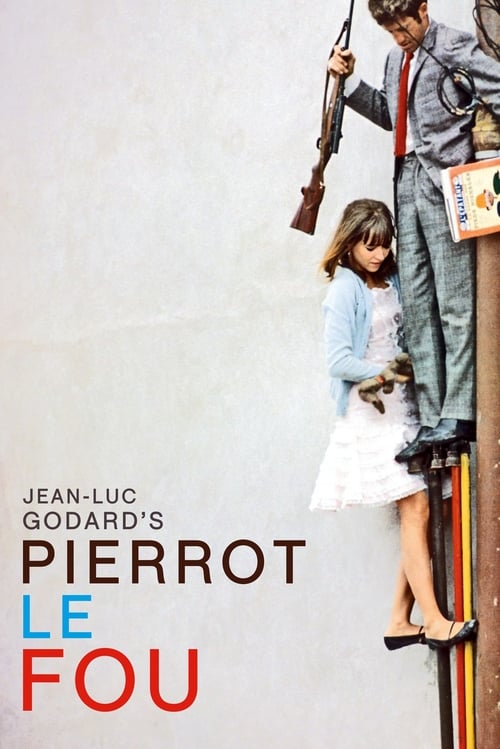
Pierrot le Fou (1965)
Directed by Jean-Luc Godard
No · Ultra Based
How we score movies →Consciousness Markers
The protagonist's rejection of bourgeois society suggests anti-establishment sentiment, but this operates on an existential rather than systemic level and lacks ideological coherence.
Marianne possesses agency and intelligence, but remains positioned within a male-centered narrative focused on the protagonist's self-discovery and existential journey.
While the film features a female lead, she is portrayed as mysterious and ultimately as an object of male fascination rather than as a fully autonomous subject with her own narrative arc.
References to Algerian hit-men reflect 1960s geopolitical anxieties but contain no meaningful engagement with race or postcolonial critique.
Godard's formal experimentation and self-conscious cinema create a preachy quality, but this serves avant-garde artistic goals rather than social justice pedagogy.
The film is a heterosexual romance with no LGBTQ+ themes or representation.
Climate themes are entirely absent from this 1965 film.
Body positivity as a contemporary cultural movement does not apply to a 1965 film.
No representation of or engagement with neurodivergence.
The film does not attempt to rewrite or reexamine historical narratives.


Synopsis
Pierrot escapes his boring society and travels from Paris to the Mediterranean Sea with Marianne, a girl chased by hit-men from Algeria. They lead an unorthodox life, always on the run.
Why it received this score
Pierrot le Fou stands as a monument to 1960s formal experimentation, a film concerned primarily with the mechanics of cinema and the aesthetics of rebellion rather than with any systematic engagement with contemporary social justice frameworks. Jean-Luc Godard's protagonist abandons his bourgeois existence for romantic adventure, a gesture toward individualistic freedom that predates the specific cultural movements we now recognize as markers of progressive consciousness. The film's treatment of its female lead, while granting her agency within the narrative, ultimately positions her as a catalyst for the male protagonist's self-discovery.
The film operates within the existential and absurdist sensibilities of its era. Godard's famous distrust of conventional narrative serves his formal ambitions, not any desire to center marginalized perspectives or interrogate systemic inequality. References to Algerian pursuers reflect the geopolitical anxieties of post-colonial France, but the film makes no attempt to examine these tensions through a lens of racial consciousness or postcolonial critique. The work remains apolitical in the contemporary sense, despite its surface rejection of bourgeois conformity.
What we encounter here is a film of undeniable artistic importance that operates entirely outside the vocabulary of 2020s social consciousness. Godard's later work would embrace more overtly political engagement, but Pierrot le Fou remains a product of its moment, concerned with cinema itself rather than with the constellation of cultural markers that define modern progressive sensibility. It is a masterpiece that simply does not register on the contemporary scale of cultural awareness.
Analysis generated by our Consciousness Algorithm
Critic Reviews
“Every time I review a film by Jean-Luc Godard, I receive outraged letters from readers who hated it.”
“Some of them work better than others -- no wonder, for he was experimenting with all of cinema's possibilities -- but many are masterpieces, and Pierrot is the crown jewel. In many respects, Pierrot is flawless. In all others, it remains great art.”
“Discover reviews, ratings, and trailers for Pierrot le Fou on Rotten Tomatoes. Stay updated with critic and audience scores today!”
“At its core, Pierrot le Fou is a desperate quest for liberation from the human condition, and the methods used by the avant-garde director explore the possibilities of the cinematic medium once it is liberated from the tyrannical rules that govern it.”