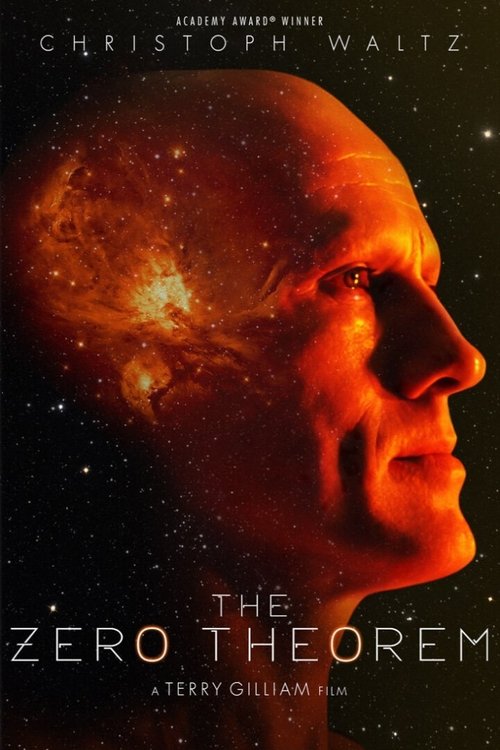
The Zero Theorem (2013)
Directed by Terry Gilliam
No — The Zero Theorem is not especially woke, scoring 31 out of 100 on our wokeness meter.
Terry Gilliam returns to the dystopian territory he has mined before, and The Zero Theorem arrives with the familiar furniture: garish future architecture, oppressive bureaucracy, a lone man ground down by the machinery of commerce.
Consciousness Markers
The film strongly critiques corporate control, meaningless labor, surveillance, and Management's plan to profit from universal chaos.
The film is philosophical and satirical about meaning, faith, and corporate nihilism, but delivers its ideas through surreal narrative rather than direct preaching.
Qohen's eccentricity, social withdrawal, plural self-reference, AI therapy, and delusions are central, but not framed as modern neurodivergence advocacy.
Gilliam's casting of Mélanie Thierry for a 'real body' versus manufactured Hollywood bodies is a production-level gesture, but the film does not thematically explore body positivity.
Bainsley is a sexualized femme fatale and love interest; the film offers no feminist critique or agenda.
The cast is predominantly white with one minor South Asian actor; no deliberate diverse casting or commentary is present.
There are no LGBTQ+ themes, characters, or subtext in the film.
Race is not a thematic concern, and no racial consciousness is explored.
Dystopian pollution appears as background texture, not as a climate crusade or environmental message.
The film is not based on historical events and offers no revisionist historical narrative.
Why it received this score
Terry Gilliam returns to the dystopian territory he has mined before, and The Zero Theorem arrives with the familiar furniture: garish future architecture, oppressive bureaucracy, a lone man ground down by the machinery of commerce. Christoph Waltz plays Qohen Leth, a programmer who refers to himself in the plural and waits by a phone for a call that will explain his existence. The corporation that employs him wants a formula proving that life is meaningless, because it intends to sell that conclusion to a waiting market. The film's contempt for corporate nihilism drives everything, and it makes no effort to hide the target. Management is a man in a suit who profits from chaos. The critique lands squarely.
Gilliam delivers his ideas through a fever dream of virtual beaches, black holes, and a talking AI therapist voiced by Tilda Swinton. The result is philosophical without being preachy, a meditation on faith and meaning that trusts its grotesque imagery to carry the argument. Qohen's oddities (his plural speech, his withdrawal, his imaginary afflictions) sit at the center of the story, though the film treats them as spiritual symptoms, not as a condition to be diagnosed and accommodated. This is a portrait of a man broken by work, not a case study.
The women fare worse. Bainsley exists to be looked at, a femme fatale in a latex nurse's uniform who is paid to seduce the protagonist and later revealed as a webcam performer. The film offers no critique of this arrangement. Gilliam made a small production gesture, casting Mélanie Thierry against the pressure to hire a trimmed American actress, and he spoke of wanting a real body on screen. That is a casting decision, not a thematic concern, and the camera's gaze remains unchanged. The result is a handsome, muddled tragedy about a man who waits for a phone call and receives a lecture from Matt Damon instead. Gilliam's defenders will find much to admire. The unconverted will check the time.
Analysis generated by our Consciousness Algorithm


Synopsis
A computer hacker's goal to discover the reason for human existence continually finds his work interrupted thanks to the Management; this time, they send a teenager and lusty love interest to distract him.
Questions about The Zero Theorem
Is The Zero Theorem woke?
No — The Zero Theorem is not especially woke, scoring 31 out of 100 on our wokeness meter. That earns it a verdict of Based.
Does The Zero Theorem have any woke elements?
2 of the 10 markers register at 30 or above, led by Eat the Rich (75) and Lecture Energy (35). On Eat the Rich: The film strongly critiques corporate control, meaningless labor, surveillance, and Management's plan to profit from universal chaos.
How does The Zero Theorem compare to other 2013 movies?
It ranks #29 of the 274 films from 2013 we've scored; their average is 14. The wokest is Belle (76).
How is the Woke Score calculated?
An AI-assisted process researches the film and its reception, scores it 0–100 on ten markers, then combines those into one 0–100 Woke Score. It measures a specific set of 2020s cultural themes, not film quality.