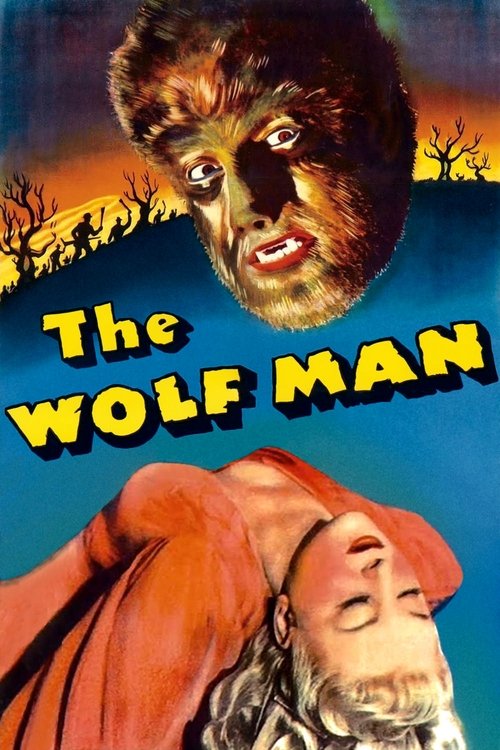
The Wolf Man (1941)
Directed by George Waggner
No — The Wolf Man is not woke, scoring 0 out of 100 on our wokeness meter.
The Wolf Man arrives from 1941 with a silver-headed cane, a Welsh village, and a fatalistic poem, and it does not trouble itself with the cultural preoccupations of a later century.
Consciousness Markers
The cast is uniformly white, with a Russian actress (Maria Ouspenskaya) cast as a Romani character — the opposite of modern representation casting. No diverse casting exists in the film.
No LGBTQ+ characters, themes, or subtext appear anywhere in the film.
Gwen is a passive romantic object relentlessly pursued by Larry, and the film's gender dynamics reflect 1941 conventions with no feminist critique.
Romani characters are depicted as exotic 'gypsies' via period stereotype rather than any racial consciousness or commentary.
No environmental or climate themes are present in this Gothic horror tale.
The film touches on aristocratic privilege but offers no critique of capitalism or economic structures.
No body positivity themes; the monstrous transformation is framed as horror, not acceptance.
Larry's condition is supernatural lycanthropy, not a depiction of neurodivergence.
The film is a fictional Gothic horror with no historical revisionism.
This is a moody monster movie with no didactic messaging or social lecturing.
Why it received this score
The Wolf Man arrives from 1941 with a silver-headed cane, a Welsh village, and a fatalistic poem, and it does not trouble itself with the cultural preoccupations of a later century. Larry Talbot returns to the family estate, pursues a woman who has already informed him she is engaged, and is bitten while rescuing her friend from a wolf. What follows is a study in atmospheric dread, not social instruction. The Romani characters exist as exotic set dressing, with a Russian actress cast as the fortune teller's mother, and the film regards them with the unexamined curiosity of its era. No corrective is offered, and none is sought.
The performances carry the enterprise. Lon Chaney Jr. lumbers through his scenes with a hangdog sorrow that makes the curse feel like an unlucky inheritance. Claude Rains, as the father, ties his grown son to a chair to prove a point about delusion, which is the sort of parenting the twentieth century produced in abundance. Evelyn Ankers has little to do but be pursued and look alarmed, which she does capably. The gender arrangements are those of the period, and the picture has no interest in interrogating them.
Here is a monster movie that means to frighten and to move, and it manages both without a single sermon. The transformation is handled with yak hair and greasepaint, and it remains more affecting than most digital efforts. We are left with a tragedy of a man undone by fate, his father's cane, and the moon. There is nothing here to instruct us. That is not a deficiency. It is simply what the picture is.
Analysis generated by our Consciousness Algorithm
Part of


Synopsis
After his brother's death, Larry Talbot returns home to his father and the family estate. Events soon take a turn for the worse when Larry is bitten by a werewolf.
Questions about The Wolf Man
Is The Wolf Man woke?
No — The Wolf Man is not woke, scoring 0 out of 100 on our wokeness meter. That earns it a verdict of Ultra Based.
Does The Wolf Man have any woke elements?
No. All 10 markers score zero.
How does The Wolf Man compare to other 1941 movies?
It ranks #5 of the 6 films from 1941 we've scored; their average is 4. The wokest is Sullivan's Travels (17).
How is the Woke Score calculated?
An AI-assisted process researches the film and its reception, scores it 0–100 on ten markers, then combines those into one 0–100 Woke Score. It measures a specific set of 2020s cultural themes, not film quality.