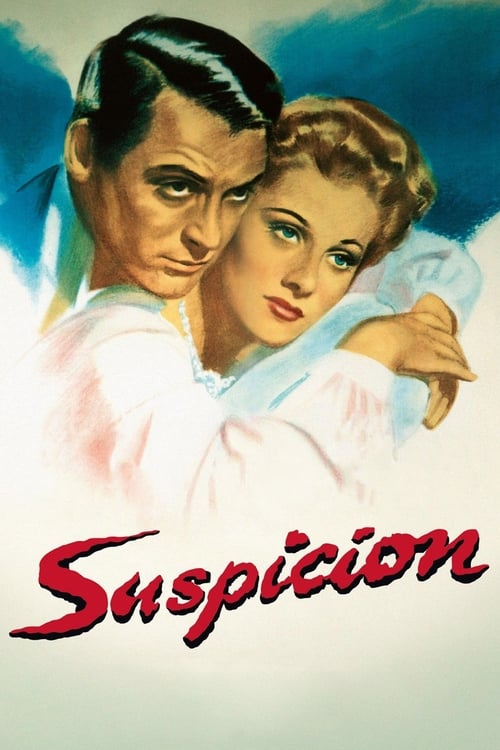
Suspicion (1941)
Directed by Alfred Hitchcock
No — Suspicion is not woke, scoring 0 out of 100 on our wokeness meter.
Alfred Hitchcock's Suspicion arrives from 1941 with a premise that has aged better than most of its contemporaries: a sheltered heiress, Lina McLaidlaw, marries a charming gambler named Johnnie Aysgarth, then spends the rest of the picture wondering whether he intends to murder her.
Consciousness Markers
All principal and supporting roles are played by white actors; the film predates modern diversity-conscious casting.
No LGBTQ+ characters, relationships, or themes appear in the film.
The film centers on a female protagonist, but it does not advance a modern feminist agenda or critique patriarchal structures.
No engagement with racial issues, racial identity, or racial consciousness.
No environmental or climate-related themes are present.
While it depicts a wastrel husband and financial deceit, it does not critique capitalism or wealth inequality as a system.
No body-positive themes or diverse body representations.
No neurodivergent characters or themes are present.
A period psychological thriller, not a work of historical revisionism.
No preachy or didactic messaging; the film operates as suspense entertainment.
Why it received this score
Alfred Hitchcock's Suspicion arrives from 1941 with a premise that has aged better than most of its contemporaries: a sheltered heiress, Lina McLaidlaw, marries a charming gambler named Johnnie Aysgarth, then spends the rest of the picture wondering whether he intends to murder her. Joan Fontaine won an Academy Award for the performance, the only acting Oscar ever awarded to a Hitchcock film, and the achievement holds up. She plays suspicion as a slow physical ailment, something that settles in the shoulders before it reaches the mind. Cary Grant weaponizes his own likability, which is the entire trick. The audience wants to trust him because the studio trained us to. That tension is the film's engine, and it runs clean.
The notorious problem is the ending. Francis Iles wrote a novel in which the husband is plainly guilty and the wife drinks the poison anyway. RKO, protective of its star's heroic image, demanded something softer. Hitchcock spent the rest of his life grumbling about it, though Donald Spoto has argued the director's fingerprints were on the compromise from the start. What survives is ambiguity: a glass of glowing milk, a reckless drive along a cliff, a confession that may or may not be true. The result is a thriller that ends not with resolution but with a shrug, elegant and unresolved.
From the vantage of contemporary cultural taxonomy, the picture offers almost nothing to file under modern social consciousness. The cast is uniformly white, the concerns are marital and financial, and the moral universe is one of private suspicion instead of systemic critique. There is no sermon here, no lesson appended to the suspense. It is a period piece about a woman deciding whether to trust her husband, and it treats that question as sufficient. Some viewers will find the restraint refreshing. Others will find it thin. Both positions are defensible, which is the most interesting thing about it.",
Analysis generated by our Consciousness Algorithm


Synopsis
A sheltered heiress falls for a charming playboy and elopes with him, but soon discovers his gambling vice and mounting debts. As his lies deepen and those around them meet mysterious ends, she begins to suspect that her husband’s affection may conceal a deadly motive—and that she could be his next victim.
Questions about Suspicion
Is Suspicion woke?
No — Suspicion is not woke, scoring 0 out of 100 on our wokeness meter. That earns it a verdict of Ultra Based.
Does Suspicion have any woke elements?
No. All 10 markers score zero.
How does Suspicion compare to other 1941 movies?
It ranks #5 of the 6 films from 1941 we've scored; their average is 4. The wokest is Sullivan's Travels (17).
How is the Woke Score calculated?
An AI-assisted process researches the film and its reception, scores it 0–100 on ten markers, then combines those into one 0–100 Woke Score. It measures a specific set of 2020s cultural themes, not film quality.