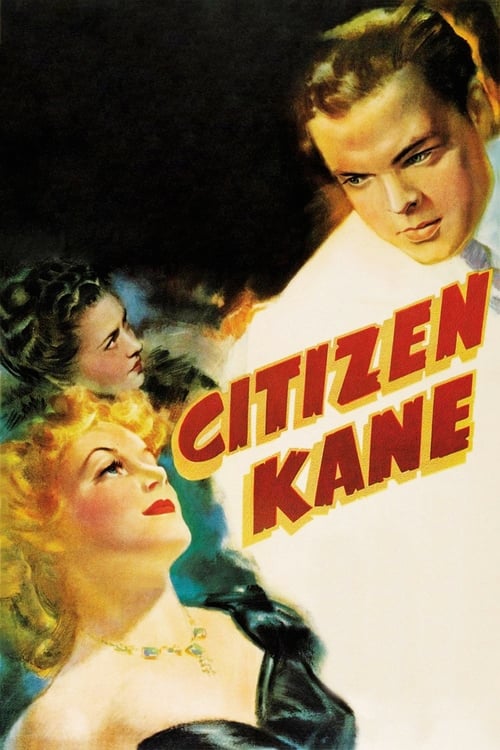
Citizen Kane (1941)
Directed by Orson Welles
No · Ultra Based
How we score movies →Consciousness Markers
The film critiques wealth accumulation and shows Kane's empire as hollow and meaningless. However, this critique predates modern anti-capitalist consciousness and operates as a humanist warning rather than a systemic indictment.
The cast is entirely white and male-centered, reflecting 1940s Hollywood norms. Women appear only as wives, mistresses, and supporting figures defined by their relationships to Kane.
While Susan Alexander's storyline shows sympathy for a woman trapped by a powerful man's desires, the film does not present a feminist critique. Women remain objects within Kane's narrative rather than agents of their own stories.
The film's moral lessons about power and corruption are woven into narrative and form rather than delivered as explicit messaging. There is some preachy quality but it remains primarily embedded in storytelling rather than overt instruction.
No examination of race or racial dynamics. The film is set in a white America and makes no acknowledgment of racial hierarchy, inequality, or the experiences of non-white Americans.
No LGBTQ+ themes, representation, or subtext. The film operates within a strictly heteronormative framework without comment or exploration.
No climate messaging or environmental consciousness. The film contains no engagement with ecological concerns or planetary themes.
No body positivity discourse or celebration of diverse body types. The film reflects standard 1940s aesthetic conventions without commentary on bodies or appearance.
No representation of neurodivergence or discussion of neurodevelopmental conditions. Kane's psychological damage is treated as character motivation rather than neurodivergent experience.
The film does not revise or reinterpret historical events. It constructs a fictional biography of a composite character based on real media barons, but does not engage in historical revisionism.


Synopsis
Newspaper magnate Charles Foster Kane is taken from his mother as a boy and made the ward of a rich industrialist. As a result, every well-meaning, tyrannical or self-destructive move he makes for the rest of his life appears in some way to be a reaction to that deeply wounding event.
Why it received this score
Citizen Kane remains a towering achievement of narrative cinema, though it arrives from a pre-woke epoch and carries the assumptions of that era like sediment in a wine glass. The film critiques wealth accumulation and media manipulation with sophistication, yet these critiques operate in a register that predates contemporary progressive consciousness. Welles examines power and its corrupting influence through the lens of personal trauma, a humanist concern that transcends the specific markers of modern social awareness.
The film's representation is entirely of its moment. The women in Kane's life serve as reflections of his desires and failures rather than autonomous figures, though Dorothy Comingore's Susan Alexander does generate sympathy as a victim of his narcissism. The cast is uniformly white, the perspective resolutely male-centered, and the moral universe populated by titans of industry and their satellites. None of this constitutes modern progressive consciousness, though the film's skepticism toward capitalist accumulation might register as vaguely compatible with anti-establishment sentiment.
What lingers about Citizen Kane, decades hence, is its formal brilliance and its recognition that power corrupts and isolates. These are enduring truths, but they belong to the tradition of humanist cinema, not to the specific constellation of progressive sensibilities that emerged in the 2020s. The film knows it is showing us something important about American society. It simply cannot know what we would later decide was important about American society.
Analysis generated by our Consciousness Algorithm
Critic Reviews
“Citizen Kane is a great motion picture. Great in that it was produced by a man who had never had any motion picture experience; great because he cast it with people who had never faced a camera in a motion picture production before; great in the manner of its story-telling, in both the writing of that story and its unfolding before a camera; great in that its photographic accomplishments are the highlights of motion picture photography to date, and finally great, because technically, it is a few steps ahead of anything that has been made in pictures before.”
“Its surface is as much fun as any movie ever made. Its depths surpass understanding. I have analyzed it a shot at a time with more than 30 groups, and together we have seen, I believe, pretty much everything that is there on the screen. The more clearly I can see its physical manifestation, the more I am stirred by its mystery.”
“Welles displays touches of genius in the handling of his story. His cast, made up of players from his Mercury Theatre group, respond like sensitive musicians to the movements of the conductor’s baton.”
“Citizen Kane does occasionally sink to dullness because of its reiterations, notwithstanding it can be classified as, in a number of aspects, one of the most arresting pictures ever produced.”