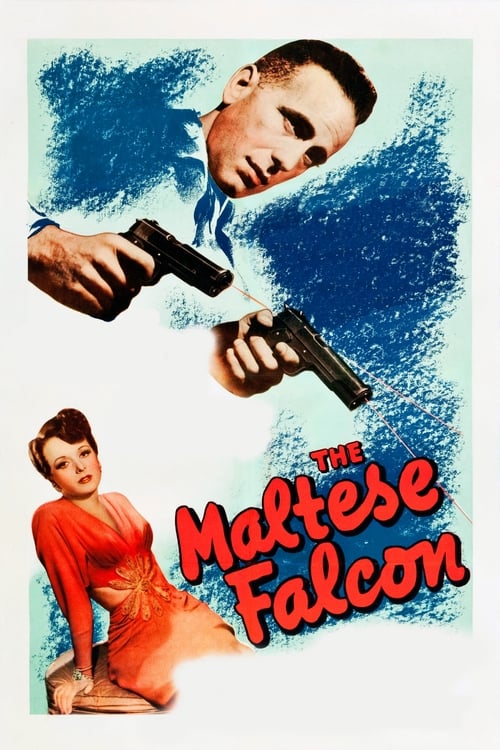
The Maltese Falcon (1941)
Directed by John Huston
No · Ultra Based
How we score movies →Consciousness Markers
The cast is entirely white and male-dominated. Female characters are present but confined to stereotypical roles as secretaries and femme fatales. No meaningful representation of any non-dominant group.
Female characters exist as manipulative objects or obstacles. Brigid is punished for her agency and deception by being handed to authorities. The narrative presents this as justice without irony.
No LGBTQ+ themes, representation, or subtext. The film operates within a strictly heteronormative framework with no acknowledgment of any alternative identities.
The film contains no racial consciousness whatsoever. Race is not addressed, acknowledged, or interrogated in any form.
Climate change and environmental concerns are entirely absent from the narrative and visual language of the film.
The film presents capitalist enterprise and profit motive as natural and unremarkable. The detective profits from his labor; crime syndicates pursue wealth. No critique is offered.
No body positivity themes are present. The film simply presents bodies as they are without commentary on beauty standards or acceptance.
No representation of neurodivergent characters or themes. The film contains no acknowledgment of autism, ADHD, mental illness, or cognitive difference.
The film contains no historical revisionism. It is a contemporary crime story with no historical pretensions.
The film maintains narrative momentum without pausing to explain or educate the audience about social issues. Dialogue serves plot and character development exclusively.


Synopsis
A private detective takes on a case that involves him with three eccentric criminals, a beautiful liar, and their quest for a priceless statuette.
Why it received this score
The Maltese Falcon stands as a monument to a cinema that operated under entirely different cultural assumptions than those of the contemporary moment. Released in 1941, John Huston's directorial debut concerns itself with narrative momentum, character intrigue, and visual composition rather than the social consciousness we might expect from a modern production. The film presents itself as a purely functional object: a detective story about morally compromised men and the women who manipulate them, executed with such confidence and style that we do not pause to examine its premises.
The female characters exist primarily as obstacles or temptations. Mary Astor's Brigid O'Shaughnessy is the classic femme fatale, a liar and seductress whose value to the narrative depends entirely on her capacity to deceive and seduce. She is punished for her agency by being turned over to the police, a resolution presented without irony or critique. The film makes no attempt at representation beyond the simple fact of Astor's presence. The supporting women are secretaries and background figures, present to reinforce the male-centered universe of the narrative.
From a contemporary vantage point, this film registers as almost completely absent of what we might call progressive sensibilities. There is no racial consciousness, no climate awareness, no disability representation, no interrogation of its own capitalist premises. The detective profits by his labor; crime syndicates operate freely; the wealthy pursue their desires without consequence. The film treats all of this as the natural order of things. This is not to diminish its artistic achievement, which remains substantial. Rather, it is to acknowledge that The Maltese Falcon is an artifact of its moment, brilliant within its own frame of reference and largely indifferent to concerns that would not become culturally legible for another seventy years.
Analysis generated by our Consciousness Algorithm
Critic Reviews
“The movie is essentially a series of conversations punctuated by brief, violent interludes. It's all style. It isn't violence or chases, but the way the actors look, move, speak and embody their characters.”
“The Maltese Falcon is an unassailable triumph of script, casting, direction and editing.”
“The film that brought the detective movie into the modern world, complete with novel film-noir techniques (shadows, low-angled shots, anti-heroes and duplicitous dames) and assembled one of the most enjoyable casts ever to play off each other.”
“The Maltese Falcon is really a triumph of casting and wonderfully suggestive character detail; the visual style, with its exaggerated vertical compositions, is striking but not particularly expressive, and its thematics are limited to intimations of absurdism (which, when they exploded in Beat the Devil, turned out to be fairly punk). But who can argue with Bogart's glower or Mary Astor in her ratty fur? ”