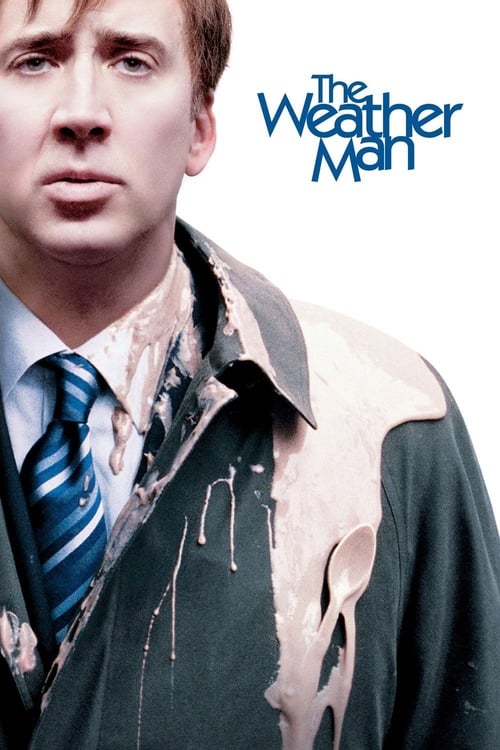
The Weather Man (2005)
Directed by Gore Verbinski
No — The Weather Man is not woke, scoring 0 out of 100 on our wokeness meter.
The Weather Man arrives from 2005, a year when a studio could still release a somber character study about a Chicago weatherman and call it a dark comedy.
Consciousness Markers
The father dispenses aphorisms about doing the hard right thing, but this is gentle humanist life advice rather than a preachy ideological sermon. The didacticism is personal, not political.
The cast is overwhelmingly white, with the sole exception of Gemmenne de la Peña as the daughter, a piece of natural casting with no commentary or agenda attached. No deliberate representation-casting effort is present.
The only vaguely related element is a subplot in which the son falsely accuses his male counselor of sexual predation, which is framed as a disturbing incident rather than any LGBTQ+ affirmation. No LGBTQ+ themes exist.
This is a male midlife-crisis character study in which women function as estranged wife and supporting figures. There is no feminist framework or critique of patriarchy.
Race is entirely absent as a subject. The film concerns a white suburban family's emotional travails with no racial consciousness whatsoever.
Despite the protagonist being a weatherman, the film has no environmental or climate-change dimension. Weather is merely a job and a metaphor for his life.
There is mild grumbling about the resentment toward his easy high-paying job, but this is personal grievance, not an anti-capitalist thesis. No eat-the-rich sentiment is articulated.
No body-positivity themes appear. Physical appearance is not a subject of the film's concerns.
No neurodivergence is depicted or discussed. The characters' struggles are framed as ordinary emotional and familial dysfunction.
The film is a work of fiction with no historical revisionism. It makes no claims about past events.
Why it received this score
The Weather Man arrives from 2005, a year when a studio could still release a somber character study about a Chicago weatherman and call it a dark comedy. Gore Verbinski directs Nicolas Cage through the familiar stations of a midlife collapse: a marriage in retreat, a father (Michael Caine) dying of lymphoma, two children he cannot reach, and a job that pays well and commands no respect. Fast food is thrown at him. He takes up archery. He flies to New York for an audition and buys his daughter a coat. The film has no thesis beyond the observation that a man can be successful and still be a disappointment.
Measured against the modern cultural ledger, this is a barren field. Race never surfaces as a subject, and the cast is a white suburban Chicago family going about its private grief. Women appear as the estranged wife and the mother, and the film has no interest in interrogating that arrangement. The weatherman premise, which a later decade would use to summon at least a passing gesture toward the climate, here serves only as a metaphor for a life of low stakes and high pay. Physical appearance, neurotype, and history are never questioned. Even the son's accusation against his school counselor is played as a family crisis, not a statement about anything.
The nearest thing to a message is Michael Caine's counsel that the harder thing and the right thing are often the same, and that nothing meaningful is easy. It is gentle paternal wisdom, delivered at a living funeral, and it asks nothing of the audience but reflection. We classify this as a film of private sorrow with no public program. Its social consciousness is nil, its cultural agenda absent, and its ambitions entirely interior. A quiet, well-acted, faintly miserable piece of work. File it under 2005 and move along.
Analysis generated by our Consciousness Algorithm
Part of


Synopsis
David Spritz, a Chicago weather man, separated from his wife and children, debates whether professional and personal success are mutually exclusive.
Questions about The Weather Man
Is The Weather Man woke?
No — The Weather Man is not woke, scoring 0 out of 100 on our wokeness meter. That earns it a verdict of Ultra Based.
Does The Weather Man have any woke elements?
Very few. None of the 10 markers reaches 30, the level where a marker counts as present; the highest is Lecture Energy at 5.
How does The Weather Man compare to other 2005 movies?
It ranks #160 of the 181 films from 2005 we've scored; their average is 13. The wokest is The Constant Gardener (72).
How is the Woke Score calculated?
An AI-assisted process researches the film and its reception, scores it 0–100 on ten markers, then combines those into one 0–100 Woke Score. It measures a specific set of 2020s cultural themes, not film quality.