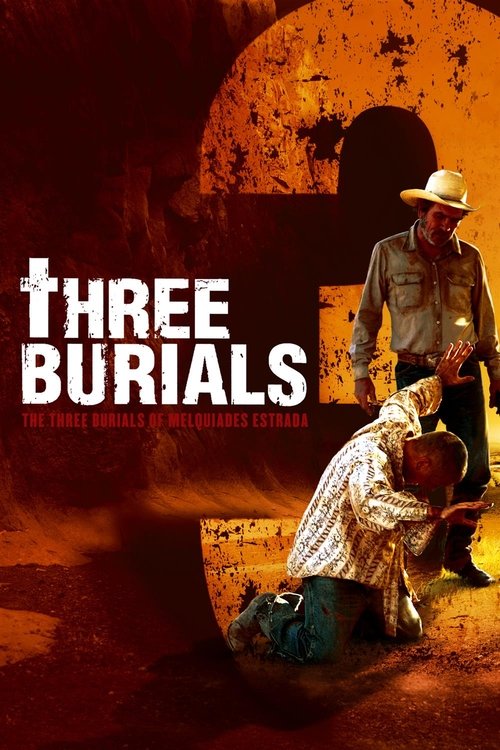
The Three Burials of Melquiades Estrada (2005)
Directed by Tommy Lee Jones
No — The Three Burials of Melquiades Estrada is not woke, scoring 15 out of 100 on our wokeness meter.
Tommy Lee Jones made his directorial debut with this 2005 neo-Western, working from a Guillermo Arriaga screenplay that takes its spine from Faulkner and its wound from a real 1997 shooting on the Texas border.
Consciousness Markers
The story centers on the killing of a Mexican immigrant by a border patrol officer and critiques border violence, but it frames this as a humanist morality tale rather than a modern racial-justice polemic.
The film features Mexican and Mexican-American actors in prominent roles, but this reflects the border setting rather than a deliberate modern diversity initiative.
The film carries a moral message about justice and redemption, but it is delivered through narrative rather than preachy lecturing.
Female characters exist but the film does not advance a feminist agenda or critique patriarchy.
No LGBTQ+ themes or characters are present.
No environmental or climate themes.
No critique of capitalism or wealth inequality.
No body positivity themes.
No neurodivergence themes.
While inspired by a real wrongful shooting, the film does not engage in ideological historical revisionism.
Why it received this score
Tommy Lee Jones made his directorial debut with this 2005 neo-Western, working from a Guillermo Arriaga screenplay that takes its spine from Faulkner and its wound from a real 1997 shooting on the Texas border. A ranch hand named Melquiades Estrada is killed by a jumpy Border Patrol officer, buried without ceremony, then disinterred by his friend Pete Perkins, who made a promise and intends to keep it. There follows a long ride into Mexico with a corpse on a mule and a captive in tow. The picture collected prizes at Cannes and generally favorable notices, which is the correct outcome for something this patient.
On the cultural ledger, the film registers lightly. Mexican and Mexican-American performers occupy substantial roles, though the border setting supplies them, not a casting initiative. The central crime is the killing of an undocumented man and a sheriff's decision to look elsewhere, which carries real weight. The film treats it as a debt between two people, not a brief against a system. Women appear throughout: a waitress, a wife who departs for Cincinnati, a healer with a coffee pot and a grievance. None of them are asked to carry an argument, and none of them do.
The moral instruction arrives by landscape and endurance. Norton is dragged across the desert, bitten by a rattlesnake, healed by a woman whose nose he once broke, and finally made to beg forgiveness over a grave he helped dig. That is a sermon, technically, but it is preached with a shovel. The film believes in justice, redemption, and the dignity of a promise. It does not believe in explaining itself. We are left with a ruined house rebuilt, a body buried three times, and a man calling after a departing horse. Modest in its cultural ambitions, firm in its grip.
Analysis generated by our Consciousness Algorithm


Synopsis
When brash Texas border officer Mike Norton wrongfully kills and buries the friend and ranch hand of Pete Perkins, the latter is reminded of a promise he made to bury his friend, Melquiades Estrada, in his Mexican home town. He kidnaps Norton and exhumes Estrada's corpse, and the odd caravan sets out on horseback for Mexico.
Questions about The Three Burials of Melquiades Estrada
Is The Three Burials of Melquiades Estrada woke?
No — The Three Burials of Melquiades Estrada is not woke, scoring 15 out of 100 on our wokeness meter. That earns it a verdict of Ultra Based.
Does The Three Burials of Melquiades Estrada have any woke elements?
2 of the 10 markers register at 30 or above, led by Racial Consciousness (35) and Representation Casting (30). On Racial Consciousness: The story centers on the killing of a Mexican immigrant by a border patrol officer and critiques border violence, but it frames this as a humanist morality tale rather than a modern racial-justice polemic.
How does The Three Burials of Melquiades Estrada compare to other 2005 movies?
It ranks #51 of the 181 films from 2005 we've scored; their average is 13. The wokest is The Constant Gardener (72).
How is the Woke Score calculated?
An AI-assisted process researches the film and its reception, scores it 0–100 on ten markers, then combines those into one 0–100 Woke Score. It measures a specific set of 2020s cultural themes, not film quality.