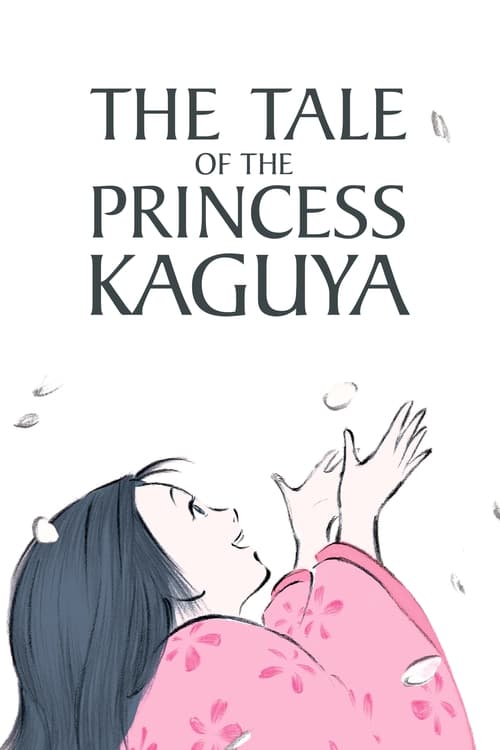
The Tale of The Princess Kaguya (2013)
Directed by Isao Takahata
No — The Tale of The Princess Kaguya is not especially woke, scoring 29 out of 100 on our wokeness meter.
The Tale of the Princess Kaguya is a hand-drawn adaptation of a tenth-century Japanese tale.
Consciousness Markers
Critics have read the film as a feminist parable: Kaguya's father forces her into noblewomanhood against her will, her mother is denied agency, and her impossible suitor-tasks function as female resistance within a male hierarchy.
The film critiques the bamboo cutter's attempt to buy nobility with gold and the partygoers' mockery of a peasant girl, framing aristocratic wealth as hollow and corrupting.
Themes of impermanence, grief, and duty are conveyed through poetic imagery and mono no aware rather than direct moralizing or preachy exposition.
An all-Japanese cast voices a Japanese folk tale; the ethnic homogeneity is culturally native rather than a deliberate diversity-casting statement.
No LGBTQ+ characters or themes appear anywhere in the narrative.
The story is set in a monoethnic Heian-era Japan with no engagement with racial identity or racial politics.
The rural-versus-palace contrast is a meditation on freedom and simplicity, not an environmentalist or climate-themed argument.
No body-positivity themes or messaging are present.
No neurodivergence themes or characters are present.
The film faithfully adapts a 10th-century literary tale rather than revising historical record for ideological ends.
Why it received this score
The Tale of the Princess Kaguya is a hand-drawn adaptation of a tenth-century Japanese tale. It does not arrive with a modern representation agenda. The Japanese cast suits a Japanese story, not a diversity mandate. There are no LGBTQ themes, no racial-consciousness subplot, no climate crusade, no body-positivity messaging, no neurodivergent characters. The film's social consciousness lives elsewhere, in the quiet cruelty of a father who decides his daughter must become a noblewoman. Her mother is pushed to the edges of that decision. Her impossible suitor tasks read as female resistance inside a male hierarchy. That feminist current is genuine, though it flows from Heian-era constraints and a girl's trapped agency, not from a contemporary slogan.
The film also has a sharp eye for aristocratic rot. The bamboo cutter uses gold and fine cloth to buy status. Partygoers mock a peasant girl dressed as nobility. Wealth is shown as hollow and corrupting. That is an anti-capitalist streak, aimed at class vanity and the cruelty of rank, not at a systemic economic treatise. The countryside and palace contrast is about freedom, simplicity, and confinement. It is not an environmental argument. Nor does the film revise history. It adapts a beloved folk tale with fidelity and lets its sorrow sit. The lecture energy stays low. Themes of impermanence, grief, and duty arrive through watercolor, silence, and mono no aware. The film never stops to explain its moral.
What remains is a serious, mournful work that refuses to turn folklore into a modern morality lesson. Its progressive sensibilities are organic and historical. They do not feel imported from a later century. The animation is exquisitely imperfect, with stray pencil lines and color bleed that make the world feel remembered instead of rendered. Princess Kaguya's final look back at Earth is devastating because the film has earned its sadness without sermonizing. Our classification apparatus finds little to flag beyond the feminist reading and the disdain for purchased nobility. We remain at our post, weary but attentive. Not every great film needs to argue with the present. Some simply break the heart and leave.
Analysis generated by our Consciousness Algorithm


Synopsis
Found inside a shining stalk of bamboo by an old bamboo cutter and his wife, a tiny girl grows rapidly into an exquisite young lady. The mysterious young princess enthrals all who encounter her. But, ultimately, she must confront her fate.
Questions about The Tale of The Princess Kaguya
Is The Tale of The Princess Kaguya woke?
No — The Tale of The Princess Kaguya is not especially woke, scoring 29 out of 100 on our wokeness meter. That earns it a verdict of Based.
Does The Tale of The Princess Kaguya have any woke elements?
2 of the 10 markers register at 30 or above, led by Feminist Agenda (50) and Eat the Rich (30). On Feminist Agenda: Critics have read the film as a feminist parable: Kaguya's father forces her into noblewomanhood against her will, her mother is denied agency, and her impossible suitor-tasks function as female resistance within a male hierarchy.
How does The Tale of The Princess Kaguya compare to other 2013 movies?
It ranks #35 of the 274 films from 2013 we've scored; their average is 14. The wokest is Belle (76).
How is the Woke Score calculated?
An AI-assisted process researches the film and its reception, scores it 0–100 on ten markers, then combines those into one 0–100 Woke Score. It measures a specific set of 2020s cultural themes, not film quality.