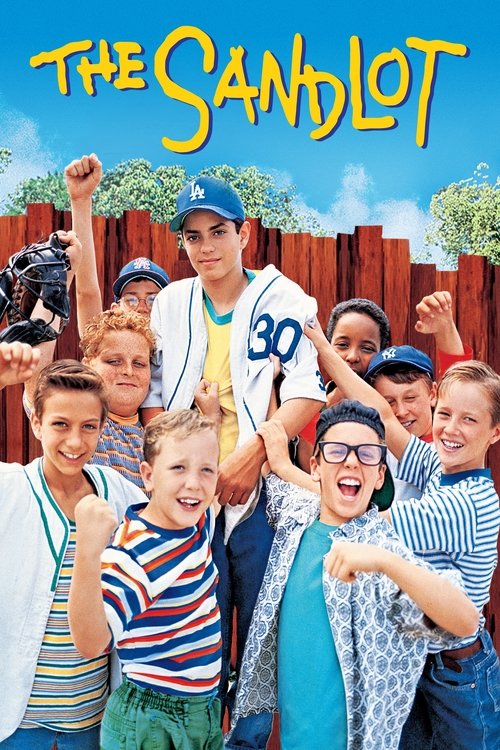
The Sandlot (1993)
Directed by David Mickey Evans
No — The Sandlot is not woke, scoring 8 out of 100 on our wokeness meter.
The Sandlot arrives from 1993 carrying a mitt, a dog, and an unearned sense of its own importance to American childhood.
Consciousness Markers
The 1962 sandlot gang is genuinely diverse for its era — Benny Rodriguez is Latino, Kenny DeNunez is Black — but the film never comments on it; they are simply kids on a team. Natural casting without a thesis.
No LGBTQ+ characters, themes, or subtext of any kind.
Wendy Peffercorn exists chiefly as the object of Squints's crush, and the pool scene (a boy faking drowning to be kissed) is the opposite of a feminist statement.
The multiracial team is presented without any racial commentary or consciousness; race is simply not a subject of the film.
No environmental or climate themes whatsoever.
No economic critique; the snooty rival Little League team is a class-flavored foil, not a systemic indictment.
Ham is described as heavyset and short-tempered, but his size is played for comedy, not celebrated as a body-positivity message.
No neurodivergent characters or themes are present.
The film is nostalgic period fiction set in 1962, not a revisionist reframing of history.
The narrator offers wistful sentiment about childhood and what really matters, but there is no preachy messaging or social instruction.
Why it received this score
The Sandlot arrives from 1993 carrying a mitt, a dog, and an unearned sense of its own importance to American childhood. It concerns nine boys in the San Fernando Valley in the summer of 1962, a period rendered in warm amber and the soft hum of wistfulness. A new kid named Smalls learns to throw. A mastiff guards a fence. Babe Ruth appears in a dream to dispense wisdom. The machinery is gentle and it works, which is the problem for anyone hoping to file this under contemporary social instruction.
The team is, for its era, quietly integrated. Benny Rodriguez is Latino. Kenny DeNunez is Black. Nobody remarks on either fact, because the film holds no thesis about it. They are simply children who can play, and the movie treats their presence as unremarkable, which is admirable and also leaves nothing to score. The lone female of consequence is Wendy Peffercorn, the lifeguard, who exists so that Squints can fake a drowning and steal a kiss. This is offered as romance. We have traveled some distance since.
Elsewhere the ledger sits bare. There is no climate anxiety, no economic sermon, no celebratory reading of Ham's girth, no neurodivergent coding, no revisionist reframing of the past. The narrator muses about friendship and what truly matters, and he muses without instructing, which spares us a lecture. The film's cultural footprint is nostalgia, uncomplicated and complete. It asks nothing of the viewer beyond affection. We can mark it accordingly and move along to the next title in the queue, weary but dutiful, our clipboard in hand, our patience intact for now.
A quiet artifact of 1962, viewed through 1993, and judged in the present tense. The pool scene remains a liability. The rest is sandlot and sentiment, which is to say, harmless and unreconstructed. We log it and proceed.
A final note on the sequels, which exist and were not consulted. This assessment covers only the original, as is proper. The dog was fine.
We close the file. The summer of 1962 is not our problem, and the film never insists that it should be. It is a baseball movie. Sometimes a baseball movie is only a baseball movie, and we should all be permitted to say so without apology, without a panel discussion, and without a content advisory scrolling up the screen before the first pitch is thrown.
In the end, the sandlot is just a sandlot. The boys are just boys. The ball is just a ball. We have scored it honestly. We retire to the press box and wait for the next screening, which is, as always, imminent, unavoidable, and almost certainly louder than this one. The projector hums. The credits roll. Nobody learns anything, and that, at last, is a relief. We dim the lights and prepare the next entry in the ledger, dutiful as ever, our patience worn thin but our pen still moving across the page with the grim precision of a man who has classified a thousand summers exactly like this one, and will classify a thousand more before the season ends.
Respectfully submitted for the record, with no further comment and no expectation of reply.
We now conclude. The file is closed. The summer is over. The dog is fine. The ball is gone. The boys grew up. So did we. So did everyone. The end, or near enough to it, and the next film waits in the dark like a fastball we did not ask for and cannot decline.
We take our seats once more.
The projector clicks.
We begin again.
And so it goes.
Analysis generated by our Consciousness Algorithm


Synopsis
During a summer of friendship and adventure, one boy becomes a part of the gang, nine boys become a team and their leader becomes a legend by confronting the terrifying mystery beyond the right field wall.
Questions about The Sandlot
Is The Sandlot woke?
No — The Sandlot is not woke, scoring 8 out of 100 on our wokeness meter. That earns it a verdict of Ultra Based.
Does The Sandlot have any woke elements?
Very few. None of the 10 markers reaches 30, the level where a marker counts as present; the highest is Representation Casting at 20.
How does The Sandlot compare to other 1993 movies?
It ranks #37 of the 97 films from 1993 we've scored; their average is 11. The wokest is Bound by Honor (60).
How is the Woke Score calculated?
An AI-assisted process researches the film and its reception, scores it 0–100 on ten markers, then combines those into one 0–100 Woke Score. It measures a specific set of 2020s cultural themes, not film quality.