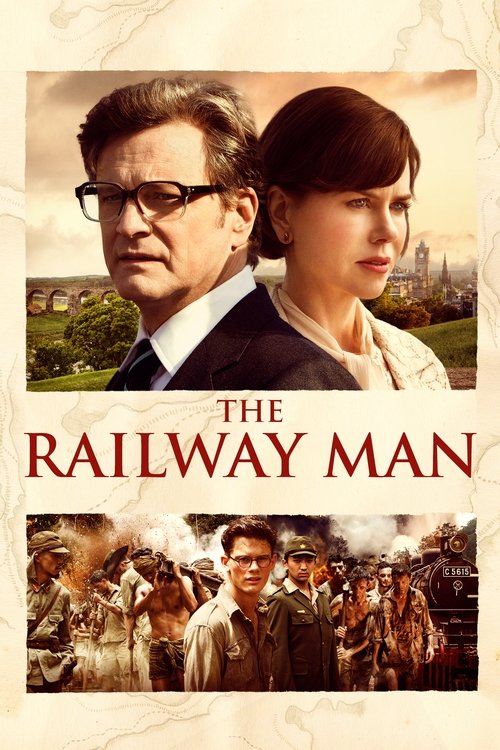
The Railway Man (2013)
Directed by Jonathan Teplitzky
No — The Railway Man is not woke, scoring 8 out of 100 on our wokeness meter.
The Railway Man arrives with the heavyset dignity of a film that knows precisely what it is: an adaptation of Eric Lomax's 1995 memoir, a study of a British officer broken by the Thai-Burma Railway and the decades of silence that followed.
Consciousness Markers
The cast includes Nicole Kidman as Patricia and Hiroyuki Sanada as Takashi Nagase, giving prominent roles to a woman and a Japanese actor, though these are historically appropriate rather than modern inclusive casting.
No LGBTQ+ themes or characters are present.
Patricia is a supportive wife, but the narrative centers on male trauma and reconciliation; there is no feminist agenda.
The film deals with British POWs and Japanese captors, but it focuses on individual trauma and reconciliation, not racial consciousness or systemic racism.
No climate change or environmental themes are present.
No anti-capitalist or eat-the-rich themes are present.
No body positivity themes are present.
PTSD is central, but it is treated as war trauma rather than neurodivergence.
Based on a true autobiography, but it does not revise history to fit modern ideological narratives.
The film is an emotional drama about forgiveness, not a preachy lecture.
Why it received this score
The Railway Man arrives with the heavyset dignity of a film that knows precisely what it is: an adaptation of Eric Lomax's 1995 memoir, a study of a British officer broken by the Thai-Burma Railway and the decades of silence that followed. Colin Firth plays the older Lomax with a tight, wounded stillness, while Jeremy Irvine handles the younger man in the camps. Nicole Kidman appears as Patricia, the wife who refuses to let him drown quietly. Hiroyuki Sanada is Takashi Nagase, the interpreter who once stood beside the torturers and now stands beside a tourist kiosk at the same site. The casting is period-appropriate and modest in its inclusiveness. A woman and a Japanese actor carry substantial weight, which is simply what the story required.
What the film declines to do is instructive. Its anguish stays lodged in individual bodies. Lomax's trauma is a private wound, not a symptom of empire or race, and the screenplay has no interest in indicting systems. The Japanese are portrayed as men who were themselves lied to, a gesture toward shared suffering that keeps the moral ledger balanced and the politics out of the room. Nagase's confession, that he was brainwashed, arrives as personal absolution. Nothing here asks the audience to reconsider colonialism, capitalism, or the climate. It asks them to watch two old men embrace.
The result is a respectable, slightly stodgy drama that premiered at Toronto and collected mixed notices, its reception built on Firth's grief and Kidman's unexpectedly dowdy, unsentimental turn. It is a film about forgiveness, and forgiveness is not a lecture. There is no sermon here, no lesson appended to the closing credits, no invitation to audit one's own complicity in anything larger than a single ruined friendship. Historians quibbled with the compression of the postwar correspondence, which is the sort of complaint a film like this tends to attract. The whole enterprise sits comfortably in an older sensibility, earnest and humanist and untroubled by the cultural weather of the present. It means well. It always has.
Analysis generated by our Consciousness Algorithm
Part of


Synopsis
A victim from World War II's "Death Railway" sets out to find those responsible for his torture. A true story.
Questions about The Railway Man
Is The Railway Man woke?
No — The Railway Man is not woke, scoring 8 out of 100 on our wokeness meter. That earns it a verdict of Ultra Based.
Does The Railway Man have any woke elements?
Very few. None of the 10 markers reaches 30, the level where a marker counts as present; the highest is Representation Casting at 20.
How does The Railway Man compare to other 2013 movies?
It ranks #137 of the 274 films from 2013 we've scored; their average is 14. The wokest is Belle (76).
How is the Woke Score calculated?
An AI-assisted process researches the film and its reception, scores it 0–100 on ten markers, then combines those into one 0–100 Woke Score. It measures a specific set of 2020s cultural themes, not film quality.