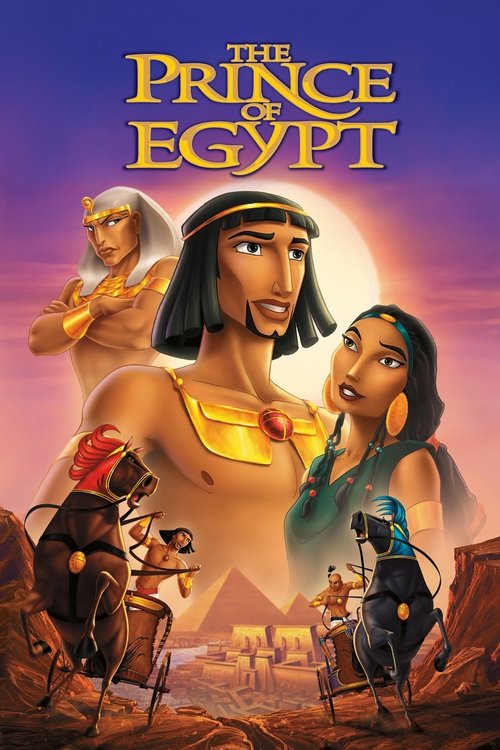
The Prince of Egypt (1998)
Directed by Simon Wells
No — The Prince of Egypt is not especially woke, scoring 23 out of 100 on our wokeness meter.
The Prince of Egypt arrives in 1998 carrying the full weight of scripture and the commercial anxiety of a studio with something to prove.
Consciousness Markers
The voice cast includes Danny Glover, Ofra Haza, and James Avery, and the filmmakers made a documented effort to depict the ethnicities of ancient Egyptians, Hebrews, and Nubians properly. However, the lead roles are voiced by white Hollywood stars, keeping this well short of modern representation standards.
The film centers the enslavement and liberation of the Hebrews, a narrative of oppression and deliverance that carries obvious resonance. It is framed entirely through scripture and humanist suffering rather than any modern racial-consciousness lens.
Tzipporah is a defiant, self-possessed woman who escapes captivity and chooses her own path, and Miriam serves as a moral catalyst who inspires Moses to persevere. Brenda Chapman also co-directed, but the film's framework remains a patriarchal scriptural narrative.
The film carries sincere moral themes about freedom, brotherhood, and the cost of deliverance, but it dramatizes rather than preaches, with no modern sermonizing.
There are no LGBTQ+ characters, themes, or subtext anywhere in this biblical epic.
The plagues are divine judgment, not ecological allegory; there is no environmental messaging of any kind.
No critique of wealth, class, or economic systems appears; the conflict is between Pharaoh's tyranny and divine deliverance, not capital.
No body-positivity themes or messaging are present.
No neurodivergent characters or themes are depicted.
The film is a faithful adaptation of the Book of Exodus, not a reworking of established history for ideological purposes.
Why it received this score
The Prince of Egypt arrives in 1998 carrying the full weight of scripture and the commercial anxiety of a studio with something to prove. DreamWorks spent three years and 350 artists from 34 countries parting the Red Sea, and the craftsmanship holds. Nine hundred and thirty-four hand-painted backgrounds. A score by Hans Zimmer. The production even consulted Christian, Jewish, and Muslim theologians, which reads today as either admirable diligence or a focus group with incense. The voice cast, however, is Val Kilmer and Ralph Fiennes and Michelle Pfeiffer and Sandra Bullock, white stars lending their throats to Hebrews and Egyptians alike. Danny Glover, Ofra Haza, and James Avery are present, and the character designers did make a documented study of ancient Egyptian, Hebrew, and Nubian physiognomy. It is a partial effort. The leads remain unmistakably Hollywood.
Tzipporah escapes the palace on her own terms and later chooses her own husband, and Miriam serves as the moral engine who shames Moses back toward his purpose. Brenda Chapman co-directed, a genuine rarity for 1998 animation. Still, the architecture is patriarchal scripture, and the liberation of the Hebrews is rendered through devotion and suffering, not through any modern vocabulary of race. The film wants us to weep for slaves. It does not want to argue with us about them.
The plagues fall as divine judgment, never as ecological warning. Pharaoh's tyranny is the villain, not capital, and no economic reading is offered or invited. Bodies are not celebrated, neurodivergence is absent, and history is adapted faithfully instead of corrected. The moral themes, freedom, brotherhood, the terrible price of deliverance, are dramatized with real conviction and no sermonizing. This is a reverent, beautifully made artifact from a less self-conscious era of family entertainment. It has convictions. It simply has no interest in the convictions currently in fashion.
Analysis generated by our Consciousness Algorithm
Part of


Synopsis
The strong bond between two Royal Egyptian brothers is challenged when their chosen responsibilities set them at odds, with extraordinary consequences.
Questions about The Prince of Egypt
Is The Prince of Egypt woke?
No — The Prince of Egypt is not especially woke, scoring 23 out of 100 on our wokeness meter. That earns it a verdict of Based.
Does The Prince of Egypt have any woke elements?
1 of the 10 markers register at 30 or above, led by Representation Casting (35). On Representation Casting: The voice cast includes Danny Glover, Ofra Haza, and James Avery, and the filmmakers made a documented effort to depict the ethnicities of ancient Egyptians, Hebrews, and Nubians properly.
How does The Prince of Egypt compare to other 1998 movies?
It ranks #14 of the 118 films from 1998 we've scored; their average is 12. The wokest is Show Me Love (60).
How is the Woke Score calculated?
An AI-assisted process researches the film and its reception, scores it 0–100 on ten markers, then combines those into one 0–100 Woke Score. It measures a specific set of 2020s cultural themes, not film quality.