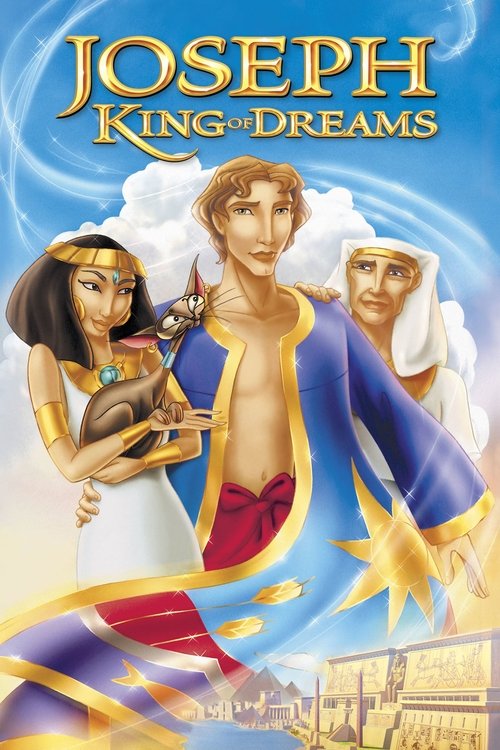
Joseph: King of Dreams (2000)
Directed by Robert C. Ramirez
No — Joseph: King of Dreams is not woke, scoring 7 out of 100 on our wokeness meter.
Joseph: King of Dreams arrives as the only direct-to-video feature DreamWorks Animation ever released, a companion piece to The Prince of Egypt assembled by much of the same crew and then quietly handed to Wal-Mart shoppers in November of 2000.
Consciousness Markers
The film carries a gentle moral about forgiveness and faith, delivered through song and story rather than sermonizing, keeping any didacticism mild and child-directed.
Asenath's role is notably expanded beyond her biblical footprint and she is framed as the 'voice of reason,' a mild elevation of a female character, but it serves the romance and plot rather than any feminist thesis.
The voice cast and characters are drawn directly from the biblical source, with no modern diversity-casting agenda at play. Ancient Near Eastern figures are inherent to the story, not a statement.
No LGBTQ+ characters, themes, or subtext appear anywhere in this faithful Genesis retelling.
The film treats its Egyptian and Hebrew settings as period backdrop with no commentary on race, power, or systemic injustice.
The seven years of famine are a narrative device for Joseph's rise, not an environmental parable or climate warning.
Joseph's grain-rationing scheme is presented as wise statecraft and divine providence, not a critique of wealth, markets, or greed.
No body-image, size-diversity, or self-acceptance themes are present.
Joseph's prophetic dreams are framed as divine gift, not as neurodivergence or a coded condition.
The film adheres closely to the Book of Genesis, with critics noting it sticks closer to scripture than its predecessor; no historical revisionism is attempted.
Why it received this score
Joseph: King of Dreams arrives as the only direct-to-video feature DreamWorks Animation ever released, a companion piece to The Prince of Egypt assembled by much of the same crew and then quietly handed to Wal-Mart shoppers in November of 2000. It retells the Genesis narrative of the favored son, the pit, the twenty pieces of silver, and the Egyptian ministry with a fidelity that critics at the time found almost stubborn. The production notes describe a first-act screening so grim that the studio head offered three words and left the room. The fix, reportedly, was characterization: wants, voices, motives. The film that resulted is earnest, tuneful, and largely innocent of the cultural preoccupations that would come to dominate the following two decades.
There is one small deviation worth logging. Asenath, who barely registers in scripture, is granted a substantial role here and designated the voice of reason, nudging Joseph toward reconciliation with his brothers. That is an expansion of a female part, though it exists to serve the romance and the plot, not a thesis. The film's moral instruction is similarly modest: forgiveness beats vengeance, and God's plan is not always legible. It arrives through song and story, aimed at children, and it never stops to lecture the audience about the world it was made in.
What we have, then, is a sincere biblical musical from a moment before the culture wars reorganized themselves around streaming-era content. Its Egyptian and Hebrew figures are ancient Near Eastern by default, not by casting statement. Its famine is a plot engine, not an environmental warning. Its grain rationing is wise statecraft. A film content to tell an old story plainly, and to sell sticker books at Chick-fil-A while doing it.
Analysis generated by our Consciousness Algorithm
Part of


Synopsis
In this animated retelling of the story from the Bible's Book of Genesis, Joseph's gift of dream interpretation and his brilliantly colored coat inspires jealousy in his brothers.
Questions about Joseph: King of Dreams
Is Joseph: King of Dreams woke?
No — Joseph: King of Dreams is not woke, scoring 7 out of 100 on our wokeness meter. That earns it a verdict of Ultra Based.
Does Joseph: King of Dreams have any woke elements?
Very few. None of the 10 markers reaches 30, the level where a marker counts as present; the highest is Lecture Energy at 12.
How does Joseph: King of Dreams compare to other 2000 movies?
It ranks #81 of the 125 films from 2000 we've scored; their average is 13. The wokest is But I'm a Cheerleader (72).
How is the Woke Score calculated?
An AI-assisted process researches the film and its reception, scores it 0–100 on ten markers, then combines those into one 0–100 Woke Score. It measures a specific set of 2020s cultural themes, not film quality.