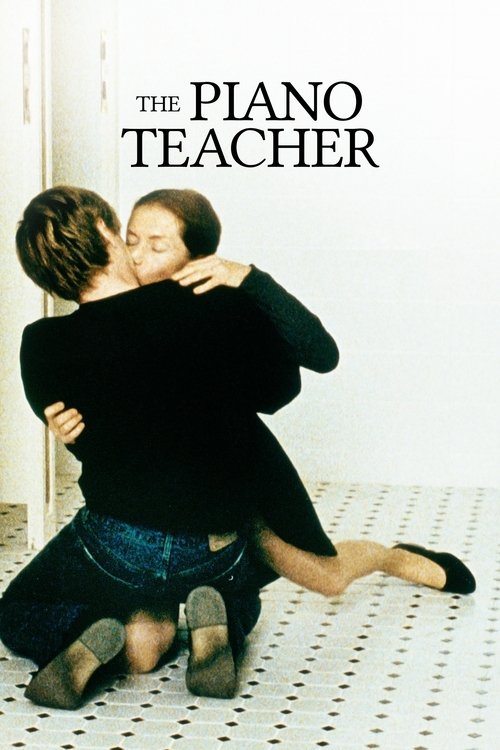
The Piano Teacher (2001)
Directed by Michael Haneke
No — The Piano Teacher is not woke, scoring 6 out of 100 on our wokeness meter.
The Piano Teacher comes to us from 2001, an era when a European film could win the Grand Prix at Cannes by being thoroughly unpleasant, and nobody in the room demanded it also be improving.
Consciousness Markers
The film centers a female protagonist and a fraught mother-daughter dynamic, but its psychosexual focus is not framed as a modern feminist agenda.
The cast is almost entirely white European, with no deliberate diverse or inclusive casting markers.
No LGBTQ+ themes, characters, or subtext are present in the film.
The film is set in a white Viennese milieu and engages no racial themes or consciousness.
There is no environmental or climate-related content.
The film does not critique capitalism or wealth inequality; its concerns are psychological and sexual.
The body is depicted through self-harm, masochism, and repression, with no body-positive messaging.
No neurodivergence themes or neurodivergent-coded advocacy are present.
The film is a contemporary psychological drama, not a historical revisionist work.
Haneke's direction is cold and ambiguous rather than didactic or lecture-driven.
Why it received this score
The Piano Teacher comes to us from 2001, an era when a European film could win the Grand Prix at Cannes by being thoroughly unpleasant, and nobody in the room demanded it also be improving. Michael Haneke directs Isabelle Huppert as Erika Kohut, a Vienna conservatory professor who shares an apartment with her mother, cuts herself in the bathtub, and proposes a sadomasochistic contract to a student who is not equipped to read it. The source is Elfriede Jelinek's 1983 novel. The milieu is white, Viennese, and sealed.
Assessing this against contemporary social consciousness is a brisk exercise. There is no diverse casting to speak of, no queer material, no engagement with race, no environmental concern, no critique of wealth, no body-positive framing, no neurodivergent advocacy, and no attempt to revise the historical record. The film's interest is the psychosexual machinery of a single woman, and it pursues that interest with a clinician's patience. The bodies on screen exist to be repressed, punished, or stabbed, which leaves the mood grim and the uplift column empty.
The single faint gesture toward modern progressive sensibilities is structural. Erika is a female protagonist, and the mother-daughter relationship at the center is genuinely fraught, controlling, and claustrophobic. Haneke frames none of it as an argument about women in the world. He frames it as an argument about Erika. The camera stays cold, the music is Schubert, and the film ends with a self-inflicted wound and a walk into the street. Whatever lesson is available here, nobody is being lectured. We are simply asked to watch, and then dismissed.
Analysis generated by our Consciousness Algorithm


Synopsis
Erika Kohut, a sexually repressed piano teacher living with her domineering mother, meets a young man who starts romantically pursuing her.
Questions about The Piano Teacher
Is The Piano Teacher woke?
No — The Piano Teacher is not woke, scoring 6 out of 100 on our wokeness meter. That earns it a verdict of Ultra Based.
Does The Piano Teacher have any woke elements?
Very few. None of the 10 markers reaches 30, the level where a marker counts as present; the highest is Feminist Agenda at 10.
How does The Piano Teacher compare to other 2001 movies?
It ranks #92 of the 148 films from 2001 we've scored; their average is 12. The wokest is Monster's Ball (60).
How is the Woke Score calculated?
An AI-assisted process researches the film and its reception, scores it 0–100 on ten markers, then combines those into one 0–100 Woke Score. It measures a specific set of 2020s cultural themes, not film quality.