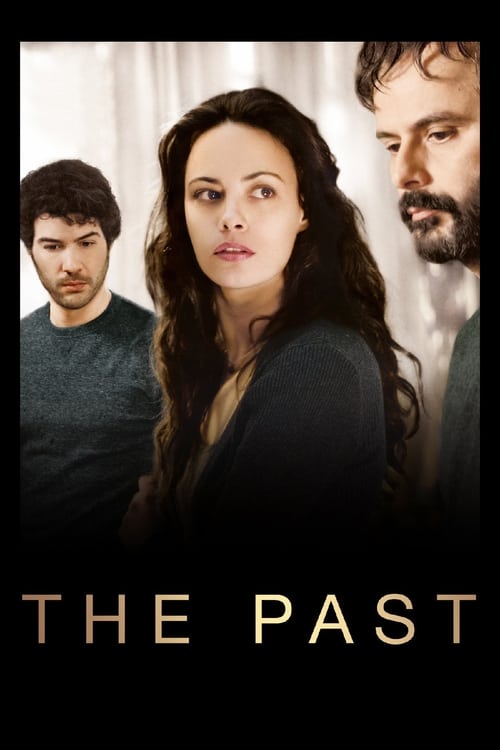
The Past (2013)
Directed by Asghar Farhadi
No — The Past is not woke, scoring 9 out of 100 on our wokeness meter.
Asghar Farhadi's The Past opens with a man arriving at an airport and never quite lets anyone leave.
Consciousness Markers
The cast naturally includes Iranian and North African actors (Mosaffa, Rahim, Ouazani) because the story concerns an Iranian man returning to France, but their presence is organic to the narrative rather than a self-conscious diversity statement.
A subplot involves Naïma, an immigrant employee, being threatened with deportation and targeted by Samir's jealous wife, but this functions as plot mechanics rather than an explicit racial-justice commentary.
Marie is a woman navigating divorce, a new pregnancy, and a strained relationship with her daughter, but the film treats this as human drama rather than a feminist thesis.
Farhadi's screenplay is morally ambiguous and layered, withholding judgment rather than delivering sermons, so any didacticism is minimal.
No LGBTQ+ characters, themes, or subtext appear anywhere in the film.
No environmental or climate themes are present.
The dry-cleaning business setting provides no critique of wealth, class, or capitalism.
No body-positivity themes or messaging.
Depression and a suicide attempt figure in the plot, but they are treated as tragic human circumstances, not as neurodivergence advocacy.
The film is a contemporary domestic drama with no historical revisionism.
Why it received this score
Asghar Farhadi's The Past opens with a man arriving at an airport and never quite lets anyone leave. Ahmad returns to Paris to finalize a divorce, and within days he is mediating between his soon-to-be ex-wife, her sullen daughter, and the dry cleaner she has taken up with. The screenplay proceeds by disclosure, each conversation peeling back another layer of a suicide attempt that nobody can agree on. Farhadi withholds judgment with real discipline. There is no villain, no lesson, no scorecard handed out at the end.
The cast reflects the film's Franco-Iranian production with an ease that never announces itself. Ali Mosaffa, Tahar Rahim and Sabrina Ouazani appear because the story concerns an Iranian man in France and the immigrant labor that keeps a Parisian dry cleaner running, not because anyone was checking boxes. A subplot sends Naïma, an employee, toward possible deportation while a jealous wife targets her. The material is there. The film simply treats it as life, which is the more honest thing to do with it.
What the film declines to do is equally instructive. There is no environmental sermon, no indictment of capital, no celebration of bodies, no vocabulary borrowed from a sensitivity seminar. Depression and a suicide attempt arrive as private devastation, not as a platform. Marie is a woman negotiating a pregnancy and a fractured family, and the film lets that stand as a human predicament instead of a manifesto. Farhadi's moral ambiguity is the whole point, and it leaves the picture with a cultural temperature closer to room than to fever. A somber, excellent piece of work. Almost nothing here is trying to teach us anything, which in 2013 already felt like a quiet act of defiance.
Analysis generated by our Consciousness Algorithm


Synopsis
After four years apart, Ahmad returns to his wife Marie in Paris in order to progress their divorce. During his brief stay, he cannot help noticing the strained relationship between Marie and her daughter Lucie. As he attempts to improve matters between mother and daughter Ahmad unwittingly lifts the lid on a long buried secret...
Questions about The Past
Is The Past woke?
No — The Past is not woke, scoring 9 out of 100 on our wokeness meter. That earns it a verdict of Ultra Based.
Does The Past have any woke elements?
Very few. None of the 10 markers reaches 30, the level where a marker counts as present; the highest is Racial Consciousness at 15.
How does The Past compare to other 2013 movies?
It ranks #127 of the 274 films from 2013 we've scored; their average is 14. The wokest is Belle (76).
How is the Woke Score calculated?
An AI-assisted process researches the film and its reception, scores it 0–100 on ten markers, then combines those into one 0–100 Woke Score. It measures a specific set of 2020s cultural themes, not film quality.