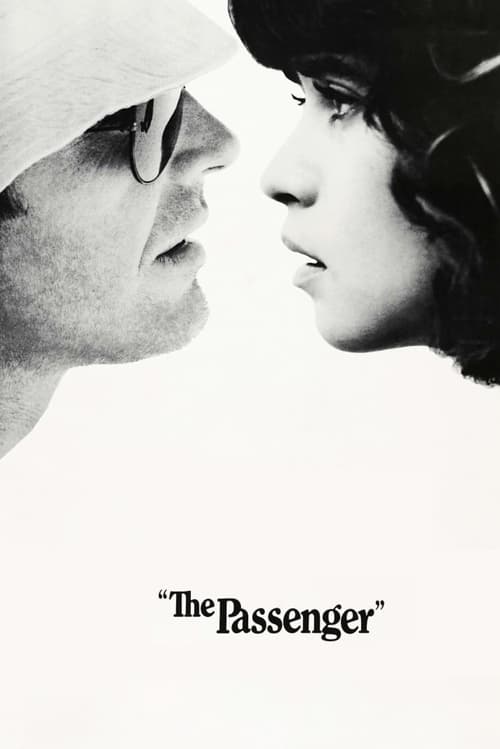
The Passenger (1975)
Directed by Michelangelo Antonioni
No — The Passenger is not woke, scoring 5 out of 100 on our wokeness meter.
Michelangelo Antonioni's The Passenger arrives from 1975, a year when a disillusioned journalist could still swap identities with a dead stranger and have it read as metaphysics instead of a plot hole.
Consciousness Markers
The arms-deal plot gestures at the cynical profit motive of weapons trafficking, but the film treats this as an existential trap for its protagonist rather than a systemic economic critique.
The film features an international, naturally assembled cast (African, Spanish, British, and American actors) appropriate to its globe-trotting narrative, but there is no evidence of casting driven by modern representation imperatives.
Maria Schneider's unnamed 'Girl' drifts alongside Locke with a free-spirited autonomy, but the film frames her primarily as a companion and object of the male protagonist's existential crisis rather than advancing a feminist thesis.
Antonioni's style is elliptical and abstract, built on ambiguity and the celebrated long take rather than argument or instruction; whatever ideas it holds are atmospheric rather than preached.
The Chadian civil war and arms-dealing backdrop provide an African setting, but racial dynamics are never examined or commented upon; the setting functions as exotic backdrop for an existential thriller.
There are no LGBTQ+ characters, themes, or subtext present anywhere in the film.
The Sahara and European cityscapes appear purely as existential topography, with no environmental themes, warnings, or climate consciousness whatsoever.
There is no engagement with body positivity, body image, or related themes.
No characters are depicted with or discussed in terms of neurodivergence or mental-health identity.
The film neither revises nor critiques historical narratives; it is a contemporary existential tale of identity and disillusionment.
Why it received this score
Michelangelo Antonioni's The Passenger arrives from 1975, a year when a disillusioned journalist could still swap identities with a dead stranger and have it read as metaphysics instead of a plot hole. Jack Nicholson plays David Locke, a television reporter adrift in Chad who finds a corpse that resembles him and steps into its life, only to learn the deceased was an arms dealer supplying rebels. A chase across Munich, Barcelona, and the dusty squares of Spain ensues. The film is beautiful and withholding, and it has no interest in instructing anyone about anything.
On the matter of representation, the cast assembles itself naturally from the globe the story traverses: African, Spanish, British, and American faces, present because the itinerary demands them, not because a studio checklist did. Maria Schneider's unnamed Girl drifts beside Locke with a free-spirited autonomy that reads as its own quiet rebellion, though the screenplay keeps her tethered to the protagonist's existential unraveling. Her independence is a mood, not a thesis. The arms-deal machinery gestures at the cynicism of profit-driven weapons trafficking, yet Antonioni treats the trade as one more trap in which a man might lose himself, not as an indictment of a system.
The remaining categories sit undisturbed. The Sahara and the Gaudi interiors function as topography for the soul, with no environmental conscience stirring beneath them. There is no engagement with body politics, no character framed through neurodivergence, no revision of the historical record. The film neither revises nor critiques history; it simply wanders through it. Its ideas arrive as atmosphere, elliptical and unresolved, and the celebrated six-minute closing take argues nothing at all. It merely watches. Antonioni built an entire hotel to get that shot, and he used it to say goodbye to a man who never quite existed. A serious picture, and a thoroughly pre-ideological one.
Analysis generated by our Consciousness Algorithm

Synopsis
David Locke is a world-weary American journalist who has been sent to cover a conflict in northern Africa, but he makes little progress with the story. When he discovers the body of a stranger who looks similar to him, Locke assumes the dead man's identity. However, he soon finds out that the man was an arms dealer, leading Locke into dangerous situations. Aided by a beautiful woman, Locke attempts to avoid both the police and criminals out to get him.
Questions about The Passenger
Is The Passenger woke?
No — The Passenger is not woke, scoring 5 out of 100 on our wokeness meter. That earns it a verdict of Ultra Based.
Does The Passenger have any woke elements?
Very few. None of the 10 markers reaches 30, the level where a marker counts as present; the highest is Eat the Rich at 12.
How does The Passenger compare to other 1975 movies?
It ranks #13 of the 22 films from 1975 we've scored; their average is 15. The wokest is Dog Day Afternoon (62).
How is the Woke Score calculated?
An AI-assisted process researches the film and its reception, scores it 0–100 on ten markers, then combines those into one 0–100 Woke Score. It measures a specific set of 2020s cultural themes, not film quality.