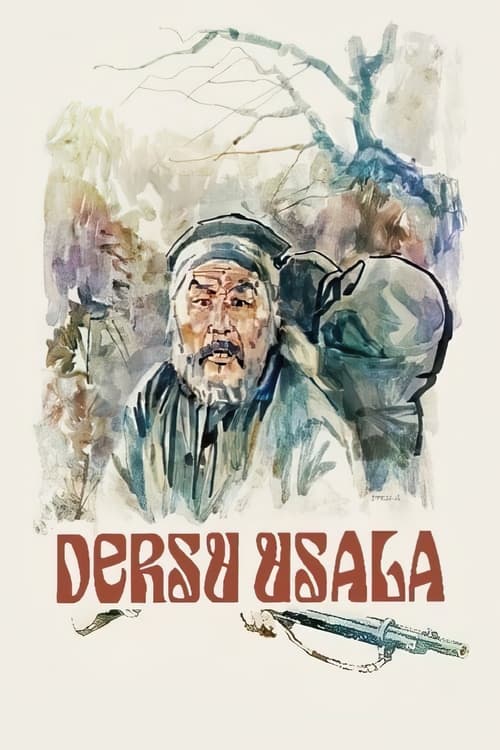
Dersu Uzala (1975)
Directed by Akira Kurosawa
No — Dersu Uzala is not woke, scoring 16 out of 100 on our wokeness meter.
Akira Kurosawa's 1975 picture follows a Russian surveyor and a Nanai trapper across the Siberian taiga, and it does so with a patience that would empty a modern multiplex in minutes.
Consciousness Markers
The film centers a Nanai (Goldi) indigenous hunter, played by Tuvan actor Maksim Munzuk, and treats his worldview with dignity. This is genuine, unforced representation rather than a modern casting initiative.
Scholars note the film's depiction of racial difference between the Russian explorer and the indigenous trapper amid colonial mapping of the Far East, but the film itself offers no racial thesis or commentary.
Nature is the film's dominant force, rendered as both beautiful and lethal, but this is existential and aesthetic rather than an environmentalist or climate-advocacy statement.
Kurosawa's film is contemplative and observational, letting its themes of nature and civilization emerge through action rather than sermonizing.
No LGBTQ+ characters or themes appear in the narrative.
The lone female character, Anna, is a peripheral wife figure with no thematic weight; the film is a male-bonding wilderness narrative.
No economic critique or anti-capitalist theme is present.
No body-positivity themes or messaging.
No neurodivergence themes or characters.
The film is a faithful adaptation of Arsenyev's 1923 memoir, not a revisionist reframing of history.
Why it received this score
Akira Kurosawa's 1975 picture follows a Russian surveyor and a Nanai trapper across the Siberian taiga, and it does so with a patience that would empty a modern multiplex in minutes. The co-production with Mosfilm, drawn from Vladimir Arsenyev's 1923 memoir, places an indigenous hunter at its center and grants him dignity, competence, and moral authority. Maksim Munzuk, a Tuvan actor, plays him without a trace of condescension. That casting is genuine and unforced, an artifact of the material itself, not a studio initiative with a press release attached. The film has no interest in announcing its virtues.
Nor does it possess most of the other markers we have learned to inventory. There is no LGBTQ+ content. The single female character, Anna, is a wife at the edge of the frame with no thematic weight. No economic critique surfaces, no body positivity, no neurodivergent characterization. The film is a faithful adaptation of its source, so nothing has been reframed for contemporary tastes. Racial difference between the mapping Russian and the indigenous guide is visible to scholars, who have written about colonial exploration of the Far East, but the film itself offers no thesis on the subject. Nature dominates the screen, beautiful and lethal in equal measure, though the impulse behind it is existential and aesthetic, not environmental advocacy.
Kurosawa lets his themes arrive through action. Dersu repairs a hut for strangers, warns a tiger, loses his eyesight, dies for a rifle. The camera observes. Nobody lectures. The result is a long, cold, humane film that has almost nothing to say about the present moment, which is precisely why it endures.
Analysis generated by our Consciousness Algorithm


Synopsis
A military explorer meets and befriends a Goldi man in Russia’s unmapped forests. A deep and abiding bond evolves between the two men, one civilized in the usual sense, the other at home in the glacial Siberian woods.
Questions about Dersu Uzala
Is Dersu Uzala woke?
No — Dersu Uzala is not woke, scoring 16 out of 100 on our wokeness meter. That earns it a verdict of Ultra Based.
Does Dersu Uzala have any woke elements?
1 of the 10 markers register at 30 or above, led by Representation Casting (45). On Representation Casting: The film centers a Nanai (Goldi) indigenous hunter, played by Tuvan actor Maksim Munzuk, and treats his worldview with dignity.
How does Dersu Uzala compare to other 1975 movies?
It ranks #8 of the 22 films from 1975 we've scored; their average is 15. The wokest is Dog Day Afternoon (62).
How is the Woke Score calculated?
An AI-assisted process researches the film and its reception, scores it 0–100 on ten markers, then combines those into one 0–100 Woke Score. It measures a specific set of 2020s cultural themes, not film quality.