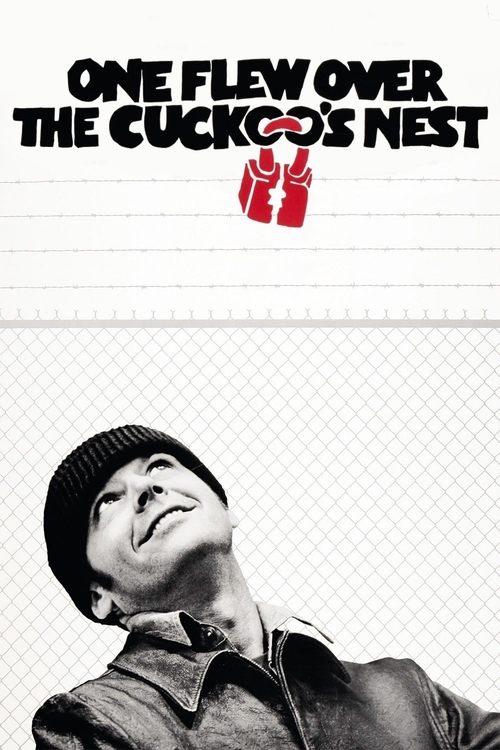
One Flew Over the Cuckoo's Nest (1975)
Directed by Miloš Forman
No · Based
How we score movies →Consciousness Markers
The film critiques institutional authority and conformist systems, which aligns with anti-establishment sentiment, but this critique is libertarian rather than anti-capitalist in the modern sense. The focus is individual freedom against bureaucratic control.
Characters with mental illness and neurodivergence are central to the narrative, and the film shows compassion for them. However, it does not center their perspectives or challenge stereotypes through their own agency.
The film features performers with intellectual disabilities in supporting roles, but their characters lack agency and are primarily vehicles for the narrative about the male protagonist. Casting reflects 1970s norms without contemporary consciousness of representation.
While the film contains philosophical dimensions about freedom and authority, it communicates these themes through narrative and character rather than explicit preachiness. The critique is embedded, not delivered.
The cast includes Scatman Crothers and Will Sampson, but their characters receive minimal development and the film contains no explicit engagement with racial themes or systemic racism.
Nurse Ratched is portrayed as the antagonist, but the film's logic does not interrogate gender systems or power structures. Her villainy is framed as personal authoritarianism rather than institutional sexism.
No meaningful LGBTQ+ themes or representation. The film predates widespread inclusion of such themes in mainstream cinema.
Climate themes are entirely absent from this institutional drama.
Body positivity frameworks did not exist in 1975. The film contains no relevant content on this marker.
The film does not engage with historical revisionism. It is set in a contemporary mental institution and does not reframe past events.


Synopsis
A petty criminal fakes insanity to serve his sentence in a mental ward rather than prison. He soon finds himself as a leader to the other patients—and an enemy to the cruel, domineering nurse who runs the ward.
Why it received this score
One Flew Over the Cuckoo's Nest arrives from an era when institutional critique could be mounted without the apparatus of modern social consciousness. The film is, at heart, a libertarian parable about individual autonomy against conformist machinery, dressed in the garb of 1970s counterculturalism. Miloš Forman's vision treats the mental institution as a metaphor for all systems of control, and this universalist approach, while thematically potent, operates entirely outside the frameworks we associate with contemporary progressive sensibility.
The cast, overwhelmingly male and featuring performers with disabilities in roles that do not center their agency or perspective, reflects the production values of its time without interrogating them. Jack Nicholson's Randle McMurphy is positioned as the hero precisely because he refuses institutional discipline, not because the film examines systemic injustice toward the institutionalized. Louise Fletcher's Nurse Ratched is a villain, but she is rendered villainous through the logic of personal tyranny rather than structural critique. The film never suggests that mental healthcare systems themselves require reimagining, only that this particular ward's authoritarian approach is cruel.
What the film does accomplish is a forthright dismantling of dehumanizing institutional practice, and this carries real weight. But such humanist critique, no matter how skillfully executed, does not constitute the specific constellation of markers we evaluate here. This is a film about power and suffering that predates the language we now use to discuss such matters.
Analysis generated by our Consciousness Algorithm
Critic Reviews
“Too many classic set pieces to mention but keep your ears cocked for that immortal line "Mmmm, Juicy Fruit." Certified brilliance.”
“One Flew over the Cuckoo 's Nest is an earnest attempt to make a serious film. But in the end the movie backs away from both the human reality and the cloudy but potent symbolism that Ken Kesey found in the asylum.”