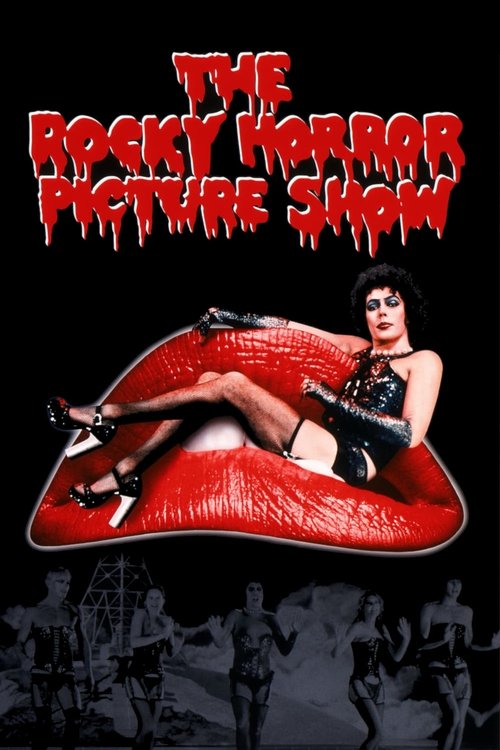
The Rocky Horror Picture Show (1975)
Directed by Jim Sharman
No · Based
How we score movies →Consciousness Markers
Sexuality and gender nonconformity are central to the film's narrative and aesthetic. The protagonist is an unapologetically queer character, and the film treats sexual transgression as liberation. Yet this engagement predates modern LGBTQ+ frameworks and operates through camp rather than identity politics.
The film features gender-nonconforming characters in prominent roles, with Tim Curry's Dr. Frank-N-Furter presented as the most charismatic figure in the narrative. However, the casting reflects 1970s sensibilities rather than contemporary representation principles.
The film features female characters (Susan Sarandon, Patricia Quinn) but does not center feminist themes or critique patriarchal structures. Gender is treated as performance and play rather than as a site of political struggle.
The film celebrates bodily excess and spectacle, which could be read as body-positive in its rejection of restraint. However, this is incidental to the narrative rather than a deliberate ideological stance.
While the film is anarchic and countercultural in spirit, it does not engage in explicit critique of capitalism or class structures. The narrative is not organized around anti-capitalist politics.
The film contains no apparent engagement with racial consciousness or anti-racist themes. The cast is predominantly white, and race is not addressed within the narrative.
The film actively resists preachiness and moral clarity. It does not pause to instruct the audience or provide explanatory frameworks for its transgressive content. This is antithetical to contemporary lecture-driven progressive cinema.
Climate consciousness is entirely absent from the film. There are no environmental themes or ecological concerns present in the narrative or subtext.
Neurodivergence is not addressed or represented in the film. There are no characters coded as neurodivergent and no engagement with disability or neurological difference.
The film does not engage with historical narratives or attempt to revise historical understanding. It is not a historical work and does not grapple with historical themes.


Synopsis
After getting a flat tire in the middle of nowhere, newly engaged couple Brad and Janet encounter the eerie mansion of the flamboyant, seductive Dr. Frank-N-Furter and a variety of eccentric characters. Through elaborate dance and rock music, the mad scientist unveils his latest creation: a perfect, muscular man.
Why it received this score
The Rocky Horror Picture Show occupies a peculiar place in the genealogy of progressive cinema. Released in 1975, it features a central character in full drag, treats sexual transgression as liberation rather than pathology, and presents gender nonconformity as something to be celebrated rather than corrected. Tim Curry's Dr. Frank-N-Furter is neither villainized for his sexuality nor subjected to any moral reckoning. By the standards of its era, this was genuinely transgressive material. Yet by the standards of contemporary cultural consciousness, the film is a piece of campy entertainment that engages with these themes through anarchic humor and spectacle rather than earnest pedagogical intent.
The film presents its gender-nonconforming characters without explanation or justification, which is a point in its favor. There is no lecture about acceptance, no character arc designed to teach the audience empathy. The household simply exists as it exists. However, the film also does not center identity politics or employ the specific frameworks of modern progressive sensibility. It is a work of 1970s counterculture that happens to depict queer sexuality and gender play, not a work of contemporary social consciousness that has chosen queerness as its organizing principle.
What complicates any straightforward scoring is that the film's anarchic energy and refusal to moralize about its content places it at odds with the preachy impulse of modern progressive cinema. The Rocky Horror Picture Show would never make a sincere speech about acceptance. It would never pause the narrative to ensure the audience understood the correct emotional response. Its transgression is precisely that it refuses to be instructive about its transgressions. This is a film made for audiences who understood that provocation and pleasure could coexist, which is a different sensibility from contemporary progressive cinema entirely.
Analysis generated by our Consciousness Algorithm
Critic Reviews
“You still get Tim Curry in drag, young Susan Sarandon in her skimpies and an enthusiastic score. [16 Nov 1990, p.3D]”
“For a movie that's mostly a plotless mix of old sci-fi flicks and Bowie-esque gender-bending, Rocky Horror continues to charm. That's due in part to the honest delight we take in the freedoms this movie so cheerfully flaunts.”
“The powerhouse of the film is Tim Curry's cross-dressing alien, Frank N. Furter, who would never reach these kinds of gloriously demented heights again.”
“The wit is too weak to sustain a film, and the songs all sound the same. ”