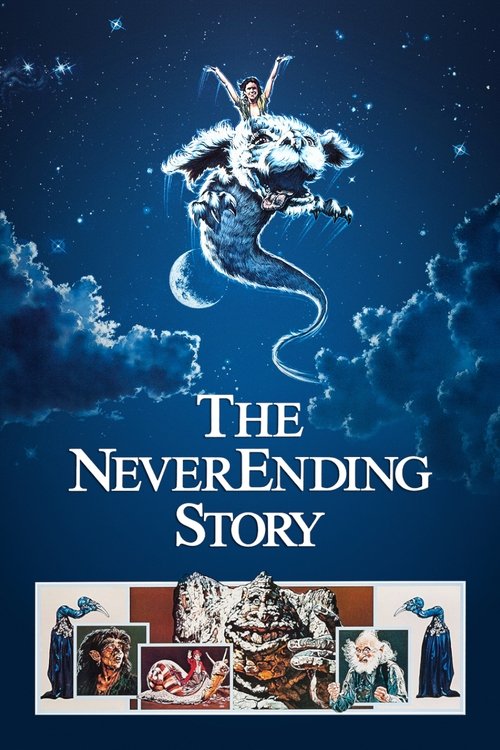
The NeverEnding Story (1984)
Directed by Wolfgang Petersen
No — The NeverEnding Story is not woke, scoring 3 out of 100 on our wokeness meter.
The NeverEnding Story arrived in 1984, a German-American co-production directed by Wolfgang Petersen and adapted from the first half of Michael Ende's novel.
Consciousness Markers
Gmork's monologue about the Nothing being humanity's lost dreams carries a mild thematic moral, but the film prioritizes adventure and wonder over preaching.
The cast is overwhelmingly white European and American, with Moses Gunn in a minor supporting role as Cairon; no deliberate diversity casting or commentary on representation is present.
No LGBTQ+ characters, themes, or subtext appear anywhere in the film.
The Childlike Empress is a female figure of authority, but the film offers no feminist critique or agenda; she is a passive, ailing damsel awaiting a male child's intervention.
The film engages no racial themes or consciousness; Fantasia's inhabitants are fantasy creatures with no racial commentary.
The Nothing represents the loss of imagination and hope, not environmental destruction; no climate messaging is present.
No economic critique or anti-capitalist themes appear in the narrative, despite author Michael Ende's later complaints about the film's commercialism.
No body positivity themes or messaging about body image are present.
Bastian is a shy, bullied daydreamer whose father urges him to stop, but the film frames this as imagination and grief rather than neurodivergence.
The film is a straightforward adaptation of a fantasy novel with no historical revisionism.
Why it received this score
The NeverEnding Story arrived in 1984, a German-American co-production directed by Wolfgang Petersen and adapted from the first half of Michael Ende's novel. It concerns a shy boy named Bastian who steals a book, hides in a school attic, and reads about a warrior named Atreyu attempting to save the dying realm of Fantasia from a devouring void called the Nothing. The film remains a beloved artifact of 1980s fantasy cinema, and its pleasures are largely visual and atmospheric. It asks nothing of its audience beyond wonder.
For those of us who catalogue the era's progressive sensibilities, the pickings here are slim. The cast is white European and American, with Moses Gunn appearing briefly as Cairon and receiving no narrative weight. No romantic or identity-based subtext attaches to any character. The Childlike Empress, though a female sovereign, spends the entire running time bedridden and ailing, waiting for a male child to rescue her by speaking her name. That is not a feminist text so much as a fairy-tale convenience. Fantasia's inhabitants are gnomes, luck dragons, and racing snails, and the film draws no racial or social commentary from any of them.
The Nothing, so tempting to read as an ecological parable, is explicitly identified as the absence of human dreams and hopes. Gmork explains this in a monologue that constitutes the film's only moment of instruction, and it lasts roughly ninety seconds before the wolf lunges. Bastian's daydreaming and his father's worry are framed as grief and imagination, not as any condition requiring a diagnostic label. Ende himself later denounced the production as kitsch and commerce, though that grievance lives in interviews, not in the footage. What remains is a children's adventure with a melancholy streak and no agenda to speak of.
Analysis generated by our Consciousness Algorithm


Synopsis
While hiding from bullies in his school's attic, a young boy discovers the extraordinary land of Fantasia, through a magical book called The Neverending Story. The book tells the tale of Atreyu, a young warrior who, with the help of a luck dragon named Falkor, must save Fantasia from the destruction of The Nothing.
Questions about The NeverEnding Story
Is The NeverEnding Story woke?
No — The NeverEnding Story is not woke, scoring 3 out of 100 on our wokeness meter. That earns it a verdict of Ultra Based.
Does The NeverEnding Story have any woke elements?
Very few. None of the 10 markers reaches 30, the level where a marker counts as present; the highest is Lecture Energy at 5.
How does The NeverEnding Story compare to other 1984 movies?
It ranks #36 of the 51 films from 1984 we've scored; their average is 7. The wokest is Revenge of the Nerds (30).
How is the Woke Score calculated?
An AI-assisted process researches the film and its reception, scores it 0–100 on ten markers, then combines those into one 0–100 Woke Score. It measures a specific set of 2020s cultural themes, not film quality.