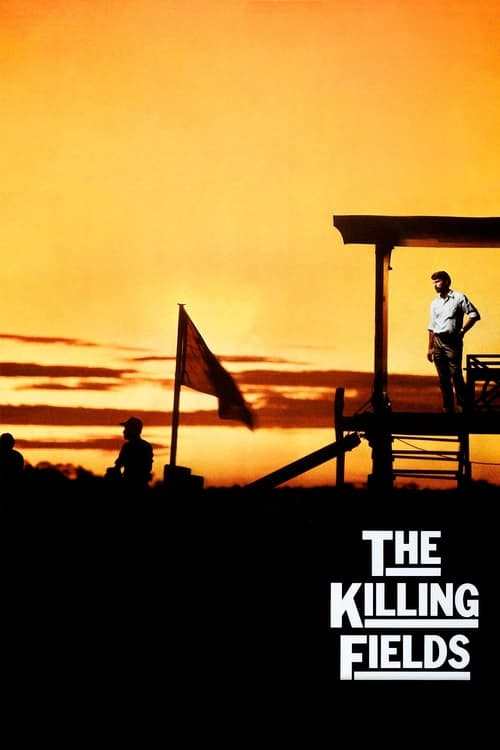
The Killing Fields (1984)
Directed by Roland Joffé
No — The Killing Fields is not woke, scoring 15 out of 100 on our wokeness meter.
The Killing Fields arrives from 1984, a British biographical drama about the Khmer Rouge years and the friendship between Sydney Schanberg and Dith Pran.
Consciousness Markers
The film casts Cambodian actors, most notably real Khmer Rouge survivor Haing S. Ngor in a lead role, but this is authentic storytelling for a film set in Cambodia rather than modern representation casting as a stated value.
The film carries heavy moral weight about the horrors of the Khmer Rouge, but delivers it through drama and human connection rather than explicit lecturing.
The film depicts the Cambodian genocide and the abandonment of Dith Pran, but frames it through a Western journalist's guilt rather than modern racial consciousness.
No LGBTQ+ characters or themes appear anywhere in the film.
The narrative centers on male journalists and contains no feminist agenda or gender-conscious commentary.
No environmental or climate themes are present.
The film is a critique of the Khmer Rouge communist regime, not of capitalism or wealth.
No body positivity themes are present.
No neurodivergence themes are present.
The film is a historically grounded account of real events and people, not a revisionist reframing of history.
Why it received this score
The Killing Fields arrives from 1984, a British biographical drama about the Khmer Rouge years and the friendship between Sydney Schanberg and Dith Pran. It carries enormous moral weight, and it earns that weight the old way: through dread, patience, and the slow accumulation of atrocity. The casting of Haing S. Ngor, a Khmer Rouge survivor with no acting experience, lends the production a documentary gravity that no amount of studio craft could manufacture. That decision reads today as a form of authentic representation, though it was made as storytelling, not as a stated institutional value. The distinction matters for our purposes.
A survey of contemporary markers yields a sparse ledger. There is no LGBTQ+ thread, no feminist reworking of the material, no climate lament, no body positivity, no neurodivergent framing. The film critiques a communist regime, not capital, which scrambles the usual political taxonomy. Racial consciousness surfaces only obliquely, filtered through an American journalist's guilt over abandoning his interpreter. History here is not revised. It is reconstructed from a real story reported in a magazine. The moral instruction, such as it is, arrives through a man hiding his education from people who would kill him for it, not through a speech.
That leaves a somber, well-made film from a dispensation that no longer sets the terms. It asks us to feel the horror and the loyalty, and it trusts the audience to draw conclusions without assistance. The restraint is now a period detail, and the picture plays as a museum piece: admirable, wrenching, and entirely innocent of the vocabulary we currently require.
Analysis generated by our Consciousness Algorithm


Synopsis
New York Times reporter Sydney Schanberg is on assignment covering the Cambodian Civil War, with the help of local interpreter Dith Pran and American photojournalist Al Rockoff. When the U.S. Army pulls out amid escalating violence, Schanberg makes exit arrangements for Pran and his family. Pran, however, tells Schanberg he intends to stay in Cambodia to help cover the unfolding story — a decision he may regret as the Khmer Rouge rebels move in.
Questions about The Killing Fields
Is The Killing Fields woke?
No — The Killing Fields is not woke, scoring 15 out of 100 on our wokeness meter. That earns it a verdict of Ultra Based.
Does The Killing Fields have any woke elements?
Very few. None of the 10 markers reaches 30, the level where a marker counts as present; the highest is Representation Casting at 25.
How does The Killing Fields compare to other 1984 movies?
It ranks #6 of the 51 films from 1984 we've scored; their average is 7. The wokest is Revenge of the Nerds (30).
How is the Woke Score calculated?
An AI-assisted process researches the film and its reception, scores it 0–100 on ten markers, then combines those into one 0–100 Woke Score. It measures a specific set of 2020s cultural themes, not film quality.