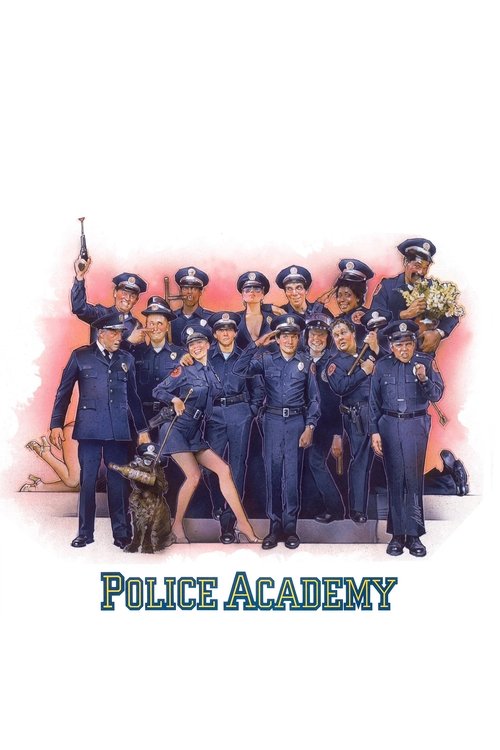
Police Academy (1984)
Directed by Hugh Wilson
No · Ultra Based
How we score movies →Consciousness Markers
The film includes female and minority cadets in substantive roles, with Kim Cattrall as a fully-fledged protagonist. However, the representation feels incidental rather than intentional, and the film never examines systemic barriers to representation beyond the surface-level premise.
The film includes a powerful female character (the Lady Mayoress) who implements progressive policy, and female cadets participate equally in training. However, feminist critique is absent; the film treats gender inclusion as comedic rather than consequential.
The film's premise explicitly mentions that weight should no longer disqualify recruits, suggesting body positivity. However, the execution relies on physical humor and caricature, undermining any genuine commitment to this principle.
Minority characters appear in the ensemble cast, but there is no racial consciousness or examination of systemic racism. Characters of color are present as comedic figures without any deeper exploration of their experiences.
Michael Winslow's character possesses extraordinary sound-effects abilities that could be interpreted as neurodivergent traits, but the film treats these as novelty rather than exploring neurodiversity with any seriousness or respect.
The film contains minimal preachy messaging. It operates primarily as entertainment rather than instruction, though the premise itself carries implicit social commentary about institutional reform.
The film presents police work as an institution to be joined and reformed from within, not critiqued. There is no anti-capitalist or anti-institutional sentiment; instead, the narrative celebrates joining the system.
No LGBTQ+ themes, characters, or representation present in the film. This is entirely absent from the narrative and visual language.
Climate themes are entirely absent from this police academy comedy. The film contains no environmental messaging or climate-related content whatsoever.
There is no historical revisionism in this film. Police Academy is a straightforward comedy set in a contemporary (1984) institutional setting with no engagement with history.


Synopsis
New rules enforced by the Lady Mayoress mean that sex, weight, height and intelligence need no longer be a factor for joining the Police Force. This opens the floodgates for all and sundry to enter the Police Academy, much to the chagrin of the instructors. Not everyone is there through choice, though. Social misfit Mahoney has been forced to sign up as the only alternative to a jail sentence and it doesn't take long before he falls foul of the boorish Lieutenant Harris. But before long, Mahoney realises that he is enjoying being a police cadet and decides he wants to stay... while Harris decides he wants Mahoney out.
Why it received this score
Police Academy stands as a peculiar artifact of 1984 progressive sentiment filtered through the machinery of mainstream comedy. The film's central conceit, that police recruitment should no longer discriminate based on sex, weight, height, or intelligence, represents a genuinely egalitarian impulse for its era. Yet the film's actual commitment to this premise is cosmetic at best. Kim Cattrall appears as a female cadet in a cast dominated by men, her presence acknowledged but not particularly integrated into the narrative's emotional core. The film treats diversity as a setup for jokes rather than a genuine reckoning with institutional barriers.
The comedy itself trades heavily in caricature and physical humor that has aged poorly. Michael Winslow's character, while talented, exists primarily as a vehicle for novelty sound effects. The film's sensibility is one of mockery, where the "misfits" recruited under the new rules provide comedic fodder for the establishment figures. This is not progressive storytelling; it is mainstream entertainment that borrows the language of inclusion without interrogating the systems that excluded people in the first place. We see the barriers mentioned but not meaningfully explored.
What rescues Police Academy from a lower score is its genuine, if accidental, representation of women and people of color in positions of institutional authority, even if the film never bothers to examine what this means. The Lady Mayoress who implements the new rules is a woman wielding actual power, and several cadets of color are present among the ensemble. These facts, while executed without particular sophistication, mark the film as operating in a space somewhat adjacent to mainstream 1980s action comedies. It remains a product of its era, lacking any of the self-conscious progressive posturing that would later define contemporary cinema.
Analysis generated by our Consciousness Algorithm
Critic Reviews
“Attention all units: Slapstick in progress in the vicinity of Police Academy. Suspects wanted for mugging the camera and possession of night shtiks with intent to incite a laugh riot. Please respond to this blues burlesque, a uniformly funny hit sure to have a long run. Its target audience -- those who can take their T&A with a grain of assault. Its plot -- a combo of "Animal House" and "An Officer and a Gentleman." Its stars -- a rainbow coalition of hot newcomers and dependable, unexpendable pros. [23 Mar 1984, p.23]”
“Despite the quick succession of sight gags director Hugh Wilson engineers in the film, Police Academy has it weak moments, particularly with Steve Guttenberg and Kim Cattrall in the leads. [23 Mar 1984]”
“Police Academy at its core is a harmless, innocent poke at authority that does find a fresh background in a police academy. ”
“If there's anything worse than a punch line that doesn't work, it's a movie that doesn't even bother to put the punch lines in.”