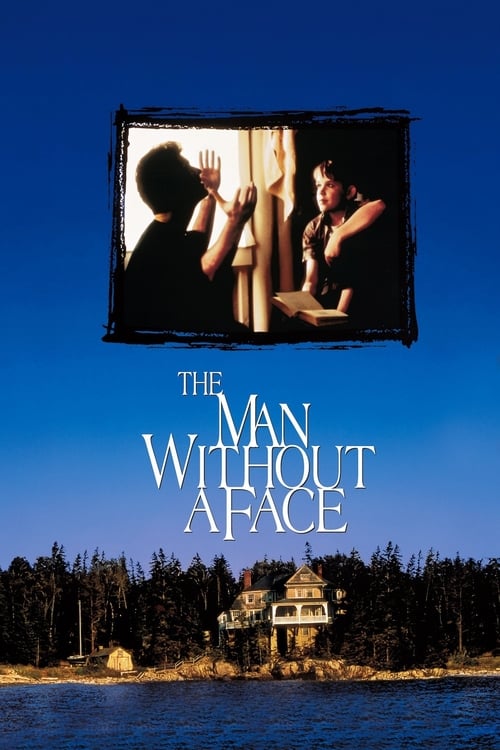
The Man Without a Face (1993)
Directed by Mel Gibson
No — The Man Without a Face is not woke, scoring 11 out of 100 on our wokeness meter.
Mel Gibson's 1993 directorial debut arrives from a simpler era of screen moralizing, when a disfigured recluse could teach a fatherless boy Latin and audiences were expected to feel something about it.
Consciousness Markers
The central character's facial disfigurement and the town's prejudice against his appearance gesture at looking past physical difference, though not in modern body-positivity terms.
The film carries a mild moral lesson about false accusation and judging by appearances, but it is a conventional 1990s drama rather than a preachy modern lecture.
The cast is uniformly white and the story contains no meaningful racial or ethnic diversity.
No LGBTQ+ themes or characters; the film actively removes the novel's ambiguous sexual undertones.
Female characters exist as family members and townspeople, but the film advances no feminist agenda.
The film is set in an all-white New England milieu and engages no racial themes or consciousness.
No environmental or climate-related content.
No critique of capitalism, wealth, or class structures.
No neurodivergence themes or characters.
The 1960s setting is period detail, not historical revisionism.
Why it received this score
Mel Gibson's 1993 directorial debut arrives from a simpler era of screen moralizing, when a disfigured recluse could teach a fatherless boy Latin and audiences were expected to feel something about it. Set in 1968 on the coast of Maine, the film occupies an all-white, all-straight New England where the only social friction available is the town's suspicion of a man with a ruined face. There is no racial consciousness here, no economic grievance, no environmental conscience. The camera is content to watch the sea.
The one thread with any modern resonance is the film's treatment of physical difference. McLeod's scarred face draws stares, and the script asks us to look past it, which is a gesture toward body acceptance in a loose, pre-modern sense. It is a small gesture. The film has no vocabulary for it beyond pity and decency, and the disfigurement functions as a plot device more than a thesis. Meanwhile, the novel's ambiguous undercurrents between teacher and student have been scrubbed clean. Isabelle Holland's book hinted at grooming and at Chuck's own confused desire; Gibson disliked that reading and removed it. The result is a film with no LGBTQ+ content at all, a deliberate subtraction instead of an oversight.
The film leaves us with a conventional drama and a mild lesson about false accusation and the cost of small-town rumor. That lesson is delivered gently, without a lectern, and it earns the film a faint pulse of sermonizing but nothing more. Women appear as mothers and sisters and waitresses, given no interiority worth the runtime. Class and capital go unexamined. The film is well acted, competently shot, and culturally inert, a museum piece from the year before everything changed. As vintages go, this is a pleasant table wine served in a paper cup. It will not be troubling the sommelier's ledger.
Analysis generated by our Consciousness Algorithm


Synopsis
Justin McLeod is a former teacher who lives as a recluse on the edge of town after his face is disfigured from an automobile accident ten years earlier, in which a boy was incinerated--and for which he was convicted of involuntary manslaughter. Also suspected of being a paedophile, he is befriended by Chuck, causing the town's suspicions and hostility to be ignited.
Questions about The Man Without a Face
Is The Man Without a Face woke?
No — The Man Without a Face is not woke, scoring 11 out of 100 on our wokeness meter. That earns it a verdict of Ultra Based.
Does The Man Without a Face have any woke elements?
Very few. None of the 10 markers reaches 30, the level where a marker counts as present; the highest is Body Positivity at 15.
How does The Man Without a Face compare to other 1993 movies?
It ranks #33 of the 97 films from 1993 we've scored; their average is 11. The wokest is Bound by Honor (60).
How is the Woke Score calculated?
An AI-assisted process researches the film and its reception, scores it 0–100 on ten markers, then combines those into one 0–100 Woke Score. It measures a specific set of 2020s cultural themes, not film quality.