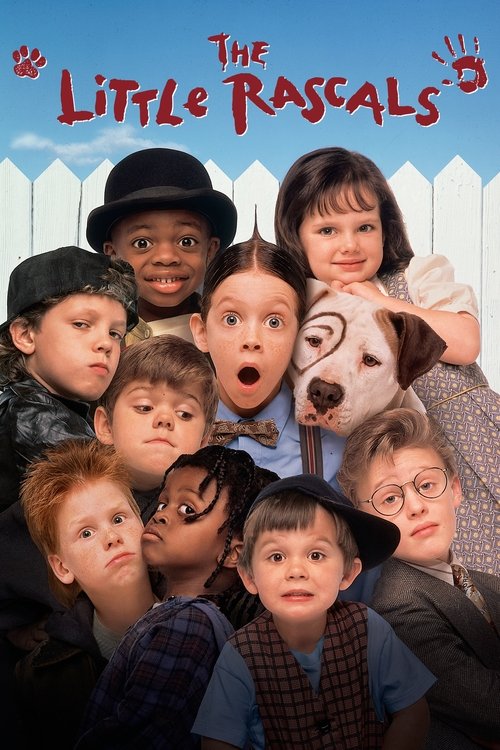
The Little Rascals (1994)
Directed by Penelope Spheeris
No — The Little Rascals is not woke, scoring 16 out of 100 on our wokeness meter.
Penelope Spheeris, a director with a documented appetite for the margins of American life, turns her attention here to a pack of nine-year-olds and their go-kart.
Consciousness Markers
The central arc concerns the 'He-Man Woman-Haters Club' learning to accept girls, culminating in a 'Women Welcome' sign, and the revered racer A.J. Ferguson is revealed to be a woman — a mild but genuine gender-inclusion message.
The child ensemble is notably multiracial, with Black kids (Buckwheat, Stymie, Uh-Huh) integrated naturally into the group, a holdover from the source material's integrated Our Gang shorts rather than a modern casting statement.
There is a light moral lesson about boys accepting girls into their club, but it is delivered through slapstick and plot resolution rather than preachy monologue.
Black characters are present and integrated, but the film makes no comment on race, racism, or racial identity; their inclusion is inherited from the source shorts, not thematized.
The rich newcomer Waldo, son of an oil tycoon, serves as a mild antagonist, but the film offers no critique of wealth or capitalism as a system.
No LGBTQ+ characters, themes, or subtext of any kind appear in this 1994 family comedy.
No environmental or climate themes whatsoever; the oil refinery is merely a plot device establishing Waldo's wealth.
No body-positivity themes or messaging are present.
No neurodivergence themes or neurodivergent-coded characters are present.
The film is a contemporary update of fictional shorts, not a revisionist retelling of historical events.
Why it received this score
Penelope Spheeris, a director with a documented appetite for the margins of American life, turns her attention here to a pack of nine-year-olds and their go-kart. The Little Rascals arrives in 1994 as a feature-length expansion of Hal Roach's Our Gang shorts, and it carries the old material's integrated ensemble forward without ceremony. Black children stand alongside white children in the clubhouse, in the derby, in the pig slop. Nobody remarks on it. The film treats this as ordinary, which it is, and declines to build a thesis upon it. That is the entire scope of its racial imagination, and the film seems content to leave it there.
Where a lesson does surface, it concerns the He-Man Woman-Haters Club and its slow capitulation to the presence of girls. Alfalfa's courtship of Darla drives the plot. The boys' sabotage of it drives the comedy. The resolution arrives with a sign reading Women Welcome and the revelation that the legendary racer A.J. Ferguson is a woman. The sentiment is genuine but light, delivered through pratfalls and a trophy ceremony instead of a sermon. It is a moral, technically, though the film would prefer we call it a happy ending.
The wealthy newcomer Waldo, son of an oil tycoon, serves as a mild antagonist, yet the film reserves no anger for his father's refinery and no critique for the fortune behind it. There is no environmental conscience here, no inquiry into the body, no interest in the mind's variations, no revision of any history. It is a 1994 children's comedy that wants, above all, to show a dog driving a car. Critics were tepid, audiences were warm, and the cultural footprint stayed modest. We classify it, we file it, and we move along.
Analysis generated by our Consciousness Algorithm
Part of


Synopsis
When nine-year-old Alfalfa falls for Darla, his "He-Man-Woman-Hating" friends attempt to sabotage their relationship.
Questions about The Little Rascals
Is The Little Rascals woke?
No — The Little Rascals is not woke, scoring 16 out of 100 on our wokeness meter. That earns it a verdict of Ultra Based.
Does The Little Rascals have any woke elements?
2 of the 10 markers register at 30 or above, led by Feminist Agenda (35) and Representation Casting (30). On Feminist Agenda: The central arc concerns the 'He-Man Woman-Haters Club' learning to accept girls, culminating in a 'Women Welcome' sign, and the revered racer A.J.
How does The Little Rascals compare to other 1994 movies?
It ranks #14 of the 86 films from 1994 we've scored; their average is 10. The wokest is On Deadly Ground (75).
How is the Woke Score calculated?
An AI-assisted process researches the film and its reception, scores it 0–100 on ten markers, then combines those into one 0–100 Woke Score. It measures a specific set of 2020s cultural themes, not film quality.