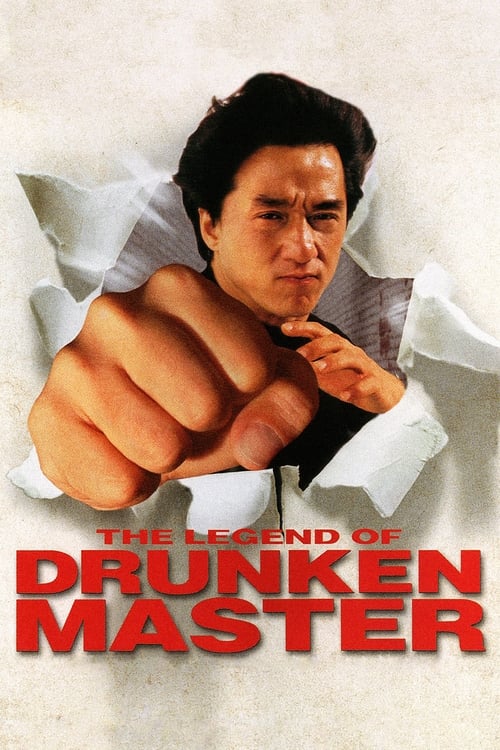
The Legend of Drunken Master (1994)
Directed by Lau Kar-leung
No — The Legend of Drunken Master is not woke, scoring 16 out of 100 on our wokeness meter.
A 1994 Hong Kong production, later repackaged for American audiences under a slightly grander title, in which Jackie Chan drinks a great deal and hits a great many people.
Consciousness Markers
The plot pits Chinese loyalists against a British consul smuggling national artifacts, giving it an anti-colonial, pro-heritage nationalism rather than a modern racial-justice consciousness.
The climax involves workers protesting at a British-owned steel factory against the consul's abuses, lending a mild anti-imperialist, anti-foreign-capital flavor.
There is a faint anti-colonial message about protecting Chinese artifacts, but it is delivered through action and comedy rather than preachy exposition.
Anita Mui's stepmother Ling has a bit of feisty agency, but the film is a traditional martial-arts comedy with no feminist thesis or gender critique.
The cast is entirely Chinese and Hong Kong performers, which is simply the natural composition of a Hong Kong production rather than a deliberate modern diversity-casting initiative.
There are no LGBTQ+ characters, relationships, or themes anywhere in the film.
No environmental or climate themes appear in the film.
No body-positivity themes or messaging are present.
No neurodivergence themes are present; the ending's depiction of Wong's impairment is played as a cautionary gag, not advocacy.
The film is a fictional adventure built around the folk hero Wong Fei-hung and does not attempt to revise or reinterpret documented history.
Why it received this score
A 1994 Hong Kong production, later repackaged for American audiences under a slightly grander title, in which Jackie Chan drinks a great deal and hits a great many people. The cast is entirely Chinese and Hong Kong, a fact that reflects nothing more than the film being made in Hong Kong by people from Hong Kong. We note this not as a deficiency but as a reminder that not every ensemble is assembled to make a statement. Anita Mui's stepmother Ling displays a certain feisty initiative, loaning her necklace and prodding her stepson toward violence, though the film has no thesis about gender and would be startled to learn anyone thought it did.
The political content is of the older, territorial variety. A British consul wishes to ship Chinese artifacts out of the country, and loyalists object, which yields a pleasingly blunt nationalism about heritage and soil. The climax finds workers protesting at a British-owned steel factory against foreign capital and its abuses, a strain of anti-imperialist sentiment that predates the current vocabulary by roughly a century. None of this is delivered as a sermon. The message arrives through fists, and the film seems content to let it stay there. A commemorative plaque is awarded at the end, which is about as much speechifying as the proceedings can tolerate.
Elsewhere the ledger is bare. No environmental themes, no body-positive messaging, no neurodivergence, no queer undercurrent, no attempt to reinterpret documented history, the folk hero Wong Fei-hung being fictional adventure material from the start. The closing gag, in which our hero is blinded and mentally impaired by industrial alcohol, is played for laughs and was trimmed for American sensibilities, which tells us more about distributors than about the film. What remains is a masterclass in choreography and a mild case of period nationalism. The fighting is superb. The ideology is furniture.
Analysis generated by our Consciousness Algorithm


Synopsis
Returning home with his father after a shopping expedition, Wong Fei-hung is unwittingly caught up in the battle between foreigners who wish to export ancient Chinese artifacts and loyalists who don't want the pieces to leave the country. Fei-hung must fight against the foreigners using his Drunken Boxing style, and overcome his father's antagonism as well.
Questions about The Legend of Drunken Master
Is The Legend of Drunken Master woke?
No — The Legend of Drunken Master is not woke, scoring 16 out of 100 on our wokeness meter. That earns it a verdict of Ultra Based.
Does The Legend of Drunken Master have any woke elements?
2 of the 10 markers register at 30 or above, led by Eat the Rich (30) and Racial Consciousness (30). On Eat the Rich: The climax involves workers protesting at a British-owned steel factory against the consul's abuses, lending a mild anti-imperialist, anti-foreign-capital flavor.
How does The Legend of Drunken Master compare to other 1994 movies?
It ranks #14 of the 86 films from 1994 we've scored; their average is 10. The wokest is On Deadly Ground (75).
How is the Woke Score calculated?
An AI-assisted process researches the film and its reception, scores it 0–100 on ten markers, then combines those into one 0–100 Woke Score. It measures a specific set of 2020s cultural themes, not film quality.