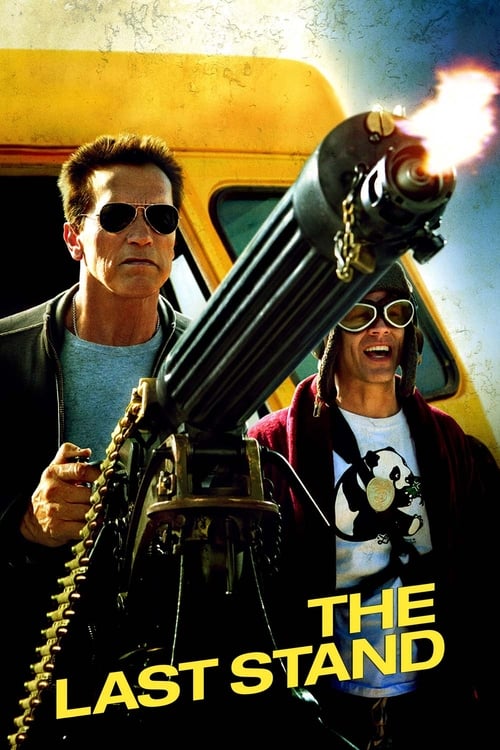
The Last Stand (2013)
Directed by Kim Jee-woon
No — The Last Stand is not woke, scoring 6 out of 100 on our wokeness meter.
Arnold Schwarzenegger returned to the movies after a detour through California politics, and the vehicle chosen for that return was a modest neo-western about a small Arizona border town and the drug lord racing toward it.
Consciousness Markers
The cast includes Forest Whitaker, Luis Guzmán, and Genesis Rodriguez in supporting roles, but these are conventional action-film hires with no commentary on identity or representation.
Jaimie Alexander's Deputy Sarah Torrance is competent and holds her own in the shootout, but she is a standard action-genre female sidekick with no feminist thesis attached.
A Black FBI agent and a Latino deputy appear naturally in the story, but the film makes no racial statement or social commentary.
A meat-and-potatoes action film that never pauses to lecture the audience on social issues.
No LGBTQ+ characters, themes, or subtext appear anywhere in the film.
No environmental themes or climate messaging of any kind.
The villain is a drug lord and the heroes are small-town law enforcement; there is no economic critique or anti-capitalist framing.
No body-positivity themes or messaging present.
No neurodivergent characters or themes are depicted.
The film is a straightforward contemporary action thriller with no historical revisionism.
Why it received this score
Arnold Schwarzenegger returned to the movies after a detour through California politics, and the vehicle chosen for that return was a modest neo-western about a small Arizona border town and the drug lord racing toward it. Kim Jee-woon, making his English-language debut, shoots the thing with clean efficiency and a fondness for analogue solutions: a Vickers gun on a school bus, a Camaro borrowed from the mayor, a cornfield purchased outright for the final chase. The premise borrows the shape of a frontier yarn, a corrupt cattle baron recast as a cartel kingpin, and the film never pretends to be more than that.
On the matter of social consciousness, the record is thin and the film seems content to leave it that way. Forest Whitaker plays the frustrated FBI agent, Luis Guzmán and Genesis Rodriguez fill out the supporting ranks, and none of these presences carry any argument about identity or representation; they are action-movie hires doing action-movie work. Jaimie Alexander's deputy handles a rifle and holds a line, which is more than the genre usually grants, but she is a sidekick with a smile and a romantic subplot, not a thesis. There is no LGBTQ content, no environmental messaging, no critique of the economic order, no interest in bodies or brains that deviate from the norm.
The film's refusal to sermonize is nearly its defining quality. It wants to stage a shootout in a quiet street and then go home. A viewer hoping to be instructed on the moral questions of the age will leave Sommerton Junction empty-handed, and the film's own modest ambitions suggest it never noticed the omission. The result is a B movie with a star, a bridge, and a body count. The classification is straightforward, and the ledger comes back nearly blank.
Analysis generated by our Consciousness Algorithm
Part of


Synopsis
Ray Owens is sheriff of the quiet US border town of Sommerton Junction after leaving the LAPD following a bungled operation. Following his escape from the FBI, a notorious drug baron, his gang, and a hostage are heading toward Sommerton Junction where the police are preparing to make a last stand to intercept them before they cross the border. Owens is reluctant to become involved but ultimately joins in with the law enforcement efforts.
Questions about The Last Stand
Is The Last Stand woke?
No — The Last Stand is not woke, scoring 6 out of 100 on our wokeness meter. That earns it a verdict of Ultra Based.
Does The Last Stand have any woke elements?
Very few. None of the 10 markers reaches 30, the level where a marker counts as present; the highest is Representation Casting at 22.
How does The Last Stand compare to other 2013 movies?
It ranks #181 of the 274 films from 2013 we've scored; their average is 14. The wokest is Belle (76).
How is the Woke Score calculated?
An AI-assisted process researches the film and its reception, scores it 0–100 on ten markers, then combines those into one 0–100 Woke Score. It measures a specific set of 2020s cultural themes, not film quality.