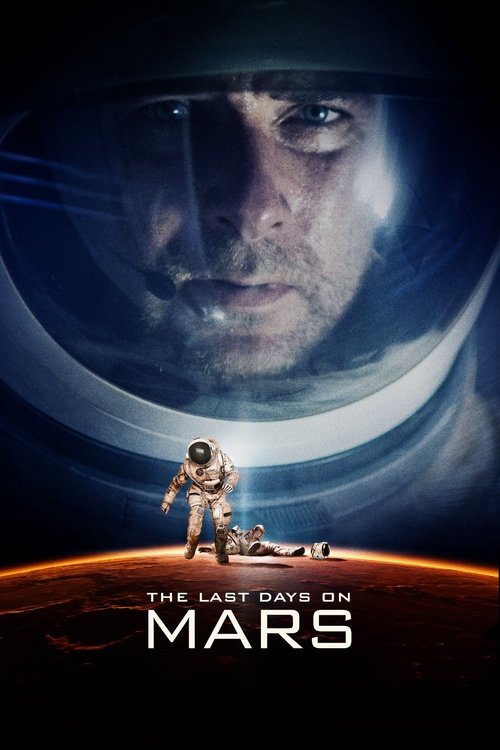
The Last Days on Mars (2013)
Directed by Ruairi Robinson
No — The Last Days on Mars is not woke, scoring 8 out of 100 on our wokeness meter.
The Last Days on Mars arrives from 2013, a year when Mars was still mostly a place for monsters and not for messaging.
Consciousness Markers
The crew includes a Black female scientist and a Serbian actor, but the diversity is presented as a natural international mission roster rather than a pointed casting statement.
Women are competent scientists and crew members, but the film offers no feminist critique or gender-themed agenda.
No LGBTQ+ characters, relationships, or themes appear in the film.
Race is never addressed or made a thematic concern.
The Martian setting is a backdrop for horror, not an environmental parable.
No critique of capitalism, corporate greed, or economic inequality is present.
The film features zombified bodies but no body-positivity themes or messaging.
No neurodivergent characters or themes are explored.
The story is fictional and does not revise historical events.
The film is a taut survival horror and does not pause for social or political lecturing.
Why it received this score
The Last Days on Mars arrives from 2013, a year when Mars was still mostly a place for monsters and not for messaging. Ruairi Robinson directs a crew of international professionals who discover a bacterial life form that turns people into fast, blackened, feral things. The premise is lean. The execution is leaner. It is based on a short story by Sydney J. Bounds, and it carries the DNA of Alien and Red Planet without much shame.
The film's social inventory is sparse. The cast includes a Black female scientist and a Serbian actor, but the diversity reads as a natural international mission roster, not a casting statement. Women are competent and doomed alongside the men. No LGBTQ characters or themes appear. Race is never a subject. The Martian setting is a haunted house, not a climate parable. There is no critique of corporate power, no body positivity, no neurodivergence, no revisionist history. The film is too busy killing its characters to lecture anyone.
What remains is a taut, derivative survival horror. The result is a modest genre exercise. The reviews were unkind, and not without cause. The film lacks the intelligence for thought-provoking science fiction and the trashy joy for a B-movie romp. Its cultural awareness is close to zero. It does not ask to be congratulated. It asks only for ninety-eight minutes and a tolerance for dimly lit corridors. For the sommelier of progressive sensibilities, this vintage is corked, but not offensive. It is simply a zombie movie on Mars, and it knows it.
Analysis generated by our Consciousness Algorithm
Part of


Synopsis
On the last day of the first manned mission to Mars, a crew member of Tantalus Base believes he has made an astounding discovery – fossilized evidence of bacterial life. Unwilling to let the relief crew claim all the glory, he disobeys orders to pack up and goes out on an unauthorized expedition to collect further samples. But a routine excavation turns to disaster when the porous ground collapses and he falls into a deep crevice. His devastated colleagues attempt to recover his body. However, when another vanishes, they start to suspect that the life-form they have discovered is not without danger.
Questions about The Last Days on Mars
Is The Last Days on Mars woke?
No — The Last Days on Mars is not woke, scoring 8 out of 100 on our wokeness meter. That earns it a verdict of Ultra Based.
Does The Last Days on Mars have any woke elements?
Very few. None of the 10 markers reaches 30, the level where a marker counts as present; the highest is Representation Casting at 20.
How does The Last Days on Mars compare to other 2013 movies?
It ranks #137 of the 274 films from 2013 we've scored; their average is 14. The wokest is Belle (76).
How is the Woke Score calculated?
An AI-assisted process researches the film and its reception, scores it 0–100 on ten markers, then combines those into one 0–100 Woke Score. It measures a specific set of 2020s cultural themes, not film quality.