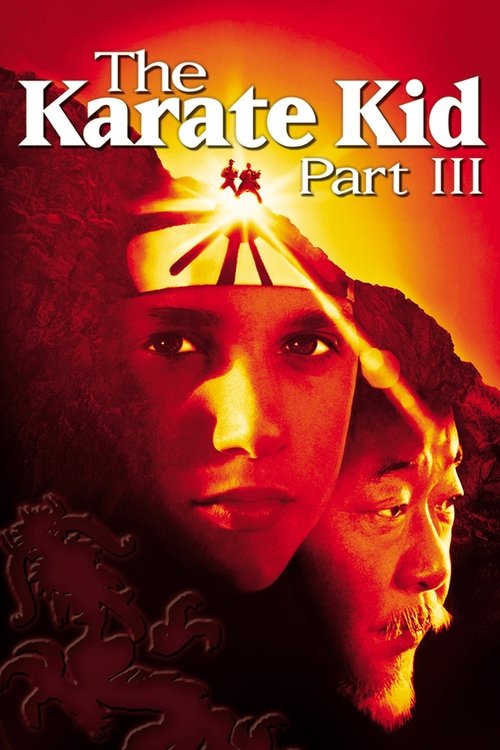
The Karate Kid Part III (1989)
Directed by John G. Avildsen
No — The Karate Kid Part III is not woke, scoring 0 out of 100 on our wokeness meter.
The Karate Kid Part III arrives in 1989 as a contractual obligation with a bonsai tree.
Consciousness Markers
The cast is led by white actors with Pat Morita as Mr. Miyagi, but his presence is natural to the franchise and not framed as modern representation casting.
No LGBTQ+ characters, themes, or subtext appear in the film.
Jessica is a friendly supporting character, but the film has no feminist agenda or gender-conscious critique.
Mr. Miyagi's Japanese heritage is part of the established story, but the film does not engage racial consciousness or systemic racial themes.
Terry Silver is a toxic-chemical magnate, but the film uses this only as villainous background and makes no climate crusade argument.
The villain is a wealthy businessman seeking to franchise Cobra Kai, but this is standard villain motivation rather than an anti-capitalist critique.
No body-positivity themes or messaging are present.
No neurodivergence themes or characters are present.
The film is a straightforward sequel with no historical revisionism.
Mr. Miyagi offers philosophical mentorship, but the film does not deliver modern social or political lectures.
Why it received this score
The Karate Kid Part III arrives in 1989 as a contractual obligation with a bonsai tree. John Kreese, broke and abandoned, seeks out Terry Silver, a toxic-chemical magnate and former Green Beret, who hires Mike Barnes to torment Daniel LaRusso into entering the All-Valley tournament. The plot is a rerun. The moral universe is personal. Mr. Miyagi's Japanese heritage remains part of the established furniture, never a platform for racial consciousness. Jessica Andrews exists as a friend because Robyn Lively was sixteen and Ralph Macchio was twenty-seven, a production compromise that produces zero feminist critique. The film has no interest in gender politics. It has no interest in anything beyond revenge, kata, and the restoration of a pottery shop's good name.
Silver's wealth and chemical business might suggest an anti-capitalist or climate parable to a later viewer. The film uses both as villainous texture. Franchising Cobra Kai is presented as vulgar, not as a systemic indictment of capital. There is no LGBTQ subtext, no body-positivity message, no neurodivergent character, no revisionist history. Miyagi dispenses aphorisms about balance and roots, but his instruction is martial and personal. He does not lecture on social justice. Daniel's arc involves learning that violence without discipline corrodes the self, a lesson as old as the hills and twice as dusty. The film's cultural awareness is limited to the idea that a man in a linen suit might be up to no good.
The result is a sequel that mistakes repetition for ritual. Critics in 1989 were unkind, and the years have not improved its posture. The performances are broad, the violence is jarring, and the resolution arrives through a kata performed in sudden-death overtime. There is no progressive agenda to parse, no modern sensitivity to applaud or condemn. The ledger is empty. This is not a failure of courage. It is a failure of imagination, which is a different thing entirely. The film belongs to 1989, to Columbia Pictures, and to the memory of cinematographer James Crabe. We classify it accordingly, with the solemnity of a sommelier presented with a bottle of expired kombucha.
Analysis generated by our Consciousness Algorithm
Part of


Synopsis
Despondent over the closing of his karate school, Cobra Kai teacher John Kreese joins a ruthless businessman and martial artist to get revenge on Daniel and Mr. Miyagi.
Questions about The Karate Kid Part III
Is The Karate Kid Part III woke?
No — The Karate Kid Part III is not woke, scoring 0 out of 100 on our wokeness meter. That earns it a verdict of Ultra Based.
Does The Karate Kid Part III have any woke elements?
No. All 10 markers score zero.
How does The Karate Kid Part III compare to other 1989 movies?
It ranks #62 of the 68 films from 1989 we've scored; their average is 10. The wokest is Do the Right Thing (72).
Is The Karate Kid Part III the most woke The Karate Kid movie?
No. It ranks #6 of the 6 The Karate Kid films we've scored; the wokest is The Next Karate Kid (35).