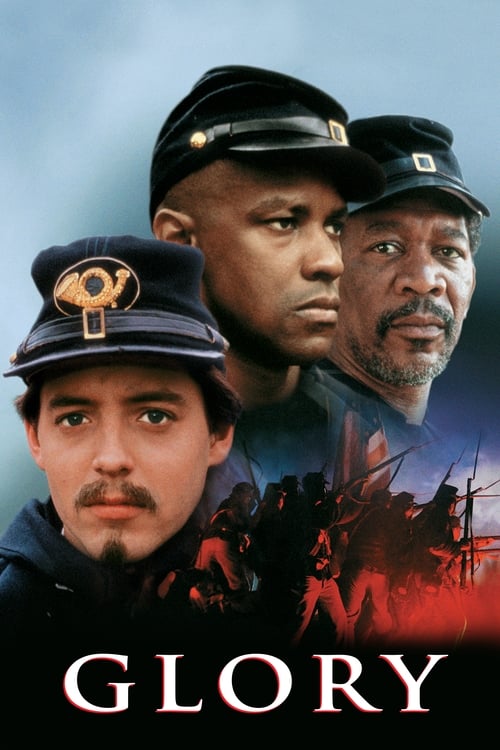
Glory (1989)
Directed by Edward Zwick
No — Glory is not especially woke, scoring 38 out of 100 on our wokeness meter.
Edward Zwick's 1989 Civil War epic carries itself like a monument: granite, dignified, and in no hurry.
Consciousness Markers
Racial injustice is the film's explicit subject: the 54th's fight for the right to fight, the unequal pay protest, the racist quartermaster, and the regiment's erasure from history. It is a serious historical reckoning rather than a modern ideological lecture.
A major studio film in 1989 with a predominantly Black principal cast (Washington, Freeman, Braugher, Kennedy) carrying the emotional weight of the regiment, though the top-billed lead remains a white officer, a point critics like Ebert flagged at the time.
The film carries clear social significance and an epilogue spelling out the 54th's legacy, but critics noted it delivers its message through drama rather than pedantry.
The pay-equity subplot and the profiteering of Montgomery and Harker gesture at economic exploitation, but the critique is framed around racial fairness rather than a systemic anti-capitalist thesis.
The film is a largely faithful dramatization of documented events and the 54th's real history, functioning as a corrective to historical erasure rather than an ideological rewriting of the record.
The film is a war drama centered on male soldiers; women appear only in brief domestic scenes with no feminist framing or commentary.
No LGBTQ+ characters or themes appear anywhere in the narrative.
No environmental or climate themes are present.
No body-positivity themes or messaging.
A mute drummer boy appears as a background figure, but the film makes no thematic use of neurodivergence.
Why it received this score
Edward Zwick's 1989 Civil War epic carries itself like a monument: granite, dignified, and in no hurry. It follows the 54th Massachusetts Infantry from recruitment to the sands of Fort Wagner, and it does so with a predominantly Black principal cast that, for a major studio picture of that era, was close to unprecedented. Denzel Washington, Morgan Freeman, Andre Braugher, and Jihmi Kennedy do the emotional labor. Matthew Broderick's Colonel Shaw takes the top billing. Roger Ebert asked why at the time. The question has aged well. The answer has not.
The film's social consciousness is genuine, and its subject is racial injustice itself. The 54th fights for the right to fight, protests unequal pay, and confronts a quartermaster who withholds their shoes. None of this is decoration. It is the plot. The economic thread, the profiteering officers and the three-quarters wages, stays tethered to fairness and never swells into a broader indictment of the system. The epilogue spells out the regiment's legacy in plain text, a modest dose of lecturing that the preceding two hours have largely earned through drama.
Elsewhere the ledger is bare. No LGBTQ presence. No climate concern. No body positivity. No neurodivergence, unless we count the mute drummer, who is scenery. Women appear in brief domestic scenes and vanish. The film corrects a historical erasure. It does not rewrite the record. The result is a serious, handsomely mounted picture that was ahead of its moment on a single front and silent on nearly all the others. It remains a fine film. It is not a battleground.
Analysis generated by our Consciousness Algorithm


Synopsis
Robert Gould Shaw leads the US Civil War's first all-black volunteer company, fighting prejudices of both his own Union army and the Confederates.
Questions about Glory
Is Glory woke?
No — Glory is not especially woke, scoring 38 out of 100 on our wokeness meter. That earns it a verdict of Based.
Does Glory have any woke elements?
3 of the 10 markers register at 30 or above, led by Racial Consciousness (72), Representation Casting (68) and Lecture Energy (30). On Racial Consciousness: Racial injustice is the film's explicit subject: the 54th's fight for the right to fight, the unequal pay protest, the racist quartermaster, and the regiment's erasure from history.
How does Glory compare to other 1989 movies?
It ranks #2 of the 68 films from 1989 we've scored; their average is 10. The wokest is Do the Right Thing (72).
How is the Woke Score calculated?
An AI-assisted process researches the film and its reception, scores it 0–100 on ten markers, then combines those into one 0–100 Woke Score. It measures a specific set of 2020s cultural themes, not film quality.