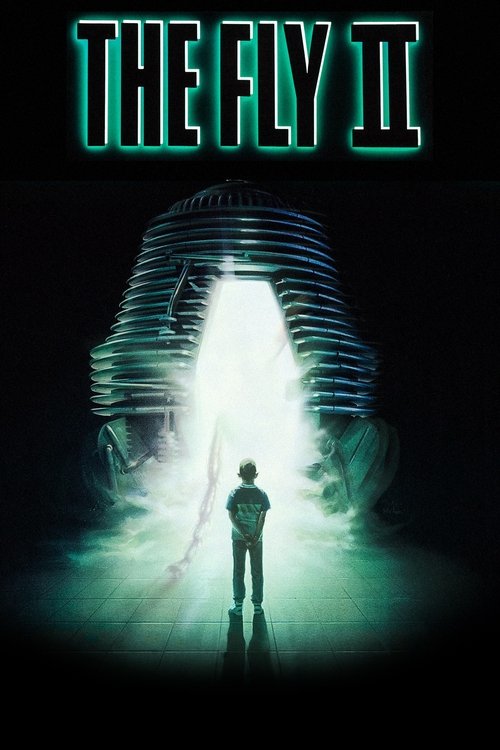
The Fly II (1989)
Directed by Chris Walas
No — The Fly II is not woke, scoring 18 out of 100 on our wokeness meter.
The Fly II arrived in 1989 as the unwanted offspring of a superior parent, which is thematically apt for a film about a man who gives birth to a larval sac.
Consciousness Markers
The villain is a corporate owner who adopts Martin as an asset and plans to exploit his mutation and teleportation technology for profit, fitting the evil-corporation trope.
The cast is entirely white with no deliberate racial or ethnic diversity; the presence of a female lead is not representation casting in the modern sense.
No LGBTQ+ characters, themes, or subtext appear in the film.
The female lead is primarily a love interest and helper; the film kills off the previous female lead in childbirth and offers no feminist critique.
The film does not engage with race, racism, or racial identity in any substantive way.
No environmental or climate-related themes are present.
The film is a body-horror story about grotesque mutation and deformity, with no body-positive messaging.
Martin's accelerated intellect and sleeplessness stem from his mutant biology, not from a portrayal of neurodivergence.
The film is a contemporary sci-fi horror sequel with no historical revisionism.
The film does not lecture the audience on social or political issues; it is a creature-feature horror.
Why it received this score
The Fly II arrived in 1989 as the unwanted offspring of a superior parent, which is thematically apt for a film about a man who gives birth to a larval sac. Chris Walas, who built the goo for David Cronenberg's 1986 remake, was promoted to director after Mick Garris fled to Critters 2. The studio wanted a teenage monster movie. Frank Darabont was brought in to punch up the drama, and the result has the texture of a committee that could not agree on a vision. Eric Stoltz plays Martin Brundle, who ages at an accelerated rate and spends his days repairing his father's telepods for the company that owns him.
The one thread worth noting is the corporate villain. Anton Bartok adopts the boy, raises him in a lab, and waits patiently for the mutation to ripen so he can sell it. This is the evil-industrialist template, and the film does grant it a modest measure of class resentment. Bartok treats a child as inventory. That is a real idea, though it sits inside a creature feature that mostly wants to show us melting flesh.
Beyond that, the film keeps its politics to itself. Beth Logan exists to be a girlfriend and, eventually, a betrayer, which is the extent of the film's interest in women. Veronica Quaife dies in the opening minutes. There is no racial consciousness, no queer subtext, no climate anxiety, no body-positive reading of a story about a man whose body becomes a horror. Nobody lectures us. It is a sequel that knows exactly what it is: a delivery system for latex and slime, and not much else. The creature crawls toward the food bowl, and the credits roll, and the culture is left undisturbed for another evening.
{"thematic_tags": ["sequel"]}
Analysis generated by our Consciousness Algorithm
Synopsis
Martin Brundle, born of the human/fly, is adopted by his father's place of employment (Bartok Inc.) while the employees simply wait for his mutant chromosomes to come out of their dormant state.
Questions about The Fly II
Is The Fly II woke?
No — The Fly II is not woke, scoring 18 out of 100 on our wokeness meter. That earns it a verdict of Ultra Based.
Does The Fly II have any woke elements?
1 of the 10 markers register at 30 or above, led by Eat the Rich (30). On Eat the Rich: The villain is a corporate owner who adopts Martin as an asset and plans to exploit his mutation and teleportation technology for profit, fitting the evil-corporation trope.
How does The Fly II compare to other 1989 movies?
It ranks #6 of the 68 films from 1989 we've scored; their average is 10. The wokest is Do the Right Thing (72).
How is the Woke Score calculated?
An AI-assisted process researches the film and its reception, scores it 0–100 on ten markers, then combines those into one 0–100 Woke Score. It measures a specific set of 2020s cultural themes, not film quality.