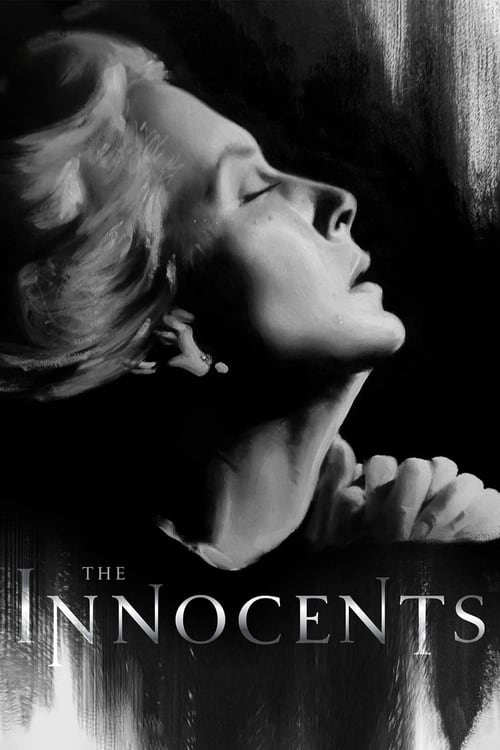
The Innocents (1961)
Directed by Jack Clayton
No — The Innocents is not woke, scoring 0 out of 100 on our wokeness meter.
The Innocents (1961) arrives from a distant country.
Consciousness Markers
The cast is entirely white British performers in a 1961 gothic horror production, with no meaningful representation casting or diverse ensemble.
There are no LGBTQ+ themes or characters; the ghostly relationship is heterosexual and presented as abusive.
A female governess is the protagonist, but the film treats her sexual repression and possible hysteria as psychological horror rather than advancing a feminist agenda.
The film has no engagement with race, racial injustice, or racial consciousness.
There is no climate or environmental crusade in this Victorian ghost story.
The wealthy uncle's neglect is a plot device, not a critique of capitalism or an eat-the-rich message.
The film does not address body image, body positivity, or related themes.
The governess's ambiguous sanity is framed through gothic psychological horror and Freudian repression, not modern neurodivergence awareness.
The film is a period ghost story adapted from Henry James, with no revisionist historical agenda.
The film is atmospheric and ambiguous rather than preachy or lecture-driven.
Why it received this score
The Innocents (1961) arrives from a distant country. Jack Clayton's adaptation of Henry James's The Turn of the Screw, reworked by Truman Capote into something colder and more Freudian, concerns a governess at a country estate who becomes convinced that two dead servants have returned to claim the children in her care. Deborah Kerr holds the screen for nearly the entire runtime, her face a study in tight-lipped dread. The film refuses to tell us whether the ghosts are real. That refusal is the whole engine of the thing, and it has kept scholars busy for sixty years.
A female lead and a plot about sexual repression do not add up to a feminist statement. The film treats Miss Giddens's desire as a symptom, something to be diagnosed and feared. The romance at its center, such as it is, belongs to Quint and Miss Jessel, a heterosexual arrangement presented as predatory and ugly. The children are white, the cast is white, the estate is English, and nobody in the frame is thinking about representation, or the climate, or the moral failings of capital. The wealthy uncle who abandons his wards exists to set the plot in motion and then to vanish. He is a device, not an indictment.
What the film offers instead is craft. Freddie Francis lights the CinemaScope frame so that darkness eats inward from the edges. Daphne Oram's electronic score predates most of what we now take for granted in horror sound design. There is no sermon here, no lesson, no moment where a character turns to the camera to explain how we ought to live. It is a haunted house story that trusts its audience to sit in the discomfort. By the standards of our current cultural accounting, it registers as a clean zero. It is also, by any standard at all, a masterpiece. Both facts can share a room without argument.
Analysis generated by our Consciousness Algorithm

Synopsis
In a mid-19th century Essex country house, a young governess for two children becomes convinced that the house and grounds are haunted by ghosts and that the children are being possessed.
Questions about The Innocents
Is The Innocents woke?
No — The Innocents is not woke, scoring 0 out of 100 on our wokeness meter. That earns it a verdict of Ultra Based.
Does The Innocents have any woke elements?
No. All 10 markers score zero.
How does The Innocents compare to other 1961 movies?
It ranks #11 of the 13 films from 1961 we've scored; their average is 6. The wokest is The Hustler (29).
How is the Woke Score calculated?
An AI-assisted process researches the film and its reception, scores it 0–100 on ten markers, then combines those into one 0–100 Woke Score. It measures a specific set of 2020s cultural themes, not film quality.