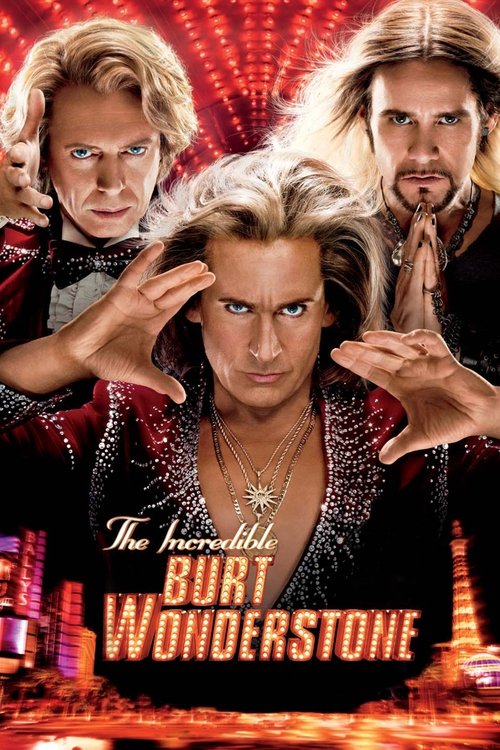
The Incredible Burt Wonderstone (2013)
Directed by Don Scardino
No — The Incredible Burt Wonderstone is not woke, scoring 6 out of 100 on our wokeness meter.
The Incredible Burt Wonderstone arrives from 2013, a year when a studio comedy could still be about two men in sequined vests arguing in a Las Vegas showroom, and this one is exactly that.
Consciousness Markers
Jane's arc as an aspiring magician who graduates from assistant to opening act offers a faint 'woman wants more than a prop role' thread, but it is played for light comedy rather than as a statement.
The cast is overwhelmingly white, with Olivia Wilde as the sole prominent female lead and no meaningful racial diversity among the principals.
A billionaire casino owner exists as a background antagonist, but the film has no critique of wealth or capitalism; the heroes simply want the lucrative contract.
This is a broad, low-stakes comedy with no preachy messaging or moralizing.
No LGBTQ+ characters, themes, or subtext appear anywhere in the film.
The film engages no racial themes or commentary whatsoever.
No environmental or climate content is present.
No body-positivity themes; the film's humor leans on physical gags rather than body acceptance.
No neurodivergence themes; Steve Gray's self-harm stunts are played as gross-out spectacle, not as a condition.
The film is a fictional showbiz comedy with no historical revisionism.
Why it received this score
The Incredible Burt Wonderstone arrives from 2013, a year when a studio comedy could still be about two men in sequined vests arguing in a Las Vegas showroom, and this one is exactly that. Steve Carell plays the titular illusionist, a man who has performed the same trick for a decade and grown insufferable about it. Steve Buscemi is his patient partner. Jim Carrey, lean and unnerving, plays a street magician who drills into his own skull for applause. The film is a broad, genial farce about relevance and ego, and it makes no attempt to be anything else.
On the matter of social consciousness, the ledger is thin. The cast is white and comfortable, with Olivia Wilde as the sole woman of consequence, an assistant named Jane who wants to perform instead of being sawed in half. Her ambition registers as a mild running gag, not a thesis. A billionaire casino owner (James Gandolfini, in his final released performance) exists to cancel the show, and the film regards his wealth with the same mild shrug it gives everything else. The heroes want his contract. Nobody wants his head.
There is no racial commentary, no climate anxiety, no examination of the body, no interest in neurodivergence, and no romantic subtext between anyone of the same sex. Carrey's self-mutilating stunts are gross-out spectacle, not a diagnosis. The film's one moral, delivered by Alan Arkin's retired magician, is that wonder is nice and friendship is nicer, a message that has never offended a single ticket-buyer. It is a pleasant, forgettable comedy that lost money, and it will not be studied. Some films arrive to start arguments. This one arrived to fill a Saturday.
Analysis generated by our Consciousness Algorithm


Synopsis
After breaking up with his longtime stage partner, a famous but jaded Vegas magician fights for relevance when a new, "hip" street magician appears on the scene.
Questions about The Incredible Burt Wonderstone
Is The Incredible Burt Wonderstone woke?
No — The Incredible Burt Wonderstone is not woke, scoring 6 out of 100 on our wokeness meter. That earns it a verdict of Ultra Based.
Does The Incredible Burt Wonderstone have any woke elements?
Very few. None of the 10 markers reaches 30, the level where a marker counts as present; the highest is Feminist Agenda at 18.
How does The Incredible Burt Wonderstone compare to other 2013 movies?
It ranks #181 of the 274 films from 2013 we've scored; their average is 14. The wokest is Belle (76).
How is the Woke Score calculated?
An AI-assisted process researches the film and its reception, scores it 0–100 on ten markers, then combines those into one 0–100 Woke Score. It measures a specific set of 2020s cultural themes, not film quality.