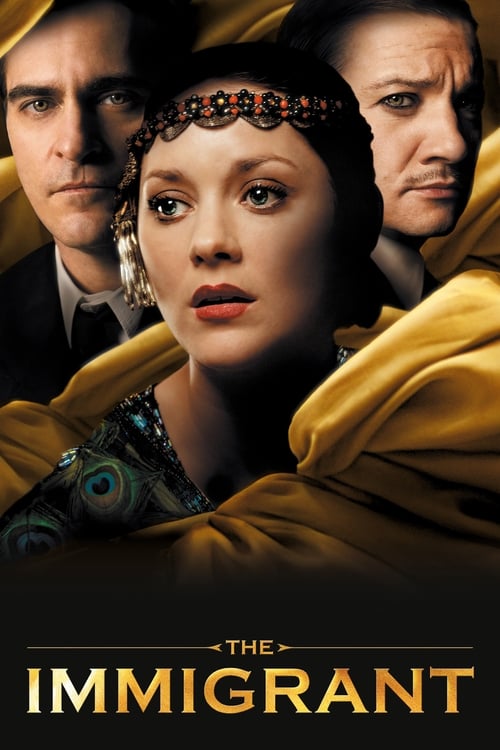
The Immigrant (2013)
Directed by James Gray
No — The Immigrant is not especially woke, scoring 33 out of 100 on our wokeness meter.
James Gray's The Immigrant arrives in 1921 and stays there, which is itself a small act of discipline.
Consciousness Markers
The narrative is a stark critique of systemic exploitation, poverty, and the corrupt economic forces that prey upon vulnerable immigrants.
The film centers on a strong female protagonist navigating a deeply corrupt and male-dominated historical setting, giving her significant agency within the narrative.
The film explores the exploitation of women, particularly through forced labor and prostitution, while highlighting the protagonist's resistance to patriarchal control.
The film deals with Polish and Jewish characters within the context of early 20th-century immigration, but it does not engage with modern, specific racial justice discourse.
The film presents its social commentary through dramatic action and character conflict rather than through didactic, lecture-style exposition.
There are no discernible LGBTQ+ themes or characters present in the film's narrative or character development.
The film's setting and plot focus entirely on social and economic struggles of the early 1900s and contains no environmental commentary.
The film depicts the brutal reality of physical exploitation and labor, rather than promoting any form of body positivity.
There is no evidence of characters with neurodivergence in the film's cast or plot.
While based on the director's family recollections, the film is a fictionalized drama set in 1921 and does not seek to revise a known historical event.
Why it received this score
James Gray's The Immigrant arrives in 1921 and stays there, which is itself a small act of discipline. Marion Cotillard plays Ewa, a Polish Catholic woman who steps off the boat at Ellis Island and into the waiting hands of a pimp named Bruno, played by Joaquin Phoenix with the expression of a man who has just swallowed something unpleasant. The film has no interest in addressing us directly. It observes. It withholds. The camera lingers on Cotillard's face as though waiting for a verdict, and she rarely gives one.
The picture is, at its core, an economic document. Bruno acquires women the way a landlord acquires buildings, and the film treats his trade as a business with overheads, contacts, and margins. Ewa's body is the commodity, and everyone in the frame understands this except the men who pretend otherwise. Her resistance is quiet and stubborn, which keeps the feminist dimension from hardening into a pamphlet. She is not a symbol. She is a person trying to retrieve her sister from quarantine, and the film respects the narrowness of that goal.
What the film does not do is lecture. There is no montage of statistics, no character who exists solely to explain the theme. The immigrant experience here is specific: Polish, Jewish, Catholic, 1921, the Lower East Side. It does not stretch itself to cover contemporary grievances, and it does not need to. Viewers hoping for climate anxiety, body positivity, an LGBTQ subplot, or a neurodivergent arc will leave unsatisfied, and the film will not apologize. Nor does it rewrite the historical record; it fictionalizes a family memory and leaves the record alone. It is a period drama with a corrupt heart and a beautiful face, and it knows exactly what it is.
Analysis generated by our Consciousness Algorithm


Synopsis
1921 New York. An immigrant woman is tricked into a life of burlesque and vaudeville until a dazzling magician tries to save her and reunite her with her sister who is being held in the confines of Ellis Island.
Questions about The Immigrant
Is The Immigrant woke?
No — The Immigrant is not especially woke, scoring 33 out of 100 on our wokeness meter. That earns it a verdict of Based.
Does The Immigrant have any woke elements?
3 of the 10 markers register at 30 or above, led by Eat the Rich (70), Representation Casting (65) and Feminist Agenda (50). On Eat the Rich: The narrative is a stark critique of systemic exploitation, poverty, and the corrupt economic forces that prey upon vulnerable immigrants.
How does The Immigrant compare to other 2013 movies?
It ranks #27 of the 274 films from 2013 we've scored; their average is 14. The wokest is Belle (76).
How is the Woke Score calculated?
An AI-assisted process researches the film and its reception, scores it 0–100 on ten markers, then combines those into one 0–100 Woke Score. It measures a specific set of 2020s cultural themes, not film quality.