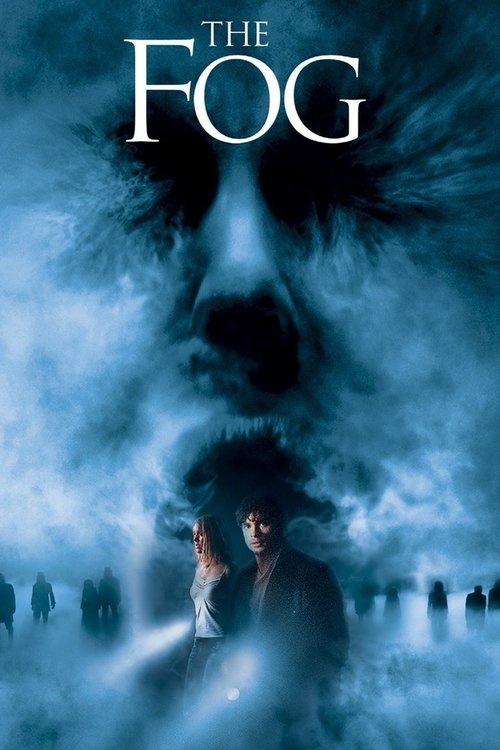
The Fog (2005)
Directed by Rupert Wainwright
No — The Fog is not woke, scoring 0 out of 100 on our wokeness meter.
The Fog presents itself as a chilling supernatural fable, yet it is a cultural artifact so stubbornly traditional that it resists even the most cursory inspection for contemporary social consciousness.
Consciousness Markers
The cast is predominantly white with one Black supporting actor (DeRay Davis) whose presence is incidental and not framed as a statement of inclusive casting.
No LGBTQ+ characters, relationships, or themes appear in the film.
Female characters exist but the film offers no feminist critique or agenda; Elizabeth is largely a damsel/reincarnation plot device.
The film does not engage with race or racial justice; the vengeful spirits are lepers, not a racialized group.
The supernatural fog is a ghostly phenomenon, not an environmental allegory or climate commentary.
The founders' theft and murder are personal sins in a horror plot, not a critique of capitalism or wealth inequality.
No body-positive themes or diverse body representation are present.
No neurodivergent characters or themes are present.
The film invents a dark secret for a fictional town's founders, but it does not reinterpret real history through a modern ideological lens.
The film is a straightforward supernatural horror remake and does not lecture the audience on social issues.
Why it received this score
The Fog presents itself as a chilling supernatural fable, yet it is a cultural artifact so stubbornly traditional that it resists even the most cursory inspection for contemporary social consciousness. This 2005 exercise in maritime dread functions entirely within the realm of gothic revenge and historical transgression. The narrative mechanism involves a group of 19th-century miscreants whose buried sins manifest as spectral torment a century later. It is a straightforward tale of historical consequence, framed through a lens of classic horror tropes.
We find no attempt here to elevate the standard narrative into a platform for modern progressive sensibilities. The thematic concerns are limited to generational guilt and the inescapable nature of a dark secret. There are no examinations of systemic inequity or inclusive representation; the cast is uniformly conventional, and the plot ignores any discourse regarding identity or social justice. The film operates purely on the level of atmosphere and plot mechanics, which is a relief to the palate, if not to the modern sensibility. It is a film concerned with vengeful spirits, not with the complex demands of twenty-first-century cultural awareness.
This is a piece of cinema that takes its revenge seriously while treating the audience's desire for a modern, socially charged experience with utter disregard. It is a relic from an era when horror sought thrills through mist and melodrama, not through the dissection of contemporary cultural flashpoints. The film is a testament to the idea that some stories prefer to remain in the past, unburdened by the weight of the current ideological climate. It is a clean, uncomplicated slice of supernatural terror.
Analysis generated by our Consciousness Algorithm


Synopsis
Trapped within an eerie mist, the residents of Antonio Bay have become the unwitting victims of a horrifying vengeance. One hundred years earlier, a ship carrying lepers was purposely lured onto the rocky coastline and sank, drowning all aboard. Now they're back – long-dead mariners who've waited a century for their revenge.
Questions about The Fog
Is The Fog woke?
No — The Fog is not woke, scoring 0 out of 100 on our wokeness meter. That earns it a verdict of Ultra Based.
Does The Fog have any woke elements?
No. All 10 markers score zero.
How does The Fog compare to other 2005 movies?
It ranks #160 of the 181 films from 2005 we've scored; their average is 13. The wokest is The Constant Gardener (72).
How is the Woke Score calculated?
An AI-assisted process researches the film and its reception, scores it 0–100 on ten markers, then combines those into one 0–100 Woke Score. It measures a specific set of 2020s cultural themes, not film quality.