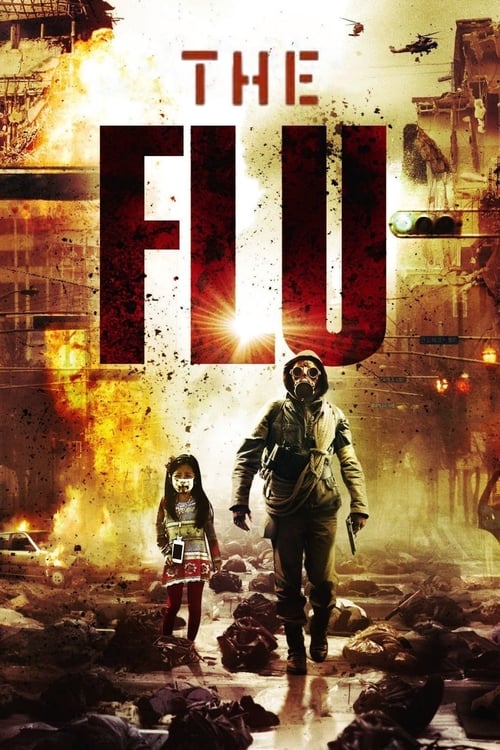
The Flu (2013)
Directed by Kim Sung-soo
No — The Flu is not woke, scoring 0 out of 100 on our wokeness meter.
The Flu, a 2013 South Korean disaster picture from director Kim Sung-soo, begins with a shipping container of dead migrants and a virus that kills within thirty-six hours.
Consciousness Markers
Entirely Korean cast in a Korean production; no deliberate diversity casting for marginalized groups in a Western context.
No LGBTQ+ characters, relationships, or themes are present.
Features a female doctor as a co-protagonist, but no feminist agenda or gender-equality messaging.
No exploration of racial identity, systemic racism, or racial justice themes.
The disaster is a viral pandemic, not a climate or environmental crisis.
No critique of capitalism, wealth inequality, or 'eat the rich' themes.
No body-positivity themes or diverse body representation as a message.
No neurodivergent characters or themes of neurodiversity.
A fictional story, not a revisionist take on historical events.
A disaster thriller that does not preach or lecture on social issues.
Why it received this score
The Flu, a 2013 South Korean disaster picture from director Kim Sung-soo, begins with a shipping container of dead migrants and a virus that kills within thirty-six hours. The plot then does what disaster plots do: it seals a city, fills a stadium with hostages of circumstance, and lets a mob mistake a pile of burning bodies for an atrocity. A president weighs an American air strike against the lives below. The film has no interest in instructing anyone. It wants the audience gripping the armrest, and it succeeds on those terms.
There is a female doctor at the center, played by Soo Ae with weary competence, and her daughter serves as the emotional stake. A woman in a lab coat is not the same thing as a thesis about women in lab coats, and the film never pauses to make that argument. A migrant worker carries the plague across the city, functioning as a plot mechanism instead of a comment on immigration policy. The antagonists are bureaucrats, the World Health Organization, and a panicking public. The infected are isolated, gassed at the perimeter, and eventually burned, and the film treats each of these as spectacle, not argument. That is the standard furniture of the genre, not an economic indictment.
The film's politics amount to a suspicion of institutions that has powered outbreak thrillers since at least the 1970s. No speeches are delivered. Nobody is scolded. The camera lingers on bodies, steel shutters, and gas masks, and the moral amounts to this: crowds are dangerous and vaccines are good. As a specimen for our purposes, it is remarkably clean. A genre exercise with no cultural agenda bolted to its frame, and a reminder that competence in the service of pure fright remains its own modest virtue. We file it and move to the next screening.
Analysis generated by our Consciousness Algorithm


Synopsis
A case of the flu quickly morphs into a pandemic. As the death toll mounts and the living panic, the government plans extreme measures to contain it.
Questions about The Flu
Is The Flu woke?
No — The Flu is not woke, scoring 0 out of 100 on our wokeness meter. That earns it a verdict of Ultra Based.
Does The Flu have any woke elements?
No. All 10 markers score zero.
How does The Flu compare to other 2013 movies?
It ranks #249 of the 274 films from 2013 we've scored; their average is 14. The wokest is Belle (76).
How is the Woke Score calculated?
An AI-assisted process researches the film and its reception, scores it 0–100 on ten markers, then combines those into one 0–100 Woke Score. It measures a specific set of 2020s cultural themes, not film quality.