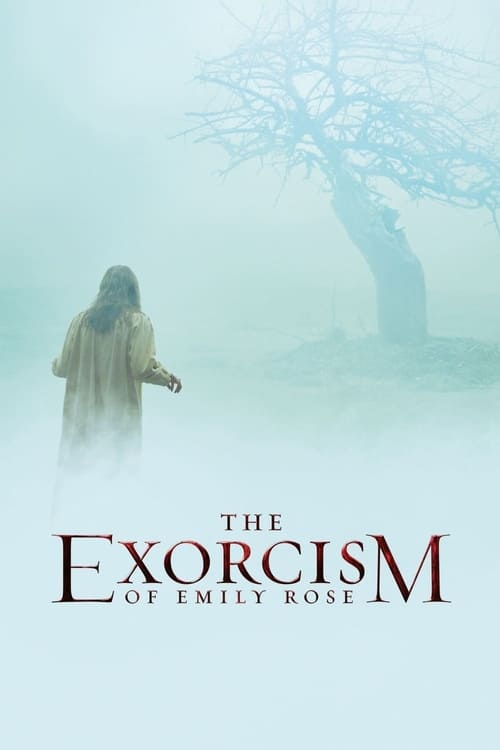
The Exorcism of Emily Rose (2005)
Directed by Scott Derrickson
No — The Exorcism of Emily Rose is not woke, scoring 9 out of 100 on our wokeness meter.
The Exorcism of Emily Rose arrives dressed as a horror picture and spends most of its runtime as a courtroom procedural, which is a bold costume choice for a film about a teenage girl who contorted and starved to death.
Consciousness Markers
The courtroom structure invites dueling monologues on faith versus medicine, and the anthropologist's cultural testimony has a distinctly lecture-like cadence. The film's deliberate ambiguity blunts the sermonizing, keeping it moderate.
The cast is overwhelmingly white, with the notable exception of Shohreh Aghdashloo as the anthropologist Sadira Adani. This is natural, era-typical ensemble casting rather than any deliberate representational program.
Laura Linney anchors the film as an ambitious female attorney navigating a male-dominated firm, and she ultimately declines the partnership she was chasing. This is a strong professional woman, but the film frames it as character, not thesis.
The anthropologist's testimony gestures at cross-cultural possession beliefs, but race is never a subject of the film's argument. This is incidental texture, not racial consciousness.
Epilepsy and schizophrenia are invoked as competing medical diagnoses in the courtroom, but the film treats them as a forensic puzzle in a faith-vs-science debate, not as neurodivergent identity to be affirmed.
No LGBTQ+ characters, themes, or subtext appear anywhere in the film.
No environmental or climate themes are present.
The archdiocese's desire to avoid scandal and the law firm's careerism are plot mechanics, not a critique of capital. No economic-justice argument is made.
No body-positivity themes; the film's bodily horror is about possession and contortion, the opposite register entirely.
The film is loosely inspired by the Anneliese Michel case but makes no revisionist historical claim; it dramatizes rather than rewrites the record.
Why it received this score
The Exorcism of Emily Rose arrives dressed as a horror picture and spends most of its runtime as a courtroom procedural, which is a bold costume choice for a film about a teenage girl who contorted and starved to death. Scott Derrickson and Paul Harris Boardman built the screenplay around a deliberate ambiguity, pairing a believer with a skeptic so that neither the demon nor the diagnosis wins cleanly. Father Moore reads Emily's letter. The prosecutor reads the medical charts. The jury splits the difference and asks for time served. It is a tidy arrangement, and it keeps the sermonizing at a low simmer for most of two hours.
Laura Linney carries the proceedings as Erin Bruner, an agnostic attorney chasing a partnership she eventually refuses. The film grants her competence and a conscience, which is a character choice more than an argument, and it never pauses to congratulate itself for either. The ensemble is white by default, the era's standard, with Shohreh Aghdashloo arriving late as an anthropologist to explain that other cultures also believe in possession. Her testimony is cross-cultural texture, not a thesis on race, and the prosecutor dismisses it as nonsense anyway.
What the film declines to do is instructive. There is no economic grievance beneath the archdiocese's wish to avoid scandal, no environmental lament, no affirmation of the body beyond the horror of its contortion. Epilepsy and schizophrenia surface as competing forensic explanations, puzzles for the jury to weigh, not identities to be honored. The courtroom format invites dueling monologues, and the anthropologist's cultural survey has the cadence of a lecture, but the film's refusal to pick a side keeps the preaching moderate. It is a sober, well-acted exercise in ambiguity, and it leaves the audience to do the believing.
Thematic tags: true_story, box_office_number_one. The film is loosely inspired by the case of Anneliese Michel, and it reached number one at the domestic box office during its opening weekend. It won no Academy Awards, and it is not a sequel, remake, superhero picture, or adaptation of a published book.
{"review": "The Exorcism of Emily Rose arrives dressed as a horror picture and spends most of its runtime as a courtroom procedural, which is a bold costume choice for a film about a teenage girl who contorted and starved to death. Scott Derrickson and Paul Harris Boardman built the screenplay around a deliberate ambiguity, pairing a believer with a skeptic so that neither the demon nor the diagnosis wins cleanly. Father Moore reads Emily's letter. The prosecutor reads the medical charts. The jury splits the difference and asks for time served. It is a tidy arrangement, and it keeps the sermonizing at a low simmer for most of two hours.\n\nLaura Linney carries the proceedings as Erin Bruner, an agnostic attorney chasing a partnership she eventually refuses. The film grants her competence and a conscience, which is a character choice more than an argument, and it never pauses to congratulate itself for either. The ensemble is white by default, the era's standard, with Shohreh Aghdashloo arriving late as an anthropologist to explain that other cultures also believe in possession. Her testimony is cross-cultural texture, not a thesis on race, and the prosecutor dismisses it as nonsense anyway.\n\nWhat the film declines to do is instructive. There is no economic grievance beneath the archdiocese's wish to avoid scandal, no environmental lament, no affirmation of the body beyond the horror of its contortion. Epilepsy and schizophrenia surface as competing forensic explanations, puzzles for the jury to weigh, not identities to be honored. The courtroom format invites dueling monologues, and the anthropologist's cultural survey has the cadence of a lecture, but the film's refusal to pick a side keeps the preaching moderate. It is a sober, well-acted exercise in ambiguity, and it leaves the audience to do the believing.", "thematic_tags": ["true_story", "box_office_number_one"]}
Analysis generated by our Consciousness Algorithm


Synopsis
When a young girl called Emily Rose dies, everyone puts blame on the exorcism which was performed on her by Father Moore prior to her death. The priest is arrested on suspicion of murder. The trial begins with lawyer Erin Bruner representing Moore, but it is not going to be easy, as no one wants to believe what Father Moore says is true.
Questions about The Exorcism of Emily Rose
Is The Exorcism of Emily Rose woke?
No — The Exorcism of Emily Rose is not woke, scoring 9 out of 100 on our wokeness meter. That earns it a verdict of Ultra Based.
Does The Exorcism of Emily Rose have any woke elements?
Very few. None of the 10 markers reaches 30, the level where a marker counts as present; the highest is Lecture Energy at 20.
How does The Exorcism of Emily Rose compare to other 2005 movies?
It ranks #83 of the 181 films from 2005 we've scored; their average is 13. The wokest is The Constant Gardener (72).
How is the Woke Score calculated?
An AI-assisted process researches the film and its reception, scores it 0–100 on ten markers, then combines those into one 0–100 Woke Score. It measures a specific set of 2020s cultural themes, not film quality.