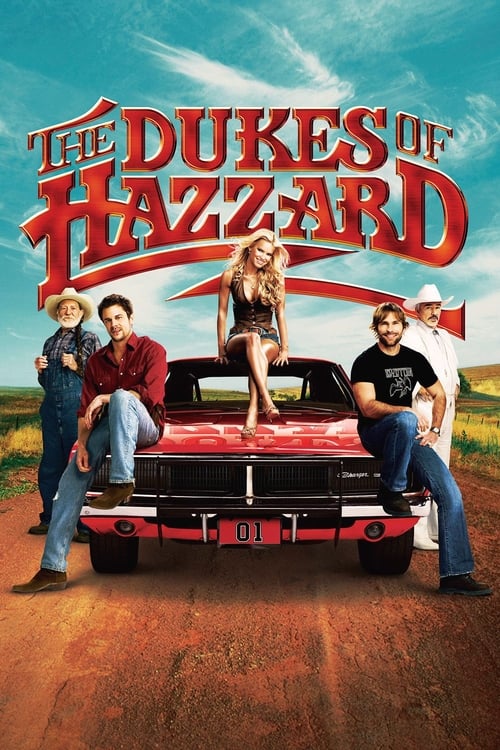
The Dukes of Hazzard (2005)
Directed by Jay Chandrasekhar
No — The Dukes of Hazzard is not woke, scoring 9 out of 100 on our wokeness meter.
The 2005 cinematic adaptation of The Dukes of Hazzard arrives with the confidence of a film that has already decided not to try.
Consciousness Markers
The plot hinges on exposing Boss Hogg's plan to turn Hazzard County into a strip coal mine, giving it a faint environmentalist streak, though it never mentions climate change or carbon.
The villains are corrupt officials and developers abusing eminent domain for a strip-mining scheme, but the film's critique is personal corruption, not systemic capitalism.
The cast is overwhelmingly white and Southern-fried, with no meaningful attempt at inclusive casting beyond the source material's existing demographics.
No LGBTQ+ characters, themes, or subtext. The film is too busy ogling Daisy Duke to notice.
Daisy Duke is presented primarily as scenery in cutoffs; her rescue subplot is agency-adjacent but not a feminist statement.
Features the Confederate-flag-adorned General Lee and a villain named Jefferson Davis Hogg, but treats them as nostalgic set dressing rather than racial commentary.
The film's camera treatment of Jessica Simpson is the opposite of body positivity; it is vintage 2005 objectification.
Sheriff Rosco is merely dimwitted for comic effect; no neurodivergent representation or sensitivity.
No progressive reinterpretation of history; the film leans on Confederate nostalgia and Southern good-ol'-boy tropes without critical revision.
A dumb car-chase comedy that never pauses to lecture the audience on social issues.
Why it received this score
The 2005 cinematic adaptation of The Dukes of Hazzard arrives with the confidence of a film that has already decided not to try. Jay Chandrasekhar, whose Broken Lizard troupe appears here in assorted cameos, directs a loose assemblage of car chases, moonshine deliveries, and the careful framing of Jessica Simpson's cutoffs. The plot concerns Boss Hogg's scheme to seize the Duke farm through eminent domain and convert Hazzard County into a strip coal mine. That is, technically, an environmental grievance. It is also the only moment the film gestures toward anything resembling a social position, and it does so without ever invoking the climate, carbon, or the planet. A coal mine is a convenient villain's errand, no more political than a stolen diamond.
The film's cultural instincts are nostalgic and pre-critical. The General Lee bears the Confederate battle flag, a villain is named Jefferson Davis Hogg, and neither detail is examined. There is no LGBTQ presence, no reclamation of Daisy beyond her function as scenery, no racial reckoning. The cast is white and Southern and content to remain so. Body positivity is not on the agenda; the camera treats Simpson as an object with a release date. Sheriff Rosco is dim for laughs, not for representation.
What the film does offer, faintly, is a distrust of corrupt officials and land developers. Boss Hogg abuses eminent domain for private gain. But the critique lands on one fat man's greed, not on the system that permits him. It is a personal failing, prosecuted by a car. The whole enterprise is a dumb, cheerful chase comedy that never once stops to instruct the audience on how to live. In this, at least, it is honest about its intentions. It wants to sell a Charger and a pair of shorts. It does.
Analysis generated by our Consciousness Algorithm
Part of


Synopsis
Cousins, Bo and Luke Duke, with the help of their eye-catching cousin, Daisy and moonshine-running Uncle Jesse, try and save the family farm from being destroyed by Hazzard County's corrupt commissioner, Boss Hogg. Their efforts constantly find the 'Duke Boys' eluding authorities in 'The General Lee', their 1969 orange Dodge Charger that keeps them one step ahead of the dimwitted antics of the small southern town's Sheriff, Roscoe P. Coltrane.
Questions about The Dukes of Hazzard
Is The Dukes of Hazzard woke?
No — The Dukes of Hazzard is not woke, scoring 9 out of 100 on our wokeness meter. That earns it a verdict of Ultra Based.
Does The Dukes of Hazzard have any woke elements?
Very few. None of the 10 markers reaches 30, the level where a marker counts as present; the highest is Climate Crusade at 20.
How does The Dukes of Hazzard compare to other 2005 movies?
It ranks #83 of the 181 films from 2005 we've scored; their average is 13. The wokest is The Constant Gardener (72).
How is the Woke Score calculated?
An AI-assisted process researches the film and its reception, scores it 0–100 on ten markers, then combines those into one 0–100 Woke Score. It measures a specific set of 2020s cultural themes, not film quality.