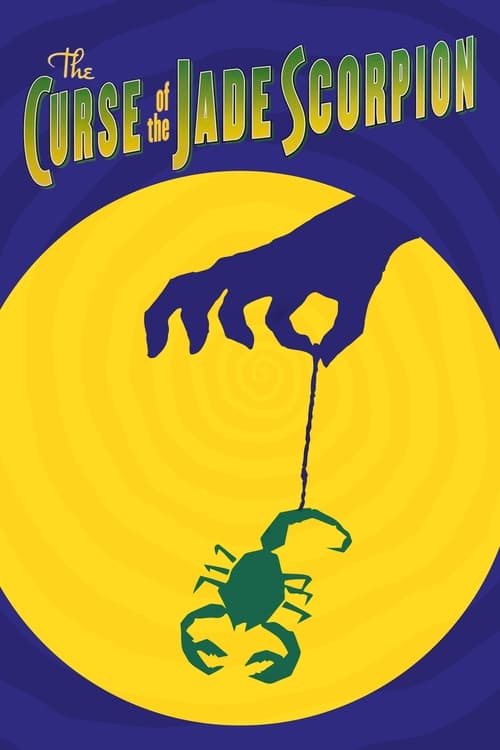
The Curse of the Jade Scorpion (2001)
Directed by Woody Allen
No — The Curse of the Jade Scorpion is not woke, scoring 6 out of 100 on our wokeness meter.
The Curse of the Jade Scorpion arrives in 1940 Manhattan, where Woody Allen plays an insurance investigator of intuitive methods and Helen Hunt plays the efficiency expert hired to modernize his office.
Consciousness Markers
Helen Hunt plays a professional 'efficiency expert' in a 1940s office, and the plot briefly notes her boss expects her to quit once married, but this is incidental screwball plotting rather than a feminist statement.
The film is a light screwball comedy that aims to amuse rather than instruct, with only the faintest trace of Allen's characteristic talky moralizing.
The cast is overwhelmingly white, led by Woody Allen, Helen Hunt, Dan Aykroyd, and Charlize Theron, with no meaningful racial or ethnic diversity and no commentary on it.
There are no LGBTQ+ characters, themes, or subtext anywhere in the film.
The film engages no racial themes or consciousness; it is a period caper set in a uniformly white Manhattan milieu.
There is no environmental or climate content of any kind.
The insurance-company setting is pure backdrop for a jewel-heist comedy; there is no critique of wealth, class, or capitalism.
No body-positivity themes or messaging appear in the film.
No neurodivergence is depicted or discussed; hypnosis is a plot device, not a metaphor for neurodivergence.
The 1940s setting is nostalgic pastiche rather than a revisionist re-reading of history.
Why it received this score
The Curse of the Jade Scorpion arrives in 1940 Manhattan, where Woody Allen plays an insurance investigator of intuitive methods and Helen Hunt plays the efficiency expert hired to modernize his office. They despise each other, are hypnotized by a stage magician, and are maneuvered into jewel thefts and eventual romance. It is a screwball comedy assembled with visible care and almost no comic yield. The film wants to be charming. It settles for beige.
This is a period caper set in a uniformly white Manhattan, and the film has no interest in disturbing that arrangement. The office is staffed with the usual Allen repertory of nervous white men and sharp-tongued white women, and the Chinatown sequence exists only as a location for the third act. No racial themes are engaged, no ethnic texture is examined. The one recurring piece of social observation is that Chris, the boss, intends to make Betty Ann retire once they marry. The film notes this, wrinkles its brow for perhaps four seconds, and returns to the hypnosis business.
Elsewhere the ledger is bare. There is no LGBTQ presence, no environmental content, no critique of the insurance trade as an institution, no body politics, no neurodivergence. Hypnosis here is a plot device and a joke about consent, not a metaphor. The 1940s are rendered as nostalgic wallpaper, all brass and rain-slicked streets, with history treated as set dressing. The picture's moral instruction is limited to a few muttered observations about luck and honesty, delivered between gags. Allen reportedly considers this his worst film, a harsh verdict from a man with a long filmography, though not an unreasonable one. It is a minor, harmless, softly lit thing. It lectures nobody. It merely fails to amuse.
Analysis generated by our Consciousness Algorithm


Synopsis
CW Briggs is a veteran insurance investigator, with many successes. Betty Ann Fitzgerald is a new employee in the company he works for, with the task of reorganizing the office. They don't like each other - or at least that's what they think. During a night out with the rest of the office employees, they go to watch Voltan, a magician who secretly hypnotizes both of them.
Questions about The Curse of the Jade Scorpion
Is The Curse of the Jade Scorpion woke?
No — The Curse of the Jade Scorpion is not woke, scoring 6 out of 100 on our wokeness meter. That earns it a verdict of Ultra Based.
Does The Curse of the Jade Scorpion have any woke elements?
Very few. None of the 10 markers reaches 30, the level where a marker counts as present; the highest is Feminist Agenda at 10.
How does The Curse of the Jade Scorpion compare to other 2001 movies?
It ranks #92 of the 148 films from 2001 we've scored; their average is 12. The wokest is Monster's Ball (60).
How is the Woke Score calculated?
An AI-assisted process researches the film and its reception, scores it 0–100 on ten markers, then combines those into one 0–100 Woke Score. It measures a specific set of 2020s cultural themes, not film quality.